Three Kinds of Laziness

Image of the Week
Image of the Week
For: Mar-14-2016
Tres Tipos de Pereza
--por Tenzin Palmo

El Buda describía tres tipos de pereza. Primero está la pereza que tod@s conocemos: no queremos hacer nada, y preferimos quedarnos en la cama media hora más a levantarnos a meditar. Segundo, hay una pereza que nos hace sentir que no valemos, la pereza de pensar, “No puedo hacer esto. Otra gente puede meditar, otra gente puede ser consciente, otra gente puede ser amable y generosa en situaciones difíciles, pero yo no puedo, porque soy demasiado tont@.” O, a ratos, “Siempre estoy enfadad@;” “Nunca he sido capaz de hacer nada en mi vida;” “Siempre he fallado y estoy destinad@ a fallar.” Esto es pereza.

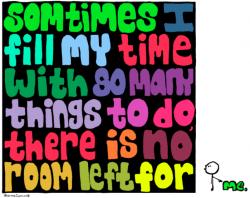
El tercer tipo de pereza es estar ocupad@ con cosas mundanas. Siempre podemos llenar el vacío de nuestro tiempo manteniéndonos ocupados. Mantenernos ocupados puede hacernos sentir virtuos@s. Pero suele ser una vía de escape. Cuando salí de la cueva, hubo gente que dijo. “¿No crees que tu soledad ha sido un escape?” Y yo dije, “¿Un escape de qué?” Yo estaba ahí- sin radio, ni periódicos, sin nadie con quien hablar. ¿Dónde iba a escapar? Cuando las cosas surgían, no podía siquiera telefonear a un@ amig@. Estaba cara a cara con quien yo era y con quien no era. No tenía escape.

Nuestras vidas normales están tan ocupadas, nuestros días tan llenos, que no encontramos tiempo ni para sentarnos un minuto y simplemente ser. Eso es ecapar. Una de mis tías siempre tenía encendida la radio o la televisión. No le gustaba el silencio. El silencio le preocupaba. Siempre había sonido de fondo. Y todos somos así. Nos asusta el silencio- el silencio exterior y el silencio interior. Cuando no hay ningún sonido dentro de nosostr@s nos hablamos a nosostr@s mism@s- opiniones e ideas y juicios y repasos de lo que sucedió ayer o en nuestra infancia; lo que él me dijo; lo que yo le dije a él. Nuestras fantasías, nuestras ensoñaciones, nuestras esperanzas, nuestras preocupaciones, nuestros miedos. No hay silencio. Nuestro ruidoso mundo externo no es más que un reflejo de nuestro mundo interno: Nuestra necesidad incesante de estar ocupados de estar siempre haciendo algo.

Hace poco estuve hablando con un agradable monje Australiano que una vez estuvo tan ocupado haciendo maravillosas actividades de dharma que se convirtió en adicto al trabajo. Se quedaba levantado hasta las dos o las tres de la mañana. Al final sufrió un colapso total. […]
Su problema era que su identidad estaba conectada con lo que hacía. Como su trabajo era para el Dharma parecía muy virtuoso. Parecía que estuviese hacienda cosas realmente buenas. Ayudaba a mucha gente y siguiendo las instrucciones de su maestro, pero ahora no puede hacer nada. ¿Quién es él? De este modo está pasando por una tremenda crisis porque se identificaba a si mismo con lo que hacía y con ser capaz de tener éxito. Ahora no puede hacer nada y depende de otros. Así que yo le dije: “Pero esta es una oportunidad maravillosa. Ahora no tienes que hacer nada, puedes simplemente ser.” Él me dijo que estaba intentando llegar a eso, pero encontraba amenazador no hacer nada, solamente sentarse allí y ser quien es, no lo que hace.
Este es el punto- llenamos nuestras vidas con actividades. Muchas de ellas son actividades muy buenas `pero si no tenemos cuidado, pueden no ser más que un escape. No estoy diciendo que no tengamos que hacer cosas buenas y necesarias, pero tiene que ser tanto inspirando como espirando, hacia dentro y hacia fuera. Tenemos que tener ambas la activa y la contemplativa. Necesitamos tiempo para estar con nosotr@s mism@s, y para estar verdaderamente centrad@s, cuando la mente pueda de verdad estar en silencio.

Preguntas semilla para la reflexión: ¿Cómo te identificas con la idea de que no encontrar el espacio para el silencio es un escape? ¿Puedes compartir alguna historia personal de alguna vez en la que necesitases simplemente ser? ¿Qué práctica te ayuda a estar verdaderamente centrado?

por Tenzin Palmo,sacado de su libro, En el corazón de la vida (Into the Heart of Life).
Seed Questions for Reflection

How do you relate to the notion that not finding the space for stillness is escape? Can you share a personal story of a time you felt the need to just be? What practice helps you become genuinely centered?

Moved by this reading? Join a live Awakin Circle to discuss in community.
Join this week
More ways to connect

Add Your Reflection

10 Past Reflections
HA
Hank
Feb 4, 2018

 My inner and outer noise is deafeniing, Has been for 50+ years.  Looking forward to just being. Practice needed.

SA
Sharon Adams
Mar 24, 2016

Do we engage in action to escape the silence of meditation, or do we meditate to escape the confusing ambiguity of action?

KS
kuldip singh Apr 16, 2016

 we do actions to survive.in the process,depending upon your environment, pressure is built or not built. If pressure starts a headache then meditation is helpful to give it rest and thus recharge it to face life once again.
Our inner world, our dreams reflect the outer world we live in.
One can escape, if one is brave enough and can afford. One can suicide if one is weak minded , or struggle a bit harder to survive and carry on. Some are gutsy, these do not give in; these fight back and overcome the difficulty of life and feel proud of it.
The only thing one can do is to charter ones path initially: one can choose a simple style or a materialistic. who decides? do the parents do for their children or the children decide as they grow up?

This is not to say that life can't take an unexpected or a rational turn at any stage in life.

SH
Shekina
Mar 16, 2016
 
I loved this reading.  I love solitude and silence.  I love the calmness I experience when I give myself permission to stare at the goddess sticker I have on my bathtub.  I love the calmness I experience as I gaze at the diamonds
shining on our lake....as the sun glimmers there.  I love the way flowers stay still in the vase until I remove them....dried and quiet in their death state.  I love the silence between musical notes.  I love being in sangha
and not needing to talk.I love looking at photos in 365 Days of Serenity photos of Wisdom to Soothe Your Spirit.
These are doing; however I am aligned with the joys of quiet.


KP
Mar 15, 2016
 Oh this rings so true for me. Though thankfully (and gratefully) I am better now. Progress, not perfection :) One of my fave phrases is "we are human beings, not human Doings." :)  I come from a long line of "doers" My grandmother in her 80's would apologize for sitting down. I learned early on that "stillness equaled lazy" and so I filled my life with movement, literal and figurative. And several times I became so busy doing that I got physically sick, just like the monk in the story. My body told me to stop and slow down and just be. In that just being, a small bit of clarity came. In the years since, I have taken much more time to be still. And in being still important things are happening. If we look at nature, trees when dormant are still doing important things for their overall health and beauty. We we are still we are doing the same. :) We are refilling so we can give when needed. <3 Breathing helps me to center. Being in nature, being near water does too. I love ... View full comment
ME
Mar 15, 2016
 This writing bothers me.   Indeed there is immense value in learning to be silent, in quieting the mind, and in learning to be alone with ourselves (and thus confront ourselves). Yes, of course. However, I do not agree that there is value in holding the selflessly occupied, worn out Australian monk out as a cautionary tale. He likely learned immensely from his dharma work. Much, much better to be busy doing for others than sitting alone in a cave. And I doubt that monk was able to become a monk at all without doing plenty of requisite silent meditation.    The aunt who needed noise might have needed to find herself through getting comfortable with silence. Or, she might have just been lonely and seeking companionship. But sitting in judgment of her fear of silence seems heartless, unnecessary, and uninformed.   The whole story is not printed here, but I more appreciate the old, busy monk who finally collapsed and then fretted that he wasn&rsq... View full comment
ME
Mar 15, 2016
This writing bothers me.   Indeed there is immense value in learning to be silent, in quieting the mind, and in learning to be alone with ourselves (and thus confront ourselves). Yes, of course. However, I do not agree that there is value in holding the selflessly occupied, worn out Australian monk out as a cautionary tale. He likely learned immensely from his dharma work. Much, much better to be busy doing for others than sitting alone in a cave. And I doubt that monk was able to become a monk at all without doing plenty of requisite silent meditation.    The aunt who needed noise might have needed to find herself through getting comfortable with silence. Or, she might have just been lonely and seeking companionship. But sitting in judgment of her fear of silence seems heartless, unnecessary, and uninformed.   The whole story is not printed here, but I more appreciate the old, busy monk who finally collapsed and then fretted that he wasn’t... View full comment
MI
Mar 15, 2016

 I was recently given a beautiful truth during meditation that resonates with this:  "Explore the nuances of silence."  Facing now one of the worst things a parent must face, a missing child, I have been unable to meditate. I have been doing everything possible to find him, filling my days with "doing."  Thank you for this gentle reminder to take time be still again, to breathe out as well as in.

NA
Namaste Mar 17, 2016

 Amen.

DD
Mar 13, 2016

Not finding space for stillness is escape from finding what is most important, that is, the real self, the soul.  In stillness we can also connect with the Soul or Oneness of all that is, which flows into compassion and peace that we so desperately need in this world.  It all starts with finding space for stillness.  Pascal said, "All of man's troubles stem from his inability to sit quietly in a room alone."  I frequently feel the need to just be, and frequently ignore that need as I am busy with some sort of doing, though I learned long ago that being is becoming, and doing is a way to avoid being.  Some doing is worthwhile -- the challenge is to avoid doing that avoids being.  Practices that help me become genuinely centered are meditation, being present and noticing what I am feeling in the moment, and paying attention to the process of my living rather than to progress or outcome.