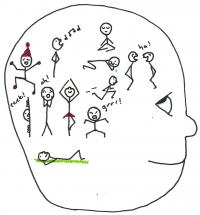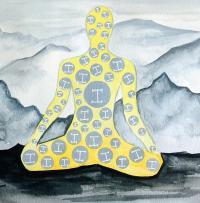
Parliament Of Subconscious Minds

Image of the Week
Hand-drawn art by Rupali Bhuva
Image of the Week
अवचेतन मन की संसद
- जॉन येट्स के द्वारा


आप इस विचार पर आपत्ति कर सकते हैं कि आपके स्व होने की भावना मात्र एक निर्माण है। आखिरकार, यह बहुत वास्तविक लगता है। हम स्वयं के इस शक्तिशाली अर्थ को इस विचार से कैसे जोड़ सकते हैं कि हम केवल उप-दिमागों का एक संग्रह हैं? ध्यान आपके वास्तविक अनुभव की जांच करने से सम्बद्ध है, इसलिए मैं आपको यह देखने के लिए आमंत्रित करता हूं कि जब कुछ होता है, तो "मैं" तथ्य के बाद ही अधिरोपित हो जाता है।

मानिए कि आप एक दोस्त के साथ चल रहे हैं और एक स्मृति याद आती है। ध्यान दें कि स्मृति के उठने के बाद ही आप अपने दोस्त की ओर मुड़ते हैं और कहते हैं, "मुझे कुछ याद आया है।" या सोचें कि "मैं दुखी महसूस करता हूं", यह विचार उठने से बहुत पहले, उदासी जैसी भावना कैसे आपके भीतर मौजूद हो सकती है। प्रत्येक उदाहरण में, और लगभग हर दूसरे अनुभव में, जब "मैं" को जिम्मेदार ठहराया जाता है, वह वास्तव में विभिन्न उप-दिमागों की गतिविधि है। इसे और भी स्पष्ट करने के लिए, विचार करें कि क्या होता है जब हम दुविधा का सामना करते हैं या कुछ कठिन निर्णय लेना होता है। आपको पता चल जाएगा कि, यहाँ भी, "मैं" संघर्ष के उत्पन्न होने के बाद ही समक्ष आता है। फिर, जब कि संघर्ष जारी है, "मैं" एक विकल्प या किसी अन्य के समर्थन में विभिन्न विचारों और भावनाओं के अलग-अलग उप-दिमागों से उत्पन्न होता है। स्पष्ट रूप से एक निर्णय पर पहुँच जाने के बाद भी, "मैं" अभी भी संदेह या संकोच का अनुभव कर सकता है यदि कुछ उप-मन आश्वस्त नहीं हैं। लेकिन कुछ समय पश्चात, अचानक ही कहीं से, एक दृढ़ निर्णय उत्पन्न होता है।

वह "कहीं से" हमारे अचेतन मन के अलावा और कोई नहीं है; निर्णय उन अचेतन उप-दिमागों में से कुछ की सामूहिक बातचीत द्वारा लिया गया था। संघर्ष को हल करने के बाद में एक सोच आती है, "मैंने फैसला कर लिया है।" इन सभी स्थितियों में, कथात्मक मन बस चेतना में सूचना के प्रवाह को ले जाता है और इसे एक सार्थक कहानी के रूप में व्यवस्थित करता है, जो "मैं" नामक काल्पनिक इकाई
को इस सब कुछ के लिए जिम्मेदार बनाता है। भेदभाव करने वाला दिमाग तब उप-दिमागों के संग्रह द्वारा बनाए गए काल्पनिक उत्पाद के बजाय इस "मैं" को एक वास्तविक व्यक्ति समझने की गलती करता है।

यह ऐसा है जैसे कि जॉर्ज नाम के लोगों से भरा एक कमरे में बहस हो रही थी, लेकिन आप सभी को खबरें मिली थीं कि "जॉर्ज ने यह कहा" और "जॉर्ज ने वह कहा।" कथात्मक मन से जानकारी प्राप्त करने वाले अचेतन विवेकशील मन की तरह, आप शायद समूह की जगह, एक एकल, अति विरोधाभासी व्यक्ति "जॉर्ज" को समझने की गलती करेंगे। "आपके" निर्णय, और बाद के इरादे और कार्य, किसी स्व से उत्पन्न नहीं होते हैं। वे चेतन मन के माध्यम से सूचनाओं के आदान-प्रदान के कई अचेतन उप-दिमागों के बीच एक आम सहमति का परिणाम हैं।

मनन के लिए मूल प्रश्न: आप इस धारणा से कैसे सम्बद्ध हैं कि हमारा 'भेदभावपूर्ण दिमाग' उप-दिमागों के संग्रह द्वारा बनाए गए उत्पाद' के बजाय गलती से 'मैं' एक व्यक्ति विशेष को इसके लिए जिम्मेदार ठहराता है ? क्या आप उस समय का अनुभव साझा कर सकते हैं जब आप चेतन मन के माध्यम से अचेतन उप-मन के सूचनाओं के आदान-प्रदान करने के बारे में जागरूक थे? आपको इस बात की जानकारी होने में मदद मिलती है कि आप 'मैं' को कैसे जिम्मेदार ठहरा रहे हैं?
Seed Questions for Reflection

How do you relate to the notion that our 'discriminating minds' mistakenly attribute 'I' to an individual instead of 'a product created by a collection of sub-minds'? Can you share an experience of a time you became aware of unconscious sub-minds exchanging information via the conscious mind? What helps you be aware of how you are attributing 'I'?

Moved by this reading? Join a live Awakin Circle to discuss in community.
Join this week
More ways to connect

Add Your Reflection

6 Past Reflections
DH
Dhruv
Mar 4, 2025
Such a simple yet profound explanation of “I”. Thank you. I am going to read this book :)
MA
Feb 12, 2024
This is fascinating!! Not easy to digest though. Need to think more
GU
Dec 4, 2020
The principle of multiple "I"s ( called here as "sub-minds" ) in our psyche is a key idea that I came across first in the 4th Way literature (expounded first by Gurdjieff). Self observation and reflection did reveal the presence in me of various types of inclinations and urges triggered by different circumstances and also in play in the same circumstance as well. Maybe it's more pronounced in me leading to there always being delay in decisions and also vacillation and tendency to change after a decision has been made ( which one I in me justifies as considering all options :)- ). The new idea I heard here from John Yates was that the wordless impulse ( discrimination ?) emerges first in mind matter and only thereafter thoughts are formulated around it... This piece implies, and it has been my experience as well rarely, that the unconscious discriminating mind momentarily evolves to have a higher consciousness thanks to which this dynamic of the mind is actually ... View full comment
MN
Dec 1, 2020
Having struggled with decision making/choices most of my life, this makes a lot of sense. Having experienced consensus recently in a team I work with, gives me hope that what is happening around me, is happening within as well. Thanks for sharing.
JP
Nov 28, 2020
Our minds discriminate between right and wrong or this and that.What is being discriminated takes place in our unconscious sub-minds. In that sense I is the narrator of the experience or I is the product of a collection of the unconscious sub-minds.How do I know that? What is that I? It is awareness. Awareness is like an observer. It is pure witnessing consciousness untouched by the collection of sub-minds. That helps us from being caught up in mistaken identity. When I need to or want to make an important decision about what to chooseI do not act impulsively or by my habitual patterns of rushing without pausing. From my experienceof such actions I have learned not to be controlled by the voices of unconscious sub-minds. This way of making wise choices is an ongoing process. It is worth doing to prevent or avoid myself from falling into a pit of suffering. The light of awareness helps me when i am moving toward the dark zone-the wrong zone. When I am aware of what is going on in my m... View full comment
DD
Nov 28, 2020
My relation to the notion stated is one of disagreement. My understanding of author Yates' essay is that he objects to attributing ideas, memories, and discoveries to the conscious construct "mind," so he posits a sub-layer of constructs called sub-minds that are unconscious and he attributes the ideas, memories and discoveries to them, and they feed the conscious mind. I believe the source of my conscious mind is what I call my soul, which is God, the Source, of which my body and mind are temporal manifestations. I believe the information, ideas, memories, and discoveries attributed to the conscious construct "mind" emerge or download from the soul/God Source which is primarily unconscious. I haven't experienced soul/God, if I may use my term, providing information via the conscious mind -- maybe a semi-experience -- I believe it. What helps me be aware of how I am attributing "I" is openness to there being something beyond body and mind.