Parlament des Unterbewussten
-von John Yates
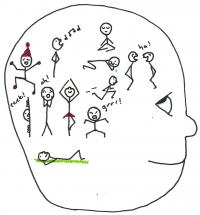
Sie mögen sich der Vorstellung widersetzen, dass Ihr Gefühl, ein Selbst zu sein, ein bloßes Konstrukt ist. Schließlich fühlt es sich sehr real an. Wie können wir dieses starke Selbstgefühl mit der Vorstellung in Einklang bringen, dass wir nur eine Ansammlung von Unverständen sind? Bei der Meditation geht es darum, Ihre tatsächliche Erfahrung zu untersuchen, deshalb lade ich Sie ein, zu beobachten, wie das " Ich", wenn etwas passiert, erst im Nachhinein wahrgenommen wird.
Angenommen eine Erinnerung taucht auf, während Sie mit einem Freund unterwegs sind. Beachten Sie, dass Sie sich erst nach dem Auftauchen der Erinnerung zu Ihrem Freund umdrehen und sagen: "Ich habe mich gerade an etwas erinnert." Oder bedenken Sie, wie ein Gefühl wie Traurigkeit vorhanden sein kann, lange bevor der Gedanke "Ich bin traurig" auftaucht. In jedem Beispiel und in fast jeder anderen Erfahrung wird dem "Ich" (im Nachhinein) eigentlich die Aktivität verschiedener Unterbewusstseine zugeschrieben. Um dies noch deutlicher zu machen, überlegen Sie, was passiert, wenn wir vor einem Dilemma stehen oder eine schwierige Entscheidung zu treffen haben. Sie werden feststellen, dass auch hier das "Ich" erst dann auf den Plan tritt, wenn der Konflikt bereits ausgebrochen ist. Dann, wenn der Konflikt weitergeht, scheint sich das "Ich" zu ärgern, wenn verschiedene Gedanken und Gefühle aus dem Unterbewussten zur Unterstützung der einen oder anderen Option aufkommen. Sogar nachdem offensichtlich eine Entscheidung getroffen wurde, kann das "Ich" immer noch Zweifel oder Zögern empfinden, wenn einige Teile des Denkens nicht überzeugt sind. Aber früher oder später, scheinbar aus dem Nichts, entsteht eine feste Entscheidung.
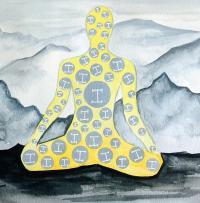
Dieses "Nirgendwo" ist nichts anderes als das Unbewusste; die Entscheidung wurde durch die kollektive Interaktion dieser unbewussten Unterbewusstseins getroffen. Nachdem der Konflikt gelöst ist, kommt der Gedanke: "Ich habe entschieden". In all diesen Situationen nimmt der erzählerische Verstand einfach den fortwährenden Informationsfluss im Bewusstsein und organisiert ihn zu einer bedeutungsvollen Geschichte, indem er alles dem imaginären Wesen namens "Ich" zuschreibt. Der unterscheidende Verstand verwechselt dann dieses "Ich" mit einem tatsächlichen Individuum und nicht mit einem Produkt, das kollektiv vom Sub-Verstand geschaffen wurde.
Es ist, als ob ein Raum voller Menschen, die alle George heißen, eine Debatte führen würde, aber alles, was Sie erhielten, waren Berichte, dass "George dies" und "George das" gesagt habe. Genauso wie der unbewusste, unterscheidende Verstand, der Informationen vom erzählenden Verstand erhält, würden Sie die Gruppe wahrscheinlich mit einem einzelnen, sehr widersprüchlichen Individuum namens "George" verwechseln. "Ihre" Entscheidungen und alle nachfolgenden Absichten und Handlungen stammen nicht von irgendeinem Selbst. Sie sind das Ergebnis eines Konsenses zwischen vielen unbewussten Unterbewussten, die Informationen über den bewussten Verstand austauschen.
________________________________________
Kernfragen zur Reflexion: Was halten Sie von der Vorstellung, dass unsere "unterscheidenden Geister" fälschlicherweise einem Individuum ein "Ich" zuschreiben, statt einem "Produkt, das von einer Ansammlung von untergeordneten Geistern geschaffen wurde"? Können Sie eine Erfahrung aus einer Zeit mitteilen, in der Sie sich bewusst wurden, dass unbewusste Unterbewusstsein Informationen über den bewussten Verstand austauschen? Was hilft Ihnen dabei, sich bewusst zu werden, wie Sie das "Ich" einschätzen?
________________________________________
Der obige Auszug stammt aus dem Buch 'The Mind Illuminated'.
Seed Questions for Reflection
How do you relate to the notion that our 'discriminating minds' mistakenly attribute 'I' to an individual instead of 'a product created by a collection of sub-minds'? Can you share an experience of a time you became aware of unconscious sub-minds exchanging information via the conscious mind? What helps you be aware of how you are attributing 'I'?