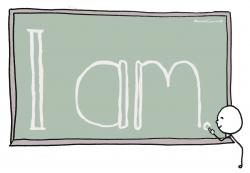
He Who Accumulates Cannot Learn

Image of the Week
Image of the Week
El que acumula no puede aprender
por Jiduu Krishnamurti

Parece que la comunión es un arte muy difícil. Comulgar un@s con otr@s más allá de los muchos problemas que tenemos requiere escuchar y aprender, que son dos cosas muy difíciles de hacer. La mayoría de nosotros difícilmente escuchamos y difícilmente aprendemos. Comulgar un@s con otr@s, que es la intención de estos encuentros, requiere cierta capacidad, una cierta manera de escuchar, que no sólo implique reunir información, lo que cualquier niño de escuela puede hacer, sino una escucha orientada al entendimiento. […]

Me parece de la mayor importancia que escuchemos de verdad para aprender. Aprender no es solamente acumulación de conocimiento. El conocimiento nunca genera percepción; la experiencia nunca germina en la belleza del entendimiento. La mayoría de nosotr@s escuchamos con el ruido de fondo de lo que ya conocemos, de lo que hemos experimentado. Quizá nunca hayas notado la diferencia entre la mente que aprende y la mente que sólamente acumula conocimiento. La mente que acumula conocimiento nunca aprende. Está siempre traduciendo lo que oye en términos de su propia experiencia, en términos del conocimiento que ha acumulado; está atascada en el proceso de acumulación, en el proceso de añadir a lo que ya conoce y una mente así, es incapaz de aprender. No sé si te has dado cuenta de esto. […] Así que a mí me parece muy importante que comulguemos un@s con otr@s silenciosamente, de una manera digna y para ello debe haber escucha y aprendizaje.

Cuando comulgas con tu propio corazón, cuando comulgas con tu amig@, cuando comulgas con los cielos, con las estrellas, con el atardecer, con una flor, entonces seguro que estás escuchando para descubrir, para aprender, y esto no significa que aceptes o que niegues. Estás aprendiendo y ambas, aceptación o negación de lo que se dice, ponen fin al aprendizaje. Cuando comulgas con la puesta de sol, con un amig@, con tu espos@, con tus niñ@s, no criticas, no niegas ni afirmas, no traduces ni identificas. Estás comulgando, estás aprendiendo, estás buscando. De ésta indagación viene el movimiento de aprender, que nunca es acumulativo.

Pienso que es importante entender que un hombre que acumula no puede nunca aprender. El autoconocimiento implica una mente fresca y entusiasta, una mente que no esté recluida, una mente que no pertenece a nada, que no está limitada a ningún campo en particular. Sólo una mente así aprende.
Seed Questions for Reflection

How do you understand the difference between learning and accumulating knowledge? Can you share a personal story that illustrates this difference? How can we make the shift from accumulating to learning?

Moved by this reading? Join a live Awakin Circle to discuss in community.
Join this week
More ways to connect

Add Your Reflection

21 Past Reflections
DB
Duryodhan Behera
Jun 6, 2023
It is not true. Unchageable reality is truth. When you have the pure knowledge,it will not change. Hence a person accumulat3s knowledge slowly that upgrade him towards pure and unchangeable reality.
MB
Marie Brozova
Apr 9, 2013
first step: regular meditation, to live in contact with nature, to keep cosmic laws - regulations. Try to  enjoy , experience present moment  and breath....... Who accumulates is not happy, is not free./behind accumulating is fear and Ego/. Soon he is owned by accumulated books, informations and things.......to be happy we need space in our head, heart = innerly and in outside  ........try to keep in harmony body, mind and soul with spirit, in hawaien healing is important to keep in harmony body, nature and akua /creator/, that energy could flow. Thanks to this harmony we have better attitude to "mana" - spiritual energy. Enough spiritual energy means also enough  health - ola, inner happiness.   Learning is important if it ieads to selfknowledge, without selfknowledge we can hardly understand the life and others.........Learning brings us not only broader perception, but also flexibility of mind,. Who is learning without accumula... View full comment
TA
tamxao Apr 21, 2013

"Trying" means you're already on a completely difference path.  Try to be in the present will never get you anywhere near the present... no matter how many thousands of years it is.  
He who tries can not be.  

PR
Apr 3, 2013

 After accumulating, whether material or knowledge, one should share.  this benefits both giver and receiver.

CA
Carol Apr 3, 2013

I think Pratibha has the key. We need to share what we have learned or failed to learn from what we have read.
I do know 2 or more people read the same thing and see or interpret what the words are in completely different ways.
We need to share in everything. That is the richness of life.

TH
Thierry Apr 4, 2013

Will you then share your interpretation? 

  
AM
Apr 3, 2013

The last time I was reminded that drama is originally a sacred art is when I saw an interpretation of Shakespeare's King Lear by a troup of Kathakali actor's twenty years ago. I then realized what extraordinary demand was put on these actors and their immense capacity of impersonation. Prior to this experience I had the opportunity to see actual communion between these extraordinary actors and their Indian public. At the end of the representation there were no applause but something like great fervor emanated from the audience.
This is beautiful. But what other sort of drama am I playing on myself when I confuse accumulation of knowledge with learning. When I confuse practical knowledge with the problematic 'knowledge' I have accumulated about myself and 'others'. Does holding on to that knowledge give me the illusion of psychological security? So I am on my toes. I don't sit back and say 'Allelujha', I know all about Truth!

AJ
Apr 2, 2013
When I was in high school, I enjoyed "acting'  (as in Drama Club).  From day one, up until opening night, of any given production, we learned our character, our words, our music,  how our character related to others in the story, the time period, the mood, the dress, our steps . . . ect. ect. ect.  (This was our required "homework")   Understanding came when "getting INSIDE my character" . . . "communing" with my character.  When the line separating me from my character disappeared, I felt confident the audience would, too, not "see me" but rather the person I played.   The mind that learns, as the article states, truly IS the mind that  "is not committed . . . does not belong to anything . . .  is not limited . . . "  To BECOME someone else (a different "character" on a stage) requires full emptying of self to become that "someone else".       To put oneself 110% into another person's shoes, for any given time... View full comment
GA
Apr 2, 2013

 per my understanding...first comes experience then learning happens (conditions apply..:)) and then knowledge takes birth.  i am unable to understand Jiddu's view when he says - he who accumulates cannot learn.  i believe that one can accumulate 'information' but not 'knowledge'.  knowledge is something like the elements - air, water, light....none can accumulate these elements.  because knowledge is something that happens through experience and learning therefrom....it is something personal and of course it gets impersonalized the moment it is put into some form....say a writing, theory, book etc...now this becomes information which then could be accumulated sans the joy!

BR
Bronwyn
Apr 2, 2013

For me, this sums up the importance of being present. For when we are present, we are listening and learning, and not thinking ahead about our contribution

KR
Kannan Ravinther Jun 17, 2019
True,when I am present,I feel more alive.
SM
Apr 2, 2013

The passage is very important for me, as I consider that I need to learn a lot in communication skills. Few points from the passage were eye openers, as I didn't realize that trying to accumulate and gain, is creating a problem to my learning and listening. Open minded learning is like a child learns , extremely fast, profound and in huge quantity.

TH
Apr 2, 2013
I don't think this passage deals with factual, objective knowledge as the one needed for daily living like professional learning, professional competence, etc. There experience and thereby knowledge are fully needed. And there experience adds to knowledge and knowledge to efficiency. I think  the author is speaking about quite a different type of knowledge, the kind of knowledge that says: 'I have met this person yesterday she was rude to me' or 'I took this road yesterday I know all about it'. The kind of knowledge that does not really help meeting that same person today or doesn't make that road trip across a beautiful landscape much of an exhilarating experience. The kind of knowledge that diminishes your aliveness as well as that of everybody and everything you happen to encounter in the present.  etc. There is truth in this passage but  I may miss its factuality if I don't take in the psycho... View full comment
A
Mar 31, 2013

 When I think of "accumulating" (gathering things up/to collect/amass) I think of "clutter".  To "clutter" up a mind is to keep it from learning.  Since my brain has a "limited capacity", I need to keep it simple/clean/uncluttered.  What knowledge I absolutely have to have, "I store".  What remains (storage),  I like to keep fluid.  Life/people/things, from one moment to another, change/move/grow . . . I want the ability to flow with it (learn).
Sweet read . . . I'll get back to this!
Always Love   
 

DD
Mar 31, 2013
 The difference between learning and accumulating knowledge -- Krishnamurti says it well.  Learning is more than anything being open.  It's having the beginner's mind, seeing what is there and hearing what is being said rather than seeing and hearing my thinking/expectations/assumptions/prejudices.  It's seeing what is rather than imposing my training, preconceived notions, agenda, or belief system.  Accumulating knowledge that gets in the way of learning is holding onto a bit of knowledge while searching through what's presenting to filter out what is not compatible with the knowledge being held onto.  When doing that, a lot gets missed, a lot goes unlearned.  "Acceptance or denial of what is being said puts an end to learning" is a profound statement.  It means to me to simply be with the experience, open, and not do anything with it.  We make the shift by practicing being present, practicing hearing, seeing, smelling, touching what is, a... View full comment
T
Mar 30, 2013
The author addresses the people who have come to attend a talk. A talk not meant to communicate information, satisfy curiosity or  entertain. The talk is about the 'difficult art of communion'. The author says communion can only come about if people are capable to listen and to learn. He says people deny themselves this capacity when their concern is to add further knowledge to what they know or when they are 'caught up' in the process of accumulating knowledge. The author equates knowledge with experience and says 'it doesn't bring perception and the beauty of understanding'. To dissociate learning from knowledge is, at first sight, a bit of a quiz for the conceptual mind. Aren't the things happening in the present automatically registered in the brain, imprinted on the mind? It is precisely the process of knowledge and if one is not aware of it one gets 'caught up' in it. In the field of relationship can one prevent the past obscuring the present and dulling sensitivi... View full comment
NA
Mar 28, 2013
 with computer we have access to knowledge of whole library and many subject at our finger tip,world   in sharing knowledge with information technology is simple and available to people all over the world,someone said if you want to be a big bodybuilder ,you need to worke hard at it,you can not be bodybuilder merely staying with bodybuilder .same way all good information we get,if we don't implement it in our daily living then we are just collecting knowledge . all inspirational articles we get from awakin.org or karma tube ,or ted.com is useless ,unless we apply that in our daily life,true meaning of learning to me is how much change I become .howmany positive virtues knowledge nurtured in me. I think mind likes to be entertained with what information tech. offers us,one must be sincere of what one feeds to mind[also be vigilant ,discriminate what is truth] true knowledge will make us good loving ,caring,happy human being,it will liberate us from ignorance .all good th... View full comment
CP
Mar 28, 2013
 There is a range of learning from learning nonsense syllables to one's  learning  that which one is looking for is that which is looking.. I was disrupted with his statement: "experience never flowers into the beauty of understanding."   Being aware of the beauty of understanding is an experience.  One way of looking at the difference between accumulating knowledge and learning is to notice that Adolf Hitler and Saddam Hussein accumulated much knowledge.  One could also notice that they had not learned. Present day schooling and much University teaching often relates to accumulating knowledge rather than high quality learning.  It seems to me that high-quality learning needs a freer, ungraded environment where one can explore what one finds to be remarkable, interesting, and important.  Coercive school learning often prevents that from happening and the coercion tends to destroy curiosity.  If we allow ourselves to be curious we can b... View full comment
CP
Conrad P Pritscher Apr 1, 2013

 I forgot to mention that the book, Learning What To Ignore: Connecting Multidiscipline Content and Process, 2013, Sense Publishers, closely elates to what is said here.

 
A
a Apr 1, 2013

 I share Conrad's confusion with the statement:  "experience never flowers into the beauty of understanding".  

A degree earned, in any given area, does not make one "a professional" (let's say) in that field.  Professionalism is gained in/with time, real life testing . . .  in/thru one's experience.  College "spoon feeds" a student (it did for me, anyway)!  Experience is where the fruit is found.  Facts are facts.  Experience DOES lead to the beauty of understanding.  (Because with/in "experience" . . . "YOU FEED" YOURSELF)
 
As an added note:  IF WE ARE NOT FREE TO GROW IN UNDERSTANDING . . . WE never WILL (understand).

John 8:32  Then you will know the Truth (God/Jesus/Spirit) and "The Truth" will set you FREE!  Love this . . . love you!

My humble opinion.  Respectfully submitted.    

 
RK
Ravi Kaw Apr 2, 2013

 There is a difference between objective knowledge and subjective knowledge. Not stating this in the beginning amounts to confusing a listener. Subjective knowledge has the attributes mentioned by the speaker, but there is a gotcha: one has to prepare one's mind to be able to do this efficiently. There are various methods mentioned in various traditions for this. Some speakers assume we are all perfect for this or understate this.