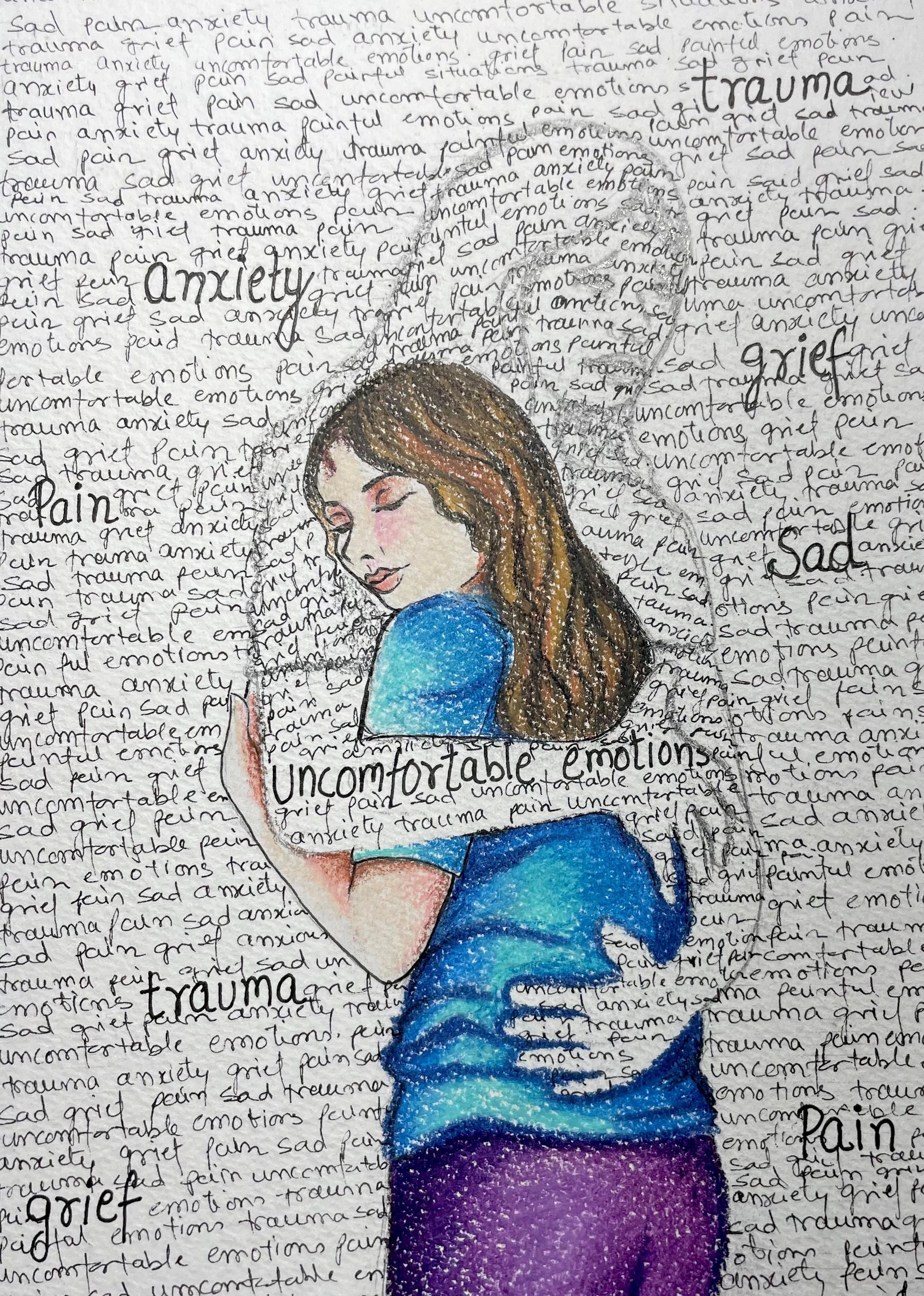
Cognitive Bypassing

Image of the Week
Hand-drawn art by Rupali Bhuva
Image of the Week
ज्ञानात्मक उपमार्ग द्वारा रसेल विल्सन
मैं एक चिकित्सक हूं, स्नायु वैज्ञानिक हूं, और एक व्यग्रता विशेषज्ञ हूं| मेरी बात कई व्यक्तियों से होती है जो व्यग्रता से पिडित होते हैं क्योंकि वे अपने ही मस्तिश्क में फंसे होते हैं | मैं यहाँ पर एक शब्द का परिचय करना चाहूँगा जो मैं पहले नहीं सुना था (अपनी औषधीय अथवा मनोचिकित्सक छेत्र में तो बिलकुल भी नहीं)|

मैं उसे “ज्ञानात्मक उपमार्ग “ बुलाता हूं |

मैं देखता हूं बहुत से व्यक्ति दूसरों को समझाते हैं, अपने विचारों को पुनर्गठन करने को| इसे एक रास्ता माना जाता है जिससे दर्द भरी भावनाओं से बचा जा सके, और यहाँ तक कि पुराने मानसिक आघातों एवं व्यग्रताओं से भी छुटकारे मिल सके| हम एक neck-up समाज में रहते हैं, हम अपने शरीर में भी बसने में कतराते हैं, जबतक की हमारा शरीर अच्छा ना महसूस कर रहा हो| अप्रिय भावनाएं एक बाध्यता के साथ समझा दी जाती हैं, या उन्हें अपने मश्तिष्क से दूसरी तरफ़ मोड़ दिया जाता है|

ऐसे आत्म- उन्नति वाले गुरुओं एवं प्रशिक्षकों की कमी नहीं जो आपको आपके मानसिक आघातों को “व्यवस्था क्रम “ में लाने के लिए एक उपाय बताते हैं जिनमे नए मानसिक व्यवस्था क्रम बनाये जाते हैं ( यहाँ सकारात्मक मनोविज्ञान आन्दोलन एक अच्छा उदाहरण है) | “अच्छा सोचने लगिये , आप बेहतर महसूस करने लगेंगे) “ वे कहते हैं| थोड़े समय के लिए तो यह बात मददगार साबित होती है , पर लम्बी अवधि में तो यह विपरीत उत्पादकता की तरफ़ जाती है|
क्या आपने कभी ऐसे विचार करने की कोशिश की है जो आपके शारीरिक आभास के विपरित हो? आप कुछ देर तक कर सकते हैं , पर वास्तव में वो पहाड़ से नीचे गिरते पत्थर को वापस पहाड़ पे चढाने जैसा होता है|

ज्ञानात्मक उपमार्ग को अपने भावनात्मक उत्थान के लिए एक रण निति के तरह इस्तेमाल करने में कुछ गलत नहीं है| पर जब मैं लोगों को ये मानते हुए देखता हूं कि प्रत्येक नकारात्मक भावना को पुनर्गठन करने कि आवश्यता है या ज्ञानात्मक तरीक से समझने कि आवश्यकता है तो मैं सिकुड़ जाता हूं| बाध्यता से भावनाओं को संज्ञान से जोड़ने से ये नुक्सान होता है कि हमें हमारे मानसिक आघातों से छुटकारा नहीं हो पता| पर ये एक अप्रिय सत्य है कि हमें अपनी दुखभरी भावनाओं को पूरी तरह महसूस करना होगा, चाहे ये सुनने में कितना भी कठिन लगे|

मुझे पता है कि ये एक डाक्टरी चिकित्सक से सुन के अजीब लगता है, पर मानसिक आघातों का छुटकारा , हमारे शारीरिक एहसास को अपनाने से ज्यादा जुड़ा होता है, ना कि हमारे मश्तिष्क के विचारों से| मानव जाति , शोक और अन्य दुखद भावनाओं से बचने के लिए में मश्तिष्क में ज्यादा उतर जाती हैं
शोक हमारे समाज में लगातार किनारे कर दिया जाता है| यहाँ तक कि हमारा मनोरोगिक निदान अधिकतर हमारे बचपन में हुए मानसिक नुक्सान के अनिर्णीत शोक से ज्यादा जुड़ा होता है|ऐसा नहीं है कि ये शोक सिर्फ प्रिय जनों की मृत्यु का ही हो, ( हालाँकि ये भी एक कारण होता है) पर ये शोक माता पिता के सम्बन्ध विच्छेद (divorce) का, बाल्यावस्था में दुर्व्यवहार का, तिरस्कार का या अन्य बड़े नुक्सान का होता है|

ऐसे बहुत सारे चिकित्सक हैं जो आपको इस छति से उभरने में मदद करेंगे पर इनमे से कितने हैं जो आपको इस छति के साथ बैठ रहने देंगे, बिना बाध्यता से उसमे स्पष्टीकरण जोड़ने की जरूरत के? क्या बाध्यता से दुखभरी भावनाओं का स्पष्टीकरण नहीं करना, उन भावनाओं को अपने अंदर सम्मिलित (metabolize) करने के लिए एक व्यापक छेत्र प्रदान करना नहीं है? शायद उससे जो उनके नीचे मानसिक आघात है, उसका निर्णय हो सके और उसका निदान हो जाए|

“अध्यात्मिक उपमार्ग “ , एक ऐसा शब्द है जो वर्ष १९८० में एक जॉन वेल्वूद जो एक बौध गुरु एवं मनोवैज्ञानिक चिकित्सक भी थे, ने रचा था| उन्होंने इसे ऐसे समझाया था” अध्यात्मिक विचार एवं पद्धति के माध्यम से अनिर्णीत भावनात्मक मामलों , मनोवैज्ञानिक घाव, एवं अपूर्ण विकासात्मक कार्यों, को दरकिनार करना या उनका सामना नहीं करने की ओर हमारा झुकाव”|

ज्ञानात्मक उपमार्ग , एक पद्धति है, जिसमे भावनाओं को टाल देते हैं ज्ञानात्मक मान्यताओं के सहारे| ज्ञानात्मक उपमार्ग इस पूर्व धारणा पे चलता है प्रत्येक मानसिक आघात एवं भावना को सही किया जा सकता है ज्ञानात्मक तरीके से या अपनी सोच को पुनर्गठित करके| मुझे ज्ञानात्मक उपमार्ग से कोई परेशानी नहीं है , पर मुझे परेशानी ये है कि अगर जब भी कोई भावना उठती हो तो उस पर “कार्य “किया जाए या उस पर ज्ञानात्मक चालाकी से उससे छुटकारा पाया जाए|

ऐसे बहुत से व्यक्ति हैं ( जिन्हें मानसिक आघात को सुधारने की प्रशिक्षा भी नहीं है) जो मान के चलते हैं कि वे किसी के दर्द का निवारण ज्ञानात्मक पहलु बदल के कर सकते हैं| मेरी राय में वर्ष दर वर्ष तैयार हो रहे जीवन यापन प्रशिक्षकों की बढती तादाद को देख कर भी येही महसूस होता है| वो प्रशिक्षक ( और ज्यादातर वो जिन्हें भावनात्मक मानसिक आघातों के बारे में जानकारी नहीं है) अच्छा करने से कहीं ज्यादा नुक्सान करते हैं|मानसिक आघात एवं कष्टदायक भावनाएं झेल रहे लोगों को, प्रशिक्षण द्वारा, उनको उससे बाहर निकलना एक खतर्नाक खेल है|
कुछ भावनाओं को छोड़ देने की जरूरत है और उन्हें सिर्फ महसूस करने की जरूरत है|

हाँ ये अवश्य जरूरी है कि आपके शोक एवं मानसिक आघात के स्तोत्र को समझा जाए , पर उन भावनाओं के साथ थोड़ी देर सिर्फ बैठ कर उन्हें महसूस करना जरूरी है| उनके साथ यंत्रवत एवं प्रत्येक समय विचारों को जोड़ के देखने की आवश्यकता नहीं है|

मनन के लिए बीज प्रश्न : ज्ञानात्मक उपमार्ग की धारणा से आप क्या समझते हैं? क्या आप एक निजी कहानी साझा कर सकते हैं, जब आपने शोक के साथ सिर्फ बैठ कर उसे अपने अंदर सम्मिलित (metabolize) किया हो? आप को बाध्यता पूर्वक ( यंत्रवत ) भावनाओं को ज्ञानात्मक परिपेक्ष से देखने से बचने में किस चीज़ से मदद मिलती है?
Seed Questions for Reflection

How do you relate to the notion of cognitive bypassing? Can you share a personal story of a time you sat with grief and metabolized it? What helps you avoid the temptation of cognitively manipulating emotion?

Moved by this reading? Join a live Awakin Circle to discuss in community.
Join this week
More ways to connect

Add Your Reflection

20 Past Reflections
TA
Taran
Apr 23, 2025
Thank you for this reflection and the image is beautiful.
HS
Harry Somaraju
Sep 10, 2024
This idea is very similar to what the The Buddha said. True transformation cannot happen by intellectual understanding of the concept of universality of suffering or impermanence. The knowledge has to permeate through to every single cell of the body. Similarly, experiencing raw emotions by coming to face to face with them, and even embracing them just as another emotion is the best, if not, the only way to heal trauma.
RJ
Apr 28, 2023
I have definitely come a long way in processing unwanted emotions and come through it stronger and more friendly with added dimension that would certainly gobsmack a life coach or psychiatrist who ask mundane questions and need to get out of theory .
CA
Cathy
Sep 24, 2022
Howdy! I could have sworn I've visited this site before but after looking
at a few of the articles I realized it's new to me. Nonetheless, I'm definitely happy I
discovered it and I'll be bookmarking it and checking back often! ronaldo manchester united drakt
ChasTancr atalanta maglia 2022 ChantalWe
LO
Lovie
Sep 22, 2022
My brother suggested I might like this blog. He was totally right.
This post truly made my day. You cann't imagine simply how
much time I had spent for this information! Thanks! fotball drakter
MelvaNewl arsenal drakt AdaFotidu
SH
Shantae
Sep 20, 2022
Normally I do not read post on blogs, but I would like to say
that this write-up very compelled me to take a look at and
do it! Your writing style has been amazed me.
Thanks, very great article. maglia lipsia 2022
TiffinyKt maglia roma 2022 22 Lelaenfdl
SH
Feb 25, 2022
I've been developing brain change models for decades. I actually discovered the route to consciously re prioritizing current Beliefs hierarchies and developing brand new neural pathways/circuits from different entry points - so, instead of 'I need a new diet because I'm a fat cow', plug in new beliefs, new hierarchies, etc. and create wholly new circuits or lead your brain to find a different one than the one ending with a failed diet. As a severe trauma victim myself, I am acutely aware of the necessity to 'be' with, experience feelings to integrate them! But to change a behavior (not possible to change a behavior by trying to change a behavior) wholly new circuits are needed to provide a wholly new outcome. And because a behavior is an output, and merely a belief in action, you cannot start at the (output/behavior) end if you want to make a change....but must start at the input - at the beginning, with new beliefs, new messaging, and new circuits. until i spent quite a bit of time ... View full comment
GU
Feb 24, 2022
Let us be careful to distinguish shallow negative emotions (arising , for example, from hurt to the ego) from deep grief, trauma or a perplexity and depression arising from getting a hold on the meaning of life itself.
For the former i have found having an orientation to getting on with life and staying focussed on whatever needs to be attended - even using any bypassing approaches - is helpful.
For the latter, many of the deeper sadnesses , it seems to me, can only gradually get processed - by body , mind and emotion - usually with the help of some great truths enunciated well by adepts (not necessarily spiritual) and the company of fellow travellers.... Patience and perseverance is needed . Hopefully we shall be graced not to breakdown badly meanwhile
WI
Will
Feb 23, 2022
I am a trauma informed psychologist and I totally agree with everything you said. Unfortunately many of my colleagues are cognitive therapists who don't understand the problem they create with trauma victims in recovery who are already oriented to wanting not to feel their emotions. Emotions are still viewed by many professionals as signs of mental weakness and even illness.
SA
Feb 22, 2022
Wow...powerful reminder here for me. I have spent some time practicing but recently the simplicity of just being ok with feeling what was present became a huge factor of remembrance to me. As if, and likely so, I had forgotten yet again and tried to make my practice needlessly complicated. Thank you for this.
SE
Feb 22, 2022
The way I understand this is that bypassing happens when we use some parts of our experience - the one we are more comfortable with or more familiar with - to disregard or not deal with the parts that are hard. We do get lost in our minds, and thinking that this is the only truth, can run away from the discomfort. I think "Cognitive bypass" is an important term and observation, and I think it should be discussed together with emotional bypassing or spiritual bypassing - and maybe even physical bypassing (by exercising to make ourselves feel better). Every one of these facets of our wholeness can be used to divert attention from facing life fully - from experiencing life fully. Many people get lost entirely in overwhelming emotions, losing the ability to engage and make cognitive sense. Others will never rest for long enough to feel or notice their thinking. So where is the approach that will include all of it, and refrain from excluding? We even exclude 'the head' from 'the body' while... View full comment
ME
me Feb 25, 2022
So very interesting! Thank you for sharing Stefanie!
PA
Feb 22, 2022
When we discover the truth that the fullness of life in this world is holding great suffering in and with Greater LOVE, we are on our way to abundance and healing of ourselves, and others too. }:- a.m.

anonemoose monk— a “wounded healer” to quote Henri Nouwen
SR
Sanjana Raghunath
Feb 22, 2022
Cognitive bypassing is normalized culture sadly. We have even picked up the dangerous habit of medicating to make the pain go away. And I have been guilty of compulsively making up explanations to avoid the most difficult of the pain so that I may be functional. But that has changed with the practice of tantra/yoga for me. Where there was a wish for escape, now is a welcoming. And I sit with the emotions and show myself love/support while the body processes the emotion. I have a traumatic response to anger so it has been a force that has been ignored in my life. When I felt anger, I felt like a vile person and it never got to express itself productively. As you can imagine, this leads to dis-ease in the body and disastrous outbursts. More recently, I have been allowing anger an avenue to express itself (in conversation and bodily movement) while I learn to listen with a loving centeredness to its message without judging myself for it. And suddenly, one day, a magical thing happened. ... View full comment
ME
me Feb 25, 2022
Beautiful, 🙏! Amen.
MA
Maria Feb 26, 2022
How wondeful. Thank you for sharing.
SU
Suzanne
Feb 22, 2022
As a retired somatic psychotherapist, I agree wholeheartedly with Dr. Wilson. The entrance to befriending our body's experience is learning to pause with a breath that gives us space to notice what is there. It's akin to hearing a knock on the door and taking the time to open it. We need to learn to greet the feeling with some friendliness and that is an important skill along the path of healing. We need guides along the way to help us recognize what's at the door and how to greet and feel fully so that what visits us also passes through. Thanks Dr. Wilson.
ST
Feb 22, 2022
Experiencing grief has been the door for me toward every day being the best day of my life after years of depression. It took a long time for me to discover that anger, frustration, addictions to sex and constant activity were ways to avoid grief. I always felt better once I allowed myself to have a real good crying, sobbing session and take time to be stilling on the earth, sand, water and fully breathe. I have incorporated Reichian/ bio-energetic exercises into my work as a wholistic physical therapist. Stillness, shaking( chaotic or dynamic meditation as taught by Rajneesh), or fetal position holding as a parent unconditionally loving a child have become pathways for many of my clients to end long term "chronic" pain. Breath work is amazingly powerful. I have benefitted from what is called "radical forgiveness" which may appear to be a form of "cognitive bypass" with the concept of re-framing any event in my life as perfect and transforming events such as abuse, violence, suici... View full comment
DD
Feb 19, 2022
I agree with Russell Wilson that helpers (and all of us) do way too much cognitive bypassing. We do too much living in and trying to heal from our head. We need less cognition to bypass feelings, and more bypassing of cognition. Get out of your head and into your body was a message of the 60's. I've sat with grief and metabolized it, often not enough. We always metabolize grief -- the issue is whether we metabolize it healthily or not. Do I chew the grief thoroughly before swallowing, gulp it down, or avoid it? Do I ingest and metabolize grief mindfully or do it inattentively while doing other activities? What helps me avoid cognitively manipulating emotion is believing cognition makes a valuable servant and a terrible master, believing much more healing lies in feeling my feelings than in cognitive shuffling (let cognition follow feeling feelings, not precede or substitute for feeling feelings), and years of practicing paying attention to my feelings.
JP
Feb 19, 2022
As humans we all go through painful emotions like fear, worry, anxietty, grief, anger, and sadness. Sometimes we divert our mind, avoid facing and going through painful emotins. We use a variety of strategies such as avoidnace, rationalization, suppresion, repression or denail. This may help us for a while but it will bounce back with more vigor and force. Instead of facing and working through difficult emotion we may Cognitively Bypass by detouring into cognitive ideas or beliefs. When my wife passed away it was difficult for me to face my grief and go throuh it. It was too much for me to bear the burden of the loss of my dear one. Instead of denying my grief I embraced my grief mindfully. It took some time for me to heal my emotional pain. I have been practicing Mindfulness Meditation for quite some time. It has helped me to act wisely. There are four interrealated four components if Mindfulness: Focused attention, Loving Awareness, Acknoledgement and Compasssion and loving... View full comment