The Rich Experience of A Quiet Mind
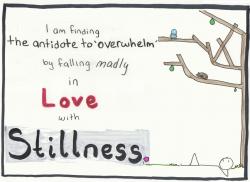
Image of the Week
Image of the Week

Entertainments, in whatever form one cares to take them, are necessary and indeed vital to happiness in the ordinary sense of the word. Both the body and the mind need rest and the batteries have to be recharged in some way. but the conventional methods for reviving ourselves in the midst of life's conflicts only partially do the job. They fall short of showing us the true nature of reality. [...]

Where, then, do we go from here? For me the answer to that question lies in my knowledge gained from the rich experience of knowing a quiet mind. I have been helped in the attainment of this knowledge by listening to and understanding the many wise men I have been lucky enough to meet, and by watching them and learning from their example.

I know now that it is not necessary to travel the world in search of a leader or a system, for the answers are all within us. In fact such a search is in itself a distraction and only serves to delay the moment of vision. It was only when my search ended that peace followed.

The key is in suffering and conflict; it is necessary to regard the suffering of others with compassion and our own with tolerance and equanimity. We must be aware of it, but silently, without trying to invite this silence by conscious effort. And this silent awareness must be allowed to come about in its own time, anything we do to hasten it merely adds further conflict.

One must be aware of the moment without any attempt to change it; it will change itself. One must be attentive to an extreme degree, as often as possible. Even to be attentive that one is not attentive is a form of attentiveness. To know reality one cannot stand outside of it and intellectualize about it, one must enter into it, become it and experience it. Then the mind becomes quiet, at peace with itself.

The beauty of living and the beauty of the earth unfolds and one's actions are no longer self-centered and destructive. Every action becomes creative. The fire of discontent changes from a destructive force consuming our lives into a bright luminous light that fills our lives with peace and joy.

-- John Coleman, in "The Quiet Mind"

Seed Questions for Reflection

What practice serves you well in developing attentiveness? What does entering reality mean to you? Can you share a personal experience that illustrates entering, becoming and experiencing reality?

Moved by this reading? Join a live Awakin Circle to discuss in community.
Join this week
More ways to connect

Add Your Reflection

13 Past Reflections
BR
Brent
Apr 20, 2022
One learns little when one is talking. Learning/knowing comes from listening with ones whole sole, leads to being able to hear all.
DA
Dave
Dec 10, 2021
Yes
EB
Ed Bourg
Jul 2, 2016


Stage of getting to silence
1. Listen rather than talking
2. Select quiet over talking or listening
3. Discern the"talking" in silence
4. Listen for the sounds of silence
5. Notice your anxiety and impatience with silence
6. Just enjoy deeper silence
 

JT
Mar 14, 2016

 During my daily morning Yoga exercises I become aware of my wandering mind, still processing my past life experiences, and my eternal mind - the mind that knows time, space and self as arbitrary concepts.

MA
Mari
Mar 14, 2016

Peace of mind is # 1 antidepressetive

GA
Sep 18, 2012
 It depends on what we take the mind to be.
To me mind is Akash, empty space. It is, still and quiet. That is its nature. We have to do nothing to make it quiet, just as we cannot do anything to disturb it.
If we take it to be an organ of the body then it would be functioning as long as we are alive. That is not disturbance. That is the way it is.
It then comes down to the notions that we hold based on our limited exposure to life on planet Earth. As we open up by travel, physical and intellectual, we would experience all that existence is; peace, beauty, adventure etc.
DD
Sep 16, 2012
 For me, paying attention develops attentiveness.  I don't know how to break it down further, except to say the practice of reminding myself to pay attention helps me to be attentive.  My thought in response to 'what does entering reality mean to me' is what reality are you talking about.  I've come to have more and more sense of being in two worlds, that is, the world of form and the world of Being.  The world of form is what we call reality, though it's not or at least it's very limited, and the world of Being is Reality, though it is mostly ignored or unknown.  Being in the world (of form) and not of it has come to be reality for me sometimes --  I have periods of abiding in that awareness, which is peaceful and positive for me. 
KW
kwerk Mar 14, 2016

 Very helpful how you express this!  thanks!

NA
Sep 16, 2012
 What practice serves you well in developing attentiveness?  Attentiveness needs practice of love and courage in all aspects of life. Love or acceptance of the present moment no matter what it is, and secondly, courage to let go desires and fears that interfere with the present moment, so that I can be in the present with complete awareness.  Adherence to unconditional truth as a principle, supports love, courage and presence of mind …….What does entering reality mean to you? ‘Absolute Reality’ is complete experience of the present moment, as is - in its ‘multiple dimensions’. We enter or experience a little of this reality as consciousness, when we let go our ego, desires and fears to become the ‘process’ or the ‘object’ we are focusing on – in a semi-trance state. This is ‘Samyama’.…..Can you share a personal experience that illustrates entering, becoming and experiencing reality? I ... View full comment
RI
Sep 16, 2012
This Quiet Mind is essential for the change you want to see in the world, the change you can be.  As I read down the passage, paragraph by paragraph, insight after insight, I was reminded that attentiveness is awareness, and being aware is a practice.   I remember my first meditation class.  I was very fortunate to be in the presence of a wise young teacher who guided us through a quieting practice that asked only that we be attentive to the patterns of thought and what arose for us physically, emotionally, mentally, and spiritually with those thoughts.  We were reminded that thinking is human.  Quiet mind does not imply ‘no thinking’.  Quiet mind meant being at ease with thoughts swirling and twirling, and actively releasing attachment to these thoughts.   For over a half century of my life, meditation as a term was defined as an ancient form of religious practice that I was taught to avoid because of the eternal ramifications.  Now,... View full comment
CP
Sep 15, 2012
 I found the following after my last reply:
"The education of attention would be an education par excellence." William James.
Be Peace.
CP
Sep 14, 2012
 My noticing the tremendous importance of attentiveness has helped me be slightly more attentive.  Entering reality means noticing what is.  A wise person told me that when I most desire to not be attentive is the time I may need it the most.  I am reminded of the ancient saying which states: "The way that can be said is not the way."  I am reminded of reading that Einstein believed God was the universe.  In that sense Thomas Keating's statement is very helpful: "God's first language is silence.  All else is a poor translation."  I'm also reminded of the wise statement: "Nothing ever happened in the past, and nothing ever will happen in the future.  Everything that happens, happens now, or happens not at all."  I'm also reminded of Gandhi's statement: "There is no way to peace.  Peace is the way."  Paraphrasing Gandhi one might say, there is no way to attentiveness.&n... View full comment
VI
Sep 14, 2012

A flurry of dogmatic, prescriptive and impractical advice seems to flow from one error of judgment: "but the conventional methods for reviving ourselves in the midst of life's conflicts only partially do the job. They fall short of showing us the true nature of reality. [...]"

Consider: If the conventional methods for reviving ourselves in the midst of life's conflicts (good humour, good food, old wine in good company of old friends, great sex...) appear to be adequate for 'the common low-life humans', shouldn't you (John Coleman & followers) consider yourself very inadequate to need "silent awareness" and wait indefinitely for it to come to you?