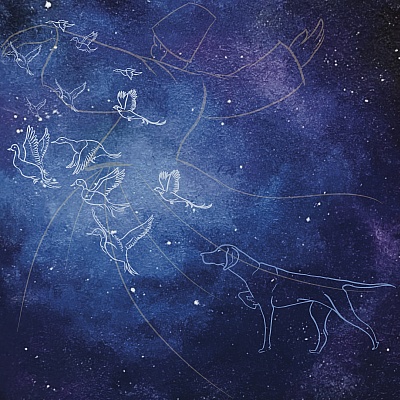
Between Knowing And Not Knowing

Image of the Week
Hand-drawn art by Rupali Bhuva
Image of the Week
Entre saber y no saber


--por Ruth Ozeki y Ezra Klein


Ezra Klein: A veces juego con la idea —y reconociendo que no sé nada en estas áreas— de que mucho de lo que se describe aquí es simplemente poco fiable. Y eso le suena negativo a la gente, pero cuando lo pienso, mucho de lo que se dice es que tus pensamientos, tu sentido del yo, lo que sucede a tu alrededor es simplemente poco fiable. Y tu tendencia a sentirte realmente fijo al respecto, a creer que realmente sabes lo que está sucediendo, eso le da una solidez. Siempre me gusta pensar en el vacío como una alternativa a pensar en las cosas como sólidas y su significado como sólido y su naturaleza como sólida.


Ruth Ozeki: Sí, eso es genial. Me gusta mucho. Eso simplemente me hace pensar en las enseñanzas sobre no saber. Hay una frase en el budismo zen que proviene de un koan, que dice que no saber es lo más íntimo.


Y es que cuando no sabemos algo y cuando podemos permanecer en ese estado de no saber es cuando hay una especie de intimidad con el mundo que nos rodea. Y esto es algo de lo que Shunryu Suzuki, fundador del Centro Zen de San Francisco, habla sobre la mente de principiante. Esta es otra iteración de la mente de principiante.


Y lo que dice sobre la mente de principiante es que, en la mente de principiante, las posibilidades son infinitas, y en la mente de experto, son pocas. Y entonces surge esta idea de que, en este estado de no saber, surge la curiosidad y el compromiso con el mundo, por falta de una palabra mejor. Y ese compromiso, esa curiosidad es íntima y está muy, muy viva.


Y esto realmente pertenece, creo, al proceso de cualquier tipo de creación, música, arte, ciertamente literatura, es la capacidad de permanecer en ese estado de no saber y de alguna manera encontrar algún modo de descansar allí, de alguna manera encontrar algún modo de estar cómodo allí. Porque es una sensación muy incómoda como novelista. Cuando empiezo a escribir una novela, no sé nada sobre ella. Y lo que realmente quiero es saber algo. Quiero saberlo todo sobre eso, sobre este mundo ficticio.


Y entonces hay una especie de tensión entre el estado de no saber y el estado de saber. Y de alguna manera a través de la meditación, estoy tratando de cultivar la capacidad de sentarme en un estado relajado en esa tensión generativa entre saber y no saber hasta que comiencen a surgir algún tipo de respuestas.


Preguntas semilla para la reflexión: ¿Cómo te relacionas con la noción de que la intimidad con el mundo que nos rodea surge del estado de no saber? ¿Puedes compartir una experiencia de una ocasión en la que pudiste experimentar tal intimidad? ¿Qué te ayuda a ser consciente de que lo que sucede a tu alrededor no es confiable?
Seed Questions for Reflection

How do you relate to the notion that intimacy with the world around us arises from the state of not knowing? Can you share an experience of a time you were able experience such an intimacy? What helps you be aware that what's going on around you is unreliable?
Moved by this reading? Join a live Awakin Circle to discuss in community.
Join this week
More ways to connect

Add Your Reflection

8 Past Reflections
GA
Nov 8, 2024
Some of the reflections from the Awakin Circle where we reflected upon this reading:
- Connecting with children is so easy, even when not speaking the same language, the intimacy, the honesty and authenticity is there as a base for connection;
- Going forward with plans and projects that are close to our hearts, although not knowing the clear way to make them a reality, makes the impossible - possible. Not knowing creates openness to new ways, that maybe we didn't even see before;
- I was proven myself wrong many times when I thought I knew. Sometimes, thinking that I know, creates a reality and an interpretation only through that filter, when not knowing makes me curious, makes me question, makes me go beyond the lessons I already learned. It humbles me.
SI
Nov 5, 2024
Humans hate uncertainty, thus we strive to be sure about things. A tolerance for uncertainty invites the ability to be vulnerable, another state that humans generally try to avoid. It takes courage to be vulnerable, and thus to allow possibilities to emerge.
SH
Nov 5, 2024
yes I agree with what you said.
AND at the the same time I realize, that you found a perfect (to me) answer.
This makes me laugh then and I realize that I am almost always trying to understand (like you? like everybody?) - and to find an answer .
New I with to try something different: just to relax with the unknown.
Perhaps I try out something different now.
DD
Nov 1, 2024
I don't believe the author knows nothing about a novel when she starts writing it. Not knowing allows openness to what is, and I think intimacy is openness to what is and is not knowing and relating to one's thinking, judgments, expectations, concepts put on what is. I've had moments by myself and with others when I have experienced such intimacy. Such moments are present, alive, special and the best of living. Such times are moments in that they are relatively short lived. Reliable means someone or something is dependable and consistent. Everything going on is unreliable in that it is always changing, never the same, and is reliable in that you can count on it always changing. Much is also reliable in that its rate of change is slow enough relative to us humans to be reliable.
SH
Sharchen Nov 5, 2024
I love your answer.
Intimacy ist knowing with the body and with your heart instead of the brain.
..to me feeling what IS and being aware of my feelings is a kind of knowing.
It also means to be present in the moment.
Any kind of judgement destroys this intimacy and this presence immediately.
DD
David Doane Nov 5, 2024
Thank you. I believe knowing is knowing what is rather than knowing one's thinking. It is nonjudgmental seeing what is rather than seeing thinking and judgments imposed on what is, which as you say destroys or doesn't even allow seeing or knowing.
JP
Oct 31, 2024
The difference Between Knowing and Not Knowing is a fascinating read for me. It helps me understand the difference between knowing and not knowing. The known is in the past and what is unknown is the future. The present is here and now, not there and then. The present is the reality. Like the authors say in the beginner's mind the possibilities are endless. I know the past which is gone and the future is unknown and has not yet arrived. If I hold on or am attached to the past there is no room for living freely and if I worry or think about the future then there is no possibility of living fully. The reality is in the here and now consciousness. Fresh and new ideas arise in the mind which is free from the past and future. As Swami Ramdass says in his book Here and Now, the reality is here and now. That reality is mysterious and true. The bottom line is to live in the world of the present, in the here and now consciousness. Such a way of living generates intimacy with me and with the m... View full comment
ST
Oct 31, 2024
hmmm- well, if everything was known I might feel complacent rather than curious and excited about unveiling the mystery of the moment. Delving into the mystery of the unknown seems to be where intimacy would evolve. I experience in to me see whenever I remember the miracle of just being alive, noticing my breath, and how amazing it is to connect with other beings and the web of life. what is unreliable is experience tainted by judgements and expectations from unconscious shadow beliefs.