En realidad, nunca experimentamos "eso"
- por Culadasa
El "yo" de la mente narradora no es más que una construcción ficticia pero práctica que se utiliza para organizar todas las experiencias conscientes separadas que ocurren en el sistema mental. Nuestro mismo concepto de un@ mism@ no es otro que este "yo" narrativo, el centro de gravedad que mantiene unida la historia. Asimismo, el "eso" es otra construcción imaginaria de la mente narradora, una ficción conveniente que se atribuye a existir para vincular las diferentes partes de la historia. La verdad es que nunca experimentamos ninguna entidad que se corresponda con "eso". Todo lo que se ha experimentado han sido la imagen, el concepto, el sentimiento hedónico y cualquier emoción que haya surgido en la consciencia.
La mente narradora usa esta estructura de "yo-eso" o "un@ mism@-otr@" para organizar la información que proviene de las muchas sub-mentes diferentes de una manera significativa. Pero la mente que discrimina asume que el "yo" y el "eso" son entidades reales, concretizando la construcción del un@ mism@-Otr@ para que parezca real y sustancial. Por lo tanto, el "yo" ficticio de la mente narradora se convierte en el Yo-ego de la mente que discrimina, y el "eso" es visto como la causa de los sentimientos y emociones hedónicos que surgen.
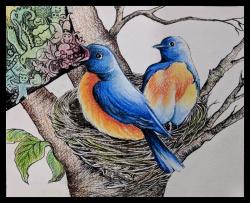
Esa percepción errónea fundamental conduce a la generación de intenciones arraigadas en el deseo y la aversión. En el ejemplo que se acaba de dar, esas intenciones pueden llevar a coger unos binoculares para ver al pájaro con más claridad, o perseguir al pájaro, capturarlo, comprar otro pájaro para mantenerlo en una jaula o incluso matar y rellenar al pájaro para disfrutarlo en el futuro. ! La secuencia anterior de episodios conectados causalmente se amplía: " (yo) Lo vi (eso) y (yo) lo reconocí (eso), (yo) lo disfruté (eso), (yo) lo quería (eso) , (yo) lo perseguí (eso), (yo) lo obtuve (eso) y (yo) lo disfruté de nuevo. Entonces, por supuesto, inevitablemente," (yo) lo perdí (eso), y (yo) me entristecí ".
Inspirándose en la información almacenada sobre experiencias pasadas y narrativas anteriores, la mente que discrimina también procesa aún más la salida de la mente narradora, creando una historia personal para el Yo-ego y una descripción del mundo. En el futuro, las percepciones e interpretaciones basadas en estos complejos constructos desencadenarán el deseo, la aversión y las reacciones emocionales destinadas a proteger y mejorar aún más el bienestar del Yo-ego. La mente narradora luego integra esos pensamientos y emociones orientados hacia un@ mism@ en una historia completamente nueva. Y este proceso cíclico de reforzar el Yo-ego sigue y sigue.
En resumen, la mente narradora simplemente combina eventos conscientes separados de muchas sub-mentes diferentes en una historia, que proyecta hacia la consciencia. Pero nuestra autoconciencia, ese sentido intuitivo y continuo de ser un "yo" separado en relación con un mundo de objetos, proviene de cómo la mente que discrimina interpreta esas historias.
Preguntas semilla para la reflexión: ¿Cómo te relacionas con "yo" y "eso" como constructos útiles de ficción? ¿Puedes compartir una historia personal de un momento en que te diste cuenta de la creación del deseo y la aversión a partir de la percepción errónea de la mente que discrimina? ¿Qué te ayuda a romper el proceso cíclico de reforzar el Yo-ego?
Culadasa ha sido profesor de meditación durante décadas. El extracto de arriba es de su libro 'La mente iluminada'.
Culadasa has been a meditation teacher for decades. The excerpt above is from his book '
The Mind Illuminated'.
Seed Questions for Reflection
How do you relate to 'I' and 'it' as fictional useful constructs? Can you share a personal story of a time you became aware of the creation of desire and aversion from the misperception of the discriminating mind? What helps you break the cyclical process of reinforcing the ego-Self?


