Three Qualities Of Holiness

Image of the Week
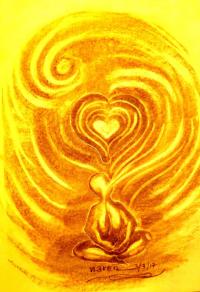
Hand-drawn art by Rupali Bhuva
Image of the Week
Trei calități ale Sfințeniei
— de Anthony De Mello

Adevărata fericire este neatinsă. Ești fericit fără nici un motiv. Și fericirea adevărată nu poate fi experimentată. Nu este în sfera conștiinței. La fel este și cu Sfințenia.

Sfințenia este conștiința dezinteresată. În momentul în care sunteți conștienți de Sfințenia voastră, aceasta devine amară și devine auto-neprihănire. O faptă bună nu este niciodată atât de bună ca atunci când nu ești conștient că este bună — ești atât de îndrăgostit de faptă încât o faci inconștient de bunătatea și virtutea ta. Mâna ta stângă nu are idee că mâna ta dreaptă face ceva bun sau vrednic de laudă. Pur și simplu o faci pentru că pare că este natural, spontan de făcut. Dacă este o adevărată virtute, s-ar simți atât de naturală încât nu ți-ar fi de gând să te gândești la ea ca la o virtute.

În al doilea rând, Sfințenia nu cere nici un efort.

Efortul poate schimba comportamentul, nu te poate schimba pe tine. Gândiți-vă la acest lucru: Efortul poate pune alimente în gură, nu poate produce apetit; te poate ține în pat, nu poate produce somn; aceasta vă poate face să dezvăluiți un alt secret, dar nu poate produce încredere; te poate forța să faci un compliment, nu poate produce o admirație autentică.

Dragostea, libertatea și fericirea nu sunt lucruri pe care le poți cultiva și produce. Nici măcar nu știți ce sunt. Tot ce puteți face este să observați contrariile lor și, prin observația voastră, să faceți ca aceste contradicții să moară. Înțelegeți-vă mândria și ea va diminua — ce va rezulta va fi umilința. Înțelegeți-vă nefericirea și ea va dispare — ce rezultă este starea de fericire. Înțelegeți-vă fricile și se vor topi — starea rezultantă este dragostea. Înțelegeți-vă atașamentele voastre și vor dispărea — consecința este libertatea.

În al treilea rând, Sfințenia nu poate fi dorită.

Dacă dorești fericirea, vei fi nerăbdător până să n-o atingi. Veți fi constant în stare de nemulțumire; și nemulțumirea și anxietatea ucid tocmai fericirea pe care ați propus să o câștigați. Când îți dorești Sfințenia pentru tine, hrănești tocmai lăcomia și ambiția pe care te fac atât de egoist, de zadarnic și de nesfânt.

Există două surse de schimbare în tine. Una este viclenia ego-ului vostru, care vă împinge să faceți eforturi pentru a deveni altceva decât ceea ce sunteți meniți astfel încât să vă poată sprijini, în așa fel încât să se poată glorifica. Celălaltă este înțelepciunea Naturii. Datorită acestei înțelepciuni deveniți conștienți, o înțelegeți. Asta e tot ce faci, lăsând schimbarea — tipul, modul, viteza, timpul schimbării — la Realitate și la Natură. Modificările care urmează nu sunt rezultatul planurilor și eforturilor voastre, ci produsul Naturii, care vă răstoarnă planurile și voința, fără a lăsa astfel loc pentru un simț al meritului sau a realizării sau chiar a unei conștiințe din partea mâinii stângi la ceea ce Realitatea face prin intermediul dreptei.

Semnificația întrebărilor pentru reflecție: Cum te referi la ideea că Sfințenia sau virtutea sunt conștiința de sine? Poți împărtăși o experiență despre un moment în care ai observat în tine opusul unei virtuți? Ce te ajută să treci de viclenia ego-ului tău și spre înțelepciunea Naturii?

Anthony De Mello era preot Iezuit. Extrasul de mai sus este din cartea sa "Calea spre Iubire".
Seed Questions for Reflection

How do you relate to the notion that holiness or virtue is unself-consciousness? Can you share an experience of a time that you observed the opposite of a virtue in you? What helps you go past the cunningness of your ego and toward the wisdom of nature?

Moved by this reading? Join a live Awakin Circle to discuss in community.
Join this week
More ways to connect

Add Your Reflection

6 Past Reflections
QU
Sep 17, 2019
I do believe that we are created perfect, because only perfection exists. I believe in the seen and the in-seen world, and that we live a physical (which is seen) and a spiritual (which is unseen) life.

When we are born born we are born perfect, but as we grow up we learn the culture we are born into; culture is riddled with lies that we live by. But the newborn does not have the words or understanding or culture until it is taught to him/her.

The lies which we live live by make all us unholy. My understanding is then that we have the power of choice. We can choose to live with a positive outlook or a negative one. We can chose to be happy or sad, we can choose to be holy or unholy.

I also understand that we cannot live by creeds, by any religion, or even anything taught to us; what we can discover with words is an idea(s) we can 'play' with as we organize and create our life.
QT
Mar 13, 2019
(Seed questions for reflection:) How do you relate to the notion that holiness or virtue is unself-consciousness? My understanding is that we are spiritual beings having a physical existence. We were created good from the beginning, collectively as well as individually. We are [created] perfect. Whole. And with everything we need to live our lives with success. I don't understandit all but I have learned that after we are born we begin a process of domestication by our parents, extended family and. Society at large. Words and symbols are used to convey messages others in the world want us to know and understand, and we take these ideas and live by them. But who we are and what we believe we are are two different things. Who we really are cannot be described with words. Words, symbols and ideas they share with us may help by giving us ideas and if we open up our own imagination, and let ourselves become spiritual as well as physical, we live more completely. Can you share an exp... View full comment
JO
Jo Mar 15, 2019
Everyday, I have responsibilities. They are “jobs” I have as a faithful daughter, daughter in law, nana, wife ... etc.. In these roles, I have to serve (selfishly, sometimes, more because I have to and less because I want to)! Over time, I have found that inliving by “a pattern” Someone (God) else has planned for me ... though restricting ... is what I absolutely need!
If Jesus wasn’t given the freedomto create His own pattern (apart from His Father’s plan), why would I be given it!?!
What helps me to live truth, is to know The Truth ...
DD
Mar 12, 2019
First, happiness isn't caused in a linear cause and effect way. Happiness is a byproduct of a way of being that is unselfconscious right action. Unselfconscious right action is action done because it is right, not for acclaim, not for secondary gain, but because it is right. When engaged in right action I am not self conscious, I am one with myself, I am whole. When I am whole, I am holy. Right action is its own reward, and the reward is happiness -- a reward that is enjoyed, not sought. Second, holiness is effortless in the sense that I am holy by nature, but that gets lost very early in life and then it takes effort to regain and maintain, which we do for moments at a time. Holiness, like happiness, is the byproduct of living unselfconscious right action which takes effort that feels effortless because it is coming from being whole and the effort flows smoothly. Third, holiness can be desired, it can't be directly created or controlled. It's a byproduct or outcome. My act... View full comment
EH
Mar 12, 2019
After expressing the thanks and respect these well intentioned words and their author deserve, may I be frank? My response is summarized by the aphorism: "Not for lack of flowery words is the world plunged into suffering." These are flowery words that may inspire the surface minds of readers, but such inspiration is a mood that quickly passes. I read a lot of such words and wonder why so many believe in the power of flowery words to end our suffering, bring us closer to the state of Yoga/Union, etc.? If the goal is this state of mind (Yoga, Enlightenment, Divine Union, etc.), why not say whatever needs to be said to inspire the reader to take the most direct path (or, for those who believe there is no "most direct path," ANY well-established and proven path)? Flowery words are not any of these paths. They are, at best, "inspiration with no clear guidance" and, at worst, "entertainment" (as in "further distraction") for those who are sti... View full comment
JP
Mar 9, 2019
True Happiness, Love, Goodness, Freedom, Humility, Reality and Holiness are our inherent, inborn and innate qualities or virtues. These virtues are uncaused. They are natural, effortless and spontaneous. In that sense holiness is unself-consciousness. To put it differently, holiness or wholeness is not bound by our limited lower state of consciousness. It is universal or cosmic consciousness beyond time, space and causality. It is Transcendental state of consciousness, pure or non-dualistic state of consciousness. There are many examples I can cite when I have observedthe opposite of virtue in me. My attachment to my own possessions such as mentally holding on to my precious books or numerous awards I have received robs me of my innate virtue. Non-judgemental existential awareness of my attachments frees me from the cunningnessof my ego.The ego plays mine vs your game and when am not awareof it, I get caught up in this game and I turn away from my natural innate wisdom. Namaste! Jagd... View full comment