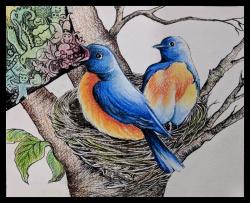
We Actually Never Experience 'It'

Image of the Week
Hand-drawn art by Rupali Bhuva
Image of the Week
हम वास्तव में कभी भीवह” (it) का अनुभव नहीं करते| द्वारा कुलादासा

हमारे निरंतर वर्णित मन ( narrating mind) का “मैं ( I) “, इस चीज़ से ज्यादा कुछ भी नहीं है, कि वो एक काल्पनिक, पर आसानी से इस्तेमाल किये जाने वाला शब्द है, जो हमारे मन में घटित हो रहे , सारे विभिन्न चेतन अनुभवों, को रचने में इस्तेमाल होता है| हमारी अस्मिता की धारणा , सिर्फ निरंतर वर्णित मन का “मैं “ है , वो गुरुतत्व का मध्य, जो सभी कहानियों को जोड़ता है | इसी तरह “वह “(it) भी एक निरंतर वर्णित मन का एक और काल्पनिक शब्द है, एक आसान काल्पनिक कहानी, जो सिर्फ इसलिए मढ़ी गई है कि कहानी के सारे पहलूओं को जोड़ा जा सके| सच्चाई तो यह है कि हमें कभी भी किसी अस्तित्व का अनुभव नहीं होता जो “वह ” से मेल खाता हो| जो अनुभव होता ही भी है, वो छवि, धारणा, सुख दुःख विषयक एहसास और अन्य कोई भी भावनाएं हैं, जो हमारी चेतना में उभर रही होती हैं|

निरंतर वर्णित मन “ मैं – वह” , “स्वयं -अन्य” शब्दों का इस्तेमाल , हमारे अवचेतन मन के अन्य भागों से आने वाली जानकारी को , एक अर्थपूर्ण तरीके से संगठित के लिए करता है| पर हमारा विवेकी मन “मैं” और “वह “ को वास्तविक अस्तित्व वाले मानता है, और “स्वयं व अन्य “ की धारणा को और मजबूत करता है ताकि वो असली और महत्वपूर्ण लगें| अतः निरंतर वर्णित मन का काल्पनिक” मैं “, हमारे विवेकी मन का अहम् , अस्मिता बन जाता है और “वह “ सुख दुःख विषयक एहसास और हमारी उठ रही भावनाओं का कारण बन जाता है|

यह मुख्य भ्रान्ति , हमें उस और ले जाती है जहाँ राग और द्वेष रंजित लक्ष्य, उभर रहे होते हैं| और अगर ऊपर वर्णित का उदाहरण लें तो यह माने कि पहमे तो हम एक चिड़िया को अच्छे से देखने के लिए दूर बीन का इस्तेमाल करेंगे, फिर ऊस चिड़िया के पीछे जायेंगे, फिर उस पर कब्ज़ा करेंगे, या एक अन्य चिड़िया खरीद कर उसे पिंजरे में कैद करेंगे, यहाँ तक की उस चिड़िया को मार कर उसमे भूसा भर देंगे ताकि हम उसका आने वाले समय में भी आनंद ले सकें| उपरोक्त, कारण पूर्वक प्रकरण, कुछ इस प्रकार आगे बढ़ता है “ मैंने देखा, मैंने पहचाना , मुझे अच्छा लगा, मैंने उसे चाहा,मैं उसके पीछे गया, मैंने उसे पाया और मैंने उसका आनदं लिया “ , और फिर अनिवार्य रूप से जैसा होता है, “मैं उससे बिछुड़ा , और मुझे अत्यंत दुख हुआ|”

पूर्व के संग्रहित अनुभवों की जानकारी एवं पूर्व की कहानियों से लेते हुए, हमारा विवेकी मन , हमारे निरंतर वर्णित मन की कहानियों को ढालता है, और हमारी अस्मिता , अहम् के लिए एक निजी इतिहास , एक विश्व का उदाहरण तैयार करता है| भविष्य में, धारणाएं, एवं विवेचनाएँ , जो इन्हीं गंभीर शब्दों से जुडी हैं, राग , द्वेष और अन्य भावनात्मक प्रतिक्रियाएं को पैदा करेंगी, जो कहने को इसी अहम्, अस्मिता की रक्षा एवं उसके और बढ़ावे के लिए होंगीं| फिर निरंतर वर्णित मन उन स्व अभिन्यस्त ( self oriented) विचारों और भावनाओं को एक नई कहानी में रच देता है| और इसी तरह अहम् अस्मिता को ज्यादा व्याप्त करने का चक्र चलता रहता है|

संक्षेप में, निरंतर वर्णित मन सिर्फ सभी विभिन्न चेतन घटनाओं को , जो उसने विभिन्न अवचेतन मन से ली हैं, मिला कर , हमारी चेतना में वापस व्यक्त करता है| परन्तु हमारा आत्मबोध , वो चलित अंतर्मन , जो दुनिया दारी के विषयों से अलग , अपने आप में , एक अलग अस्तित्व रखता है : आत्मबोध उस बात पे निर्भर करता है कि हमारा विवेकी मन उन कहानियों को कैसे विवेचन करता है|

मनन के लिए बीज प्रश्न : आप “ मैं :और “वह “ के काल्पनिक परन्तु आवश्यक शब्द होने से, कैसा नाता रखते हैं? क्या आप अपनी एक व्यक्तिगत कहानी साझा कर सकते हैं, जब आप अपने विवेकी मन की ,गलत धारणाओं के द्वारा उत्पन्न राग एवं द्वेष , के प्रति जागरूक हुए हों? आपको अपने अहम्, अस्मिता के घुमावदार चक्र से बाहर निकलने में किस चीज़ से सहायता मिलती है?
Seed Questions for Reflection

How do you relate to 'I' and 'it' as fictional useful constructs? Can you share a personal story of a time you became aware of the creation of desire and aversion from the misperception of the discriminating mind? What helps you break the cyclical process of reinforcing the ego-Self?

Moved by this reading? Join a live Awakin Circle to discuss in community.
Join this week
More ways to connect

Add Your Reflection

8 Past Reflections
GU
Sep 3, 2021
One experience of breaking one little construct of the mind was, of late, for me (by the way, that 'me' was convenient for putting in this sentence) in taking cold water baths....It's just a sensation. The belief earlier was that it's a discomfort...
Now I ( another convenient little letter this 'I') am observing a tendency to subtly boast about this discovery...
Thanks for this article which has the potential to weaken the constructed self provided the seeing of the dynamics sharpens
NE
Neha
Sep 1, 2021
Mind and it's parts - thinking mind, discriminating mind, subconscious mind, intuitive mind.
I is used as a language, reference point - me as a body, thoughts, feelings. Understanding real I. I am truth, consciousness, bliss.
PA
Aug 31, 2021
And thus, our true fullness in humanity is not realized until the ego self dies, or to put it in another sense, until we experience emptiness, nothingness. Mystics of perennial tradition and various religions have known this and tried to express it for others, but each must experience it on their own.

}:- a.m. anonemoose monk
D
Aug 31, 2021
It seems I'm not allowed to add a comment linking to Caladusa's sexual misconduct charge. Look it up. Wisdom is wisdom, but careful who you hold up.
D
Aug 31, 2021
Also, as confusing as this may sound to some, it's quite a clear representation of what Krishnamurtidoesn't say.
TD
Tim Dalmau
Aug 31, 2021
I would comment if I could stop noticing all the deletions, generalizations and uses of universal quantifiers in this description. Unless this explained in better constructed use of the englash langiage then I honestly dont know what I would be responding to, either positively or negatively
DD
Aug 27, 2021
I agree with Culadasa. For me, the 'I' and 'it' are fictional useful constructs, that is, they are appearances (mirages) that help us get along in the world of apparent separations (a mirage) that we are conditioned into seeing. We human beings are in the fictional usefulworld of separate constructsthough not of it -- we are of oneness (or Oneness). At some point in middle life I became aware that my desires and aversions are from seeing things and persons as being separate from me, and becoming aware that what appears to be separate 'I' and 'them' are really part of one whole. Becoming aware that the ego-self is one more created separate construct makes the ego-self much less important to me and makes it much easier for me to break the cyclical process of protecting and reinforcing it. (Curiously I initially wrote cynical (instead of cyclical) process of reinforcing the ego-self which seems to fit my feeling about that cyclical process.)
JP
Aug 27, 2021
In all wisdom traditions that I know of, "Who am I" is the fundamentalquestion raised by spiritual seekers. There are two Selves: Ego-self and the Witnessing -self. The ego-self is a convenient construct to organize all the separate experiences occurring in the mind. I is necessary to relate to the ever-changing world. The challenge thatI face in my dailylife is not to be bound or attached to the world created by the mind. This passage authored by Culadasareminds me of thestory of Two Birds narrated in the ancient bookof wisdom Mandukya Upanishad:"Two birds, inseparable companions, perch on the same tree. One eats the fruit, the other looks on.The first bird is our individual self feeding the pleasures and pains of the deeds. The other is the universal self, silently witnessing all." To me spiritual growth is a life-long journey with a few ups and downs , pleasures and pains, successes and failures. When my vision is blocked by selfish desires I tumble and I hurt my... View full comment