Radical Honesty

Image of the Week
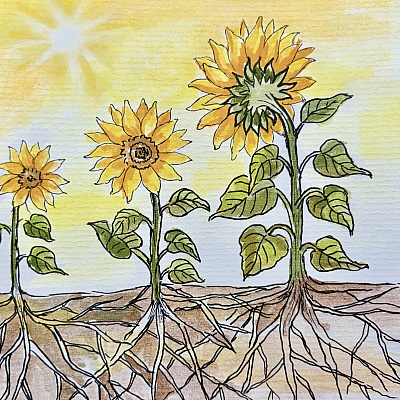
Hand-drawn art by Rupali Bhuva
Image of the Week
Radikale Ehrlichkeit
– von Yung Pueblo


Radikale Ehrlichkeit, eine Form der Authentizität, die in deinem Inneren beginnt, ist eine warmherzige Anerkennung, die du sanft auf dein bewusstes Leben anwendest. Bei dieser Sichtweise auf radikale Ehrlichkeit geht es nicht darum, jedem zu sagen, was du denkst. Vielmehr ist sie die Wurzel, aus der dein Selbstbewusstsein erwächst. Gedanken und Gefühle, die einst beiseitegeschoben oder ignoriert wurden, werden nun willkommen geheißen. Wo du einst den Drang verspürt hast, wegzulaufen, forderst du dich nun heraus, dich dem zu stellen, was auch immer da ist. Vor allem werden alle Lügen, die du dir früher selbst erzählt hast, hinterfragt, damit die Wahrheit ans Licht kommen kann. Der Schlüssel zur radikalen Ehrlichkeit liegt darin, dass es nicht um dich und andere Menschen geht, sondern darum, wie du in allen Situationen mit dir selbst umgehst, egal ob du allein bist oder mit anderen zusammen.

Bei radikaler Ehrlichkeit geht es nicht darum, sich selbst zu bestrafen oder sich selbst hart zu beurteilen. Vielmehr geht es darum, ruhig und beständig mit deiner Wahrheit in Kontakt zu sein. Dieses Gleichgewicht zu üben, ist entscheidend. Am Anfang mag es schwerfallen, mit radikaler Ehrlichkeit umzugehen, aber es ist wirklich ein langfristiges Projekt. Wenn du großartige Ergebnisse sehen willst, musst du dich von ganzem Herzen auf den Prozess einlassen, besonders wenn es schwierig wird, damit du der Versuchung widerstehen kannst, in unbewusst motiviertes Verhalten zurückzufallen.

Wenn du weiterhin den Weg der Lügen beschreitest, werden die Angst und ihre beiden Haupterscheinungsformen – Unruhe und Wut – weiterwachsen. Zunächst fürchtest du die Wahrheit, dann lügst du, um deine Angst loszuwerden, und gerätst dabei ungewollt in einen Teufelskreis, in dem du deine Angst tatsächlich weiter stärkst, denn jede Lüge schürt weitere Unruhe. Der einzige Weg, dem lodernden Feuer der Angst ein Ende zu setzen, besteht darin, es gründlich mit der Wahrheit zu löschen. Unehrlichkeit ist die Angst vor der Wahrheit.

Unehrlichkeit dir selbst gegenüber schafft Distanz. Je mehr Lügen du im Laufe der Zeit aufbaust, desto fremder wirst du dir selbst. Wenn du deine eigene Wahrheit nicht akzeptieren kannst, bewegst du dich in die entgegengesetzte Richtung der Selbsterkenntnis. Wenn Lügen deinen Geist durchdringen, wird das Leben undurchsichtig und die richtigen Handlungen, die du unternehmen musst, um deine innere Anspannung zu lindern, lassen sich nur schwer entschlüsseln. Die Lügen, die du dir selbst erzählst, werden sich auch in einem Mangel an Tiefe in deinen Beziehungen manifestieren. Eine tiefe Verbindung zu einem anderen Menschen ist nicht möglich, wenn du tief von dir selbst getrennt bist.

Wenn du radikale Ehrlichkeit praktizierst, verringert sich diese Distanz und dein Geist beginnt, ruhiger zu werden. Dir selbst die Wahrheit zu sagen, ist der Beginn innerer Harmonie. Diese Harmonie macht deine Beziehungen sofort lebendiger. Indem du deine Vergangenheit untersuchst und die Wahrheit aufdeckst, die du zuvor nicht anerkennen wolltest, stärkst du tatsächlich die Kraft deiner Ehrlichkeit.

Dieses höhere Maß an Präsenz lässt dein Selbstbewusstsein aufblühen. Schließlich reift deine radikale Ehrlichkeit so weit, dass sie unverzichtbar wird – du trägst sie überallhin mit dir, und in jeder Situation wird sie zu einem Gewinn, der deine Entscheidungen prägt.

Wo du dir früher eingeredet hast, dass alles in Ordnung sei, gibst du dir nun zu, dass tatsächlich Unruhe oder Schmerz vorhanden waren. Wo du dich früher dazu gezwungen hast, zu glauben, dass dir etwas gefalle, gibst du zu, dass du es doch als unangenehm empfunden hast. Wo du früher alten Schmerz geleugnet hast, gibst du zu, dass es in dir eine Wunde gibt, die gepflegt werden muss.

Kernfragen zur Reflexion: Wie stehst du zu der Vorstellung, dass radikale Ehrlichkeit eine Praxis ist, in „ständigem Kontakt mit deiner Wahrheit“ zu bleiben, anstatt jedem zu erzählen, was du denkst? Kannst du eine persönliche Geschichte erzählen, in der du aufgehört hast, vor etwas Schwierigem in dir selbst davonzulaufen, und dich stattdessen entschieden hast, dich dem zu stellen, und was sich dadurch verändert hat? Was hilft dir dabei, zwischen dem, was du dir selbst erzählst, und der darunter liegenden Wahrheit zu unterscheiden?

Yung Pueblo ist Nr. 1 der New York Times-Bestsellerliste und wurde zu einem der „Time100 Creators of 2025“ gekürt. In seinen Texten beschäftigt er sich vor allem mit der Kraft der Selbstheilung, dem Aufbau gesunder Beziehungen und der Weisheit, die entsteht, wenn wir uns ernsthaft damit auseinandersetzen, uns selbst besser kennenzulernen. Der obige Auszug stammt aus seinem Buch „Lighter“.

Seed Questions for Reflection

How do you relate to the notion that radical honesty is a practice of staying in "constant contact with your truth" as opposed to telling everyone what you think? Can you share a personal story of a time when you stopped running from something difficult within yourself and instead chose to face it, and what shifted when you did? What helps you distinguish between what you tell yourself and the truth underneath?

Moved by this reading? Join a live Awakin Circle to discuss in community.
Join this week
More ways to connect

Add Your Reflection

18 Past Reflections
LI
Linh
Jun 15, 2026
Sometimes lying helps me avoid difficult situations. For example, when someone asks for my opinion, I may be too lazy or uncomfortable to explain what I really think, so I just agree with them. Then they respond as if they understand me and think we are the same kind of person.

To be honest, lying has helped me save a lot of energy in those situations. However, now I want to practice honesty—with myself and with others—because I feel that after each lie, I move a little farther away from my true self and from my friends.

But I wonder: how can I practice being more honest?
EN
Jun 13, 2026
My favorite line was about not to yourself … that when you lie to yourself … you become a stranger to yourself … !!!

I witness moments of re-understanding ideas I have about myself so as to have radical honesty with myself … this is the root of life for me to grow with personally and with all my relationships .

I find myself seeking relationships mainly with those who are radically honest with themselves too. It’s refreshing and collaborative as we seek areas of interest to pursue .
AS
May 28, 2026
Honesty is the best policy and for me Honesty is medicine for our mind. People fear to be honest sometimes cause they are worried about what others will think of them
GD
May 27, 2026
सत्य यह है छुपाने से खुद को तकलीफ होती है बाहर एक अंदर दूसरा मन खुद को डंख देता है वहीं चहरे पे देखता है
GD
May 27, 2026
सत्य यह है छुपाने से खुद को तकलीफ होती है बाहर एक अंदर दूसरा मन खुद को डंख देता है वहीं चहरे पे देखता है
AJ
May 26, 2026
New words for a timeless pursuit of truth. This is a decision that anyone can make and many people have followed this path to integrity; for centuries. It begins with a recognition of our own suffering and the ways we are responsible for causing it. Intend to pay attention. Find a form of mindfulness that works for you. Watch how your thoughts and behavior effect you and others. Endeavor to choose wisely and act skillfully. Just begin by intending to make a kinder life for yourself and others.
NK
May 26, 2026
This reading beautifully captures a shift I have experienced over the last decade of my own meditation practice, where I simply called it "self-awareness." Looking back, I realize how often I used my external roles—whether as a parent, a CEO, or simply an elder with more experience—to justify outbursts of anger and defensiveness. I hid behind the "responsibility to correct others," rationalizing actions that, in truth, had no valid cause or right timing. More often than not, the people on the receiving end were left completely defenseless against this assumed authority. Deep reflection reveals that none of those justifications hold weight. When we lead with love instead of letting reactive emotions take over, unnecessary friction dissolves and true perspective emerges. My hope is that this practice of radical honesty becomes deeply rooted in our subconscious minds. It is the only way to prevent lasting damage to our relationships and save ourselves from the heavy price of reg... View full comment
AP
May 26, 2026
Having connected truthfully with own self, all radical stuff gets side-lined.
JA
May 26, 2026
"A deep connection with another being is not possible if you are deeply disconnected from yourself."
How can I be disconnected fom myself and at the same time be radical honest with myself?
SH
Shaktima May 26, 2026
Being disconnected from the self is an outcome of not being radically honest with the self. Radical honesty = connection
JA
May 26, 2026
Anger can also come from: frustration; fatigue; physical or emotional pain; feeling disrespected; accumulated stress.
And anxiety can involve: biological predisposition; excessive stimuli; repetitive thoughts; traumatic experiences; social and emotional pressure.
JP
May 22, 2026
According to my understanding there are two faces of honesty. One honesty is with myself and the other is honesty with others. If I am not honest with myself how can I be honest with others? I find it is relatively easy to be honest with myself. It is relativly difficult for me to be honest with others. There is a fear lurking behind not telling the radical truth. In relationships the fear is about hurting people close to me will abondon me. I go through internal and external fear cycles which will drain my enrgy. When I was a child it was relatively easy for me to tell the truth. As I was going through adolesence it became realtively more difficult for me to behave truthfully. I was going through fear cycles. The fear was of abondoment. As I was growing up I came to realize that the people who love me unconditionally will not abondon me. They will be with me, they will compassionately empathize with me. Slowly and gradually I came to realize that true love liberates me from my self-... View full comment
SH
Shaktima May 26, 2026
"There is a fear lurking behind not telling the radical truth."

I hear this, friens. This is where we can to be radically honest with ourselves. We learn to adapt to close our boundaries to those who are the stimulus to our childhood wounds. But radical honesty is sitting with and taking ownership of that fear. Beyond admitting that we have that fear, being honest why we let that fear live inside us. Is it part of our identity? Does it keep us connected to the ones who hurt us in hopes that one day they will apologize on some physical or metaphysical level. Honesty with the self has many layers.
DD
May 22, 2026
For me there are two different ways to think about radical honesty. First is to tell the complete truth about facts of my life rather than fabricating stories about myself. Second is to be completely honest about what I am experiencing which is my truth. Radical honesty is present when it is present. I can be radically honest at one time or with one person and not at another time or with another person. Early in life I was guarded, not saying what I was experiencing, not saying my truth, which as Yung Pueblo wrote makes deep connection with another impossible. To have deep connection, I needed to become open and honest as to what I was experiencing, which was difficult for me to do. Now it is easy for me to distinguish between what is my truth and what is not. The satisfaction I experience in being honest about my truth helps me do it. To lose one's truth either by ignoring it or denying it is to lose oneself and lost close relationship.
SH
Shaktima May 26, 2026
"Now it is easy for me to distinguish between what is my truth and what is not. "

Love this! Is it a feeling or a sensation? Are you open to share more?
DD
David Doane May 29, 2026
I think you'd like me to share more about the experience of my truth. For me there is feeling, there is sensation, there is thinking, and there is what I am experiencing. I think we mostly relate from thinking, which makes for the shallowest relating. I think deep relating involves being aware of and relating as much of self as we can. To relate deeply with another, I find it is important that I notice what I am experiencing in the moment and relate what I am experiencing. What I am experiencing may be sadness or interest or disagreement or boredom or heard or talked down to or whatever, and I believe sharing what I am experiencing makes for deep relating.
ST
May 21, 2026
Hmmmm
I am having a challenge relating to most of this article. It seems obvious to me that I need to pay attention to my thoughts and emotions and sensory experience before responding to others or situations and that self awareness will prevent me from being incongruous which I guess is what the author is referring to as being untruthful.
I occasionally react in an out of balance way when something triggers some deeper part of my shadow
That I have not dug down to perhaps due to some fear of w
The work it would take to really change long held patterns.
SH
Shaktima May 26, 2026
Here's a place to start... Think of a time that someone said something to you that offended you or hurt you and you just kept quiet or shut down. Why didn't you speak up? Ask "why" to that next response and go atleast 5 "why's" deep or until you find yourself super angry and annoyed with the exercise. Your truth begins there.