Featured Speaker
Cortland Dahl
From Himalayan Caves To Brain Labs: Lessons in Human Flourishing
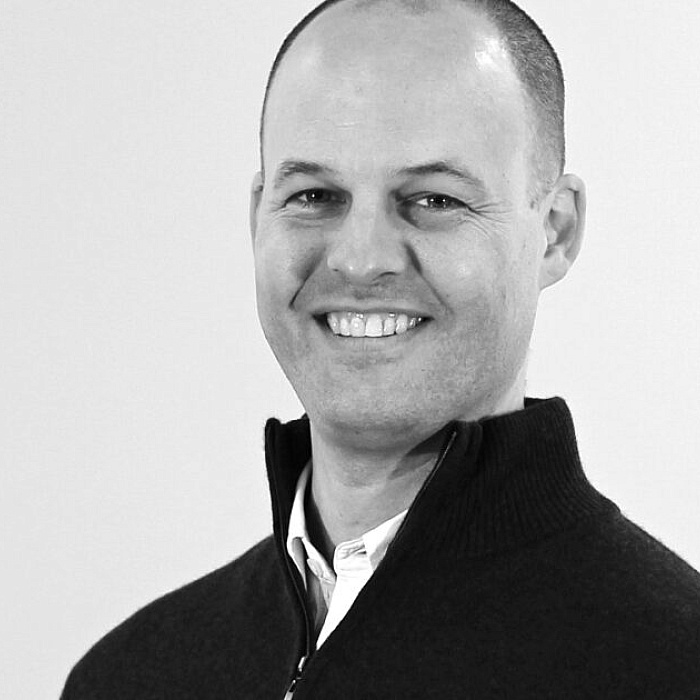
As a teenager, Cortland Dahl once fainted on stage from the sheer force of his social anxiety. That debilitating phobia would become the unlikely doorway to a life spent in Himalayan retreat caves, neuroscience laboratories, and meditation halls on six continents. Today he is a research scientist, meditation teacher, and co-creator of the Healthy Minds Program -- a free wellbeing app downloaded over a million times across 140 countries -- bridging ancient contemplative wisdom and modern brain science.
When Cortland first tried meditation in college, he wasn't seeking wisdom -- he was just trying to get through the day. "It wasn't overnight," he has shared, "but the world felt like a completely different place." He has called that early struggle "a blessing in disguise" -- one that carried him to Naropa University for a master's in Buddhist Studies, then to eight years living in Tibetan refugee settlements in Nepal and India.
Under the guidance of three revered lamas -- Chatral Rinpoche, Khenpo Sherab Sangpo, and Yongey Mingyur Rinpoche -- he spent long periods in solitary retreat in the Himalayan foothills near Kathmandu. He became fluent in Tibetan, translated twelve volumes of classical meditation manuals, and co-founded Tergar International with Mingyur Rinpoche -- a global meditation community now spanning six continents.
A chance encounter with neuroscientist Richard Davidson at a 2010 Mind & Life conference in Zurich opened a new chapter. Dahl moved to Madison, Wisconsin and in 2016 became the first person awarded a PhD in Mind, Brain, and Contemplative Science from the University of Wisconsin-Madison. His doctoral research proposed four trainable pillars of wellbeing -- awareness, connection, insight, and purpose -- published in the Proceedings of the National Academy of Sciences and now built into the free Healthy Minds Program app.
That partnership with Davidson continues to deepen. Their book Born to Flourish, published in March 2026, distills decades of shared research into everyday practice. Through Dharma Lab, their Substack and podcast, they are building a growing community of thousands exploring the meeting ground of neuroscience and contemplative wisdom.
"Pain is unavoidable -- everyone experiences it," Dahl has reflected. "But suffering is something we add on top." In a recent essay on returning to his native Minneapolis amid political turmoil, he recalled an elderly Tibetan monk who had been tortured yet practiced compassion daily for his guards. "Hatred and fear will always be louder," Dahl wrote. "Wisdom and compassion will always be more subtle."
Join Menka Sanghvi and Mark Foley, in conversation with this bridge-builder between ancient wisdom and modern science who keeps asking the question his own anxiety first posed decades ago: what else can the mind learn to do?
Five Questions with Cortland Dahl
What Makes You Come Alive?
Nothing gives me more energy than sharing some of the ideas and practices that have transformed my own life with others and seeing their perspective change before my eyes.
Pivotal Turning Point in Your Life?
Reading my first book on meditation...it was like I had stumbled upon a user's manual for the human mind that someone forgot to give me at birth.
An Act of Kindness You'll Never Forget?
The first time I met the Dalai Lama, he held my hand and spoke to me for 10 minutes about a specific form of meditation that I was exploring in my practice, then asked his attendant to go back to his personal library to get me his favorite book on the topic, which he then gave me. My mind was blown. He is a living embodiment of pure compassion.
One Thing On Your Bucket List?
To reach a point where there's nothing on my bucket list except what I'm experiencing right now.
One-Line Message for the World?
You already have, and already are, everything you have ever sought, and ever will.
Related Calls

Can AI Help Us Be More Human?
Nov 29, 2025
Dr. Richard J. Davidson, Srinija Srinivasan & Nipun Mehta
Gary Zukav
Oct 30, 2021
Universal Human
Jayesh Patel
Dec 24, 2011
Living Service, at the Gandhi Ashram