Call Nuggets
Danny Martin
Art of Dialogue
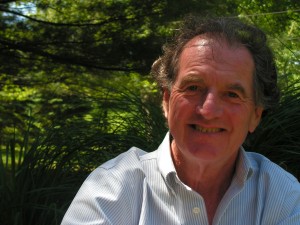
Dialog is enthralling when the other voice you hear has a lilting accent and a gift for humor as well a compelling personal story that inspires. Danny Martin joined us on Forest Calls to speak about the power of dialog to transform. Our moderator was Birju Pandya.
BP: At what point did you know your faith was something you wanted to deepen to the point of entering the priesthood?
DM: I grew up in Belfast [Northern Ireland. But we lived just on the outskirts. And when I was a little boy I used to go up into the mountains and lie in the heather. I got this deep sense of connection with the ground, the heather, the birds. I grew up Catholic, and I used to find the same experience as an altar boy serving in the early morning mass. They were the stirrings of an awareness of a mystery, a connectedness. A couple of uncles were fond of me and took to a Trappist monastery when I was 13. We arrived on a beautiful evening in May. I was so entranced! Everyone had gone to bed. There was a strange sense of peace. I stepped onto a balcony and looke
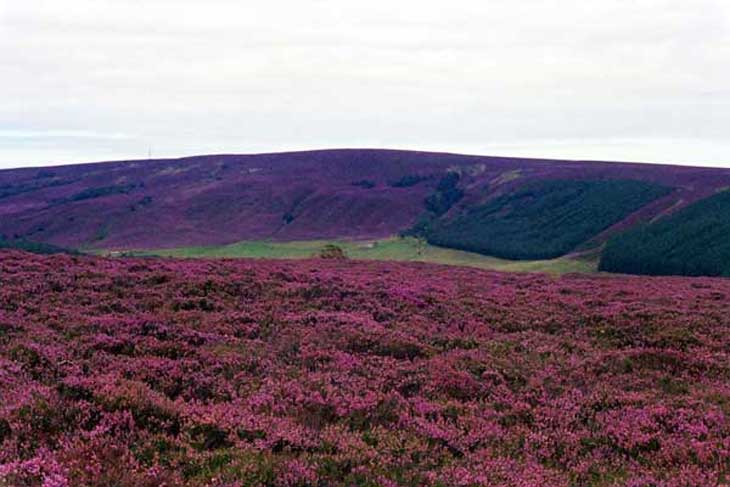 d across the fields at the setting sun. There a monk in black and white was standing under a sycamore tree. It was as if I was connected…like a thread of fire connected me to the monk, and the tree and the field and the sun and the river. And it was imprinted on my psyche and my soul. It was a combination of that and the earlier experience that led me to explore a deeper level of living.
BP: What challenges did you find in the priesthood and what led you out?
DM: I was not attracted to clerical work. Missionary work attracted me. It was at a time in the 60’s when the Catholic church was opening up—the Vatican Council was promising a different kind of church. Being a missionary at that time had less to do with proselytizing and more to do with mutual enhancement and enrichment, learning from each other. Liberation theology was unfolding, a sense of how can you help people be more human and freer from systems that oppress. I was a priest for 20 years. I spent 5 years in Africa. It was like a Camelot period, it was so alive with the possibilities I described. Then in 1978 there was a sea change. The church elected JP II. Soon after US elected Regan, UK elected Thatcher. That began the process of my own exit.
BP: This seems to have led you to ecology. How did that connection happen?
DM: Thomas Berry was a Catholic priest from North Carolina. He was a
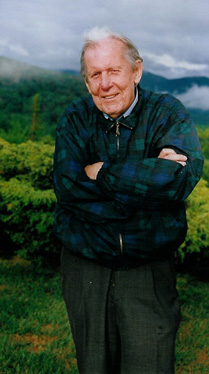 cultural historian who wrote on many religions. He was greatly impacted by the ecological challenges of the 1970s and I met him when wrote his first book, “Dream of the Earth,” about seeing the interconnectedness of things, the spirituality of ecology. As he said every cultural has its own story of origin—that’s what cosmology is. And with the advent of science in the western world God became irrelevant, and so that cosmology became increasingly dysfunctional. The great work of our time is to dialog and create a cross-cultural story. That sparked my interest in dialog.
BP: Could you share your role in writing the Earth Charter?
DM: Some of us were working with the UN in the early 90s, working on an environmental endeavor and hoping to bring religion in to help us. We developed thousands kits and resources to give out across religions to their leaders, to engage them and urge them to care for the earth.
We created the International Community for the Renewal of the Earth. With other religious speakers we developed a workshop based on interfaith conversations. We held them across the continents and from these conversations a beautiful little document emerged. We brought it to the Earth Summit in Brazil in 1992. The first item on the agenda was the Earth Charter. But they were not ready for it. It was demoted to a declaration that went nowhere. But we used whatever connections we had to bring together religions leaders including the Dalai Lama and had a wonderful celebration in downtown Rio. It was later folded into a larger process in The Hague with Gorbachev and Stephen Rockefeller.
BP: What does dialog mean as a process for you?
DM: Dialog comes from “dia” – through and “logo” – meaning. So how do we interact in a way that allows meaning to come through? It is an unfolding process we create together. Debate comes from the phrase “to beat down,” and you have only one winner. Discussion comes from “to cut.” It’s appropriate for analyzing, but when you’re dealing with something you don’t know, discussion will not be enough. There are three basic attitudes necessary to dialoging: openness, empathy, and equality. Learning how to listen to others and oneself is important too. Through dialog differences are brought together to be “held.” In that creative tension something is created.
BP: How does one develop those skills?
DM: It can happen spontaneously in spite of yourself. There is a deep self in all of us that is so connected that sometimes life will break in and create the conditions for that to happen. We can rise above ourselves. Life then is living us. But the skills need to be practiced. The mutual agreement is to try and listen to each other. That’s all. Then something will happen.
Rahul Brown: While the world then may not have been ready for the Earth Charter, what changes do you see in the last decade and do you see a connection between empathy and openness and its affect on our greatest challenge?
DM: Where I live we started Conversations for Action. We held meetings in the library. The conversations were fascinating! The town board took notice and we were asked to create an energy advisory panel. Out of that came a climate action plan. The town board integrated it into their legislative process as a criterion, and it won every award in the state. It is now a separate npo, standing on its own with summits and task forces. It’s local and it’s real. Lots of efforts like this will make a difference.
Caller: On a practical level you talked about ways to shift the conversation. What are some other tools you use to bring the collective to a consensus of any kind?
DM: Interfaith conversations tend to be diatribes. And I want to say, “I don’t really care! What do you think? How do you feel?” When I hear your story, I see you differently. They connect us in ways we’ve never known before. The level of empathy rises. It doesn’t matter what your positions are but what is going on for you! There are simple techniques for gathering simple agreements. Ask, “What do we think we hear ourselves saying? What do we have in common?” Vote to see where the consensus is. This helps to shift the conversation.
Jan Daddo
 na: To what extent is media facilitating or preventing meaningful dialog from taking place?
DM: Let’s look at the Boston bombing experience. There were different levels of meta conversation going on: the basic fear, the prejudices, what’s happening in society that produces this. And there were some doing a good job in media and some doing a bad job. It seems to me there is a dialogical role for media to explore assumptions and surface possibilities. Weekly newspapers are more likely to have a reasoned reflection on a topic because they have more time to research. Daily media is more like gossip.
RB: How can we support you and your work?
DM: I write a blog dannymartin.org. I’d love to continue the conversation. I’d love to know what’s going on in the world where you are and we can share with each other. This kind of conversation this morning of sharing experiences to access creativity, a truer self and a collective self would be great!
Want the full experience?
Listen to the complete conversation with Danny Martin.