Call Nuggets
BJ Miller
How Not to Waste a Good Existential Crisis
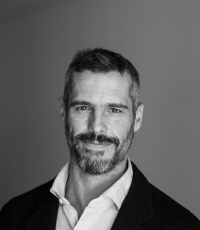 Last Saturday, we had the privilege of hosting Awakin Call with BJ Miller.
BJ Miller, MD, is a public figure and palliative care physician transforming the field of death and dying for the past twenty years. A triple amputee, Miller’s humanity invites others to examine their own suffering and to de-pathologize death. Executive Director at the Zen Hospice Project and assistant clinical professor of medicine at the University of California, San Francisco, Miller hopes to reduce unnecessary suffering and reframe our relationships to crises, both personal and global. Miller’s pivotal encounter with death came during college, when an excruciating incident while "horsing around" with friends caused him to lose both legs below the knee and half of one arm. Somehow, Miller never had a “Why me?” moment. Even moving through tremendous grief and shame, he resolved not to believe that his life was extra difficult, only uniquely difficult as all lives are.
Below are some of the nuggets from the call that stood out for me ...
On Suffering
BJ defines suffering as the gap between reality and our perception of what we wish reality to be. There exist two paths to narrow the gap–contemplation and action. He references the serenity prayer “grant me the serenity to accept the things I cannot change, courage to change the things I can, and the wisdom to know the difference.” That discernment is key to facing suffering. He also states, referring to his own experience from his injury, that “if you can’t change something, you have to learn how to love it.”
Jo raised the distinction between necessary vs. unnecessary suffering (sometimes distinguished as pain vs. suffering or first vs. second arrow). We must actively will to keep unnecessary suffering at bay and it is a life pursuit to learn how to do that.
The Practice of Approaching Suffering
How do we get there? Often it takes an existential crisis to shake us up and shake us down. These crises cause us to unravel—to come apart and allow us to distinguish between what is the irreducible, authentic self and what is the made-up, precarious self.
BJ explains that we must feel our way through this process, that there is no regimented or stepwise path. Rather, the path is often playful—one in which we recreate, change, move, and build new on top of this unraveling.
Showing up with Authentic Vulnerability
Jo reminds us of a quote from Rachel Naomi Remen: “Helping, fixing, and serving represent three different ways of seeing life. When you help, you see life as weak. When you fix, you see life as broken. When you serve, you see life as whole. Fixing and helping may be the work of the ego, and service the work of the soul.”
How do we move beyond simply helping/fixing towards serving? BJ highlights that vulnerability is such a key piece of this puzzle. He says, “my presentation has vulnerability baked in.” Because of his prosthetic limbs, BJ’s patients immediately know that he’s been in a hospital bed. It allows him to “sidle up to someone as a fellow lost human being.”
But we can all do this by doing our inner work. Rather than “trying to end around the pain,” we can let go of the outcome and direct our hope in the orientation of the unknown. If we keep trying to strategize through it, we make only futile attempts to commandeer our lives. BJ says that at first in the aftermath his injury “I needed to be lost for a while. I had no clue who I was. I felt like I was plopped into the wilderness again. Then you’re into curiosity and pain and wonderment... Now I’m just comfortable with being lost. It can be an adventure." The necessity of that unnecessary suffering shows our human feebleness. That feebleness arises from both things beyond and within our control. It also arises from the acknowledgement that we can’t be alive and not hurt others. We are going to hurt others. But we can find our way to saying “I’m so sorry.” And through that authentic vulnerability we find connection with those whom we serve.
Embracing Meaninglessness and Not-knowing
Humans can inject meaning into just about anything. In the words of Friedrich Nietzsche, “he who has a why to live for can bear almost any how.” But, BJ asks, “What happens if you can’t, if you just can’t muster the narrative?” One of the mistakes we make in caregiving, in palliative care, or in any service profession is to pressure people to perform some meaning-making ritual. This creates a weird pressure and unfairly implies that one can “fail” at meaning making, that one can “mess up” their quest for dying well.
Instead, BJ encourages us to embrace meaninglessness and mystery and not-knowing. That begs something more beautiful like faith.
Aesthetic and Proportionality
It’s important to remember that we don’t respond to the world; we respond to our perceived narrative of the world. BJ organizes this into two categories:
1. The Aesthetic, which pulls us back to the truth of our body and into the wonder of being alive—"the wild, wacky thing it is to have a body.” We often live as frontal-lobe heavy creatures stumbling around with our bodies in subservience to our thoughts. But we must acknowledge a different aesthetic. Our thoughts are there to serve our body, not the other way around. There is wisdom in tuning into this aesthetic.
2. Proportionality: We can zoom in and out; we have the ability to change our perspective. We are of utmost importance and our actions have immense consequence. We must step into and own this. A lot of us go around dramatically more insecure than we need to be. We need to expand into this life. Yet simultaneously we must settle into how ridiculously insignificant and small we are, to right-size ourselves before larger systems, before the vastness of the universe. We can find a fluid nature around our own proportions.
Nature as a place where we see both aesthetic and proportionality. And we must remember that we humans are nature. It’s in us and we in it!
Our Homework: the Integration of Inner and Outer Work
As we do this work of service and we do this work within ourselves, we notice a connection between the inner work of healing and the outer work of social justice. They are one in the same.
Often, we see a sacrificial approach to service-oriented careers, overemphasizing the outer work and denying ourselves the inner work. But if we don’t process what is within us, then we end up spraying our pain across the world. BJ says, “grief is a public health issue.” This is our homework. Doing our inner work is one of the kindest things we can do for somebody else. In fact, it’s a component of professionalism and how we show up. People can see through us if we have repressed something within; conversely, they can sense our authenticity when we’ve done the inner work.
BJ’s Vision for Palliative Care and Mettle Health
No one knows what the heck this thing called palliative care is. He hopes to redefine palliative care as a philosophy, not as a clinical discipline. To move away from pathologizing and instead to coach people on how to use their existing doctors. He hopes that Mettle will also address disparities in access to palliative care by reaching rural or underserved areas.
You can learn more and support their work here: Mettle Health
Lots of gratitude to all the behind-the-scenes volunteers that made this call happen!
Want the full experience?
Listen to the complete conversation with BJ Miller.