Call Nuggets
Aurora Sidney-Ando
Nurturing Art
San Miguel de Allende is a beautiful and vibrant artist town in Mexico, tucked away in a valley between two mountain ranges. Walking along its cobble stoned streets and past pink sandstone churches and purple Jacaranda trees is evocative of a fairytale. On our Global Awakin Call, Aurora Sidney-Ando recollected memories of her childhood in San Miguel, where she was immersed in a community of artists.
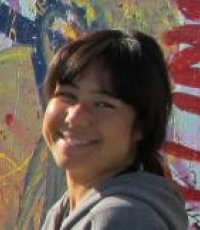 “I grew up with the belief that you could make it as an artist. Why wouldn't you be able to do what you love? Why wouldn't you be able to live on the beach and eat fresh coconuts and watch the sun set and watch gold blow away in the wind?”
Yet when Aurora grew up to become a professional artist, she didn’t live on a beach and eat fresh coconuts. Instead, she chose to study humanistic and transpersonal psychology and learn how to integrate this field with artistic expression in order to help young people process and heal from trauma. Through the sharing of her gift, Aurora is offering medicine for the soul.
Discovering the Canvas of Expression
She discovered at a young age the expressive power of art. As a shy kid in school, a book to hide behind accompanied Aurora everywhere she went. In the third grade, Aurora recollected a class presentation where she stood frozen and without words.
Painting, on the other hand, created an entirely different experience and medium of expression. From the moment she painted her first canvas these became her classroom presentations.
“In my own journey, I feel that it has made me a stronger person. There is power in being able to manipulate art materials and to exalt in my ability as a human being to take colors and shapes and put them together in ways that I can't always control as much as I would like. It makes me feel like a conduit for something bigger than myself.“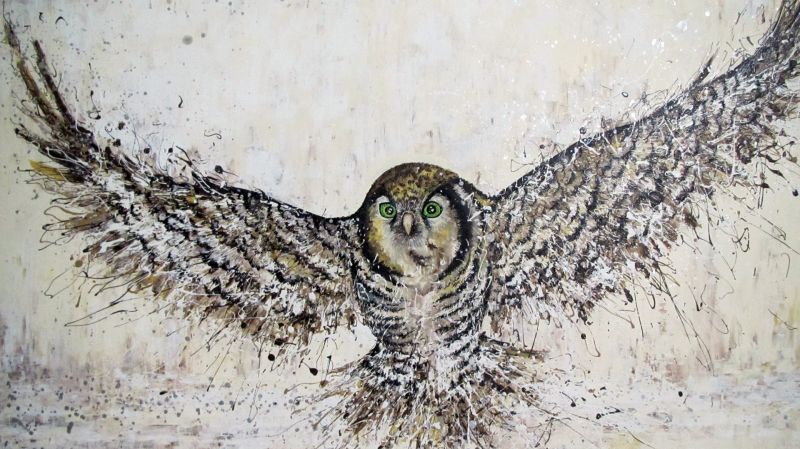
Aurora’s shyness, mixed with her discovery of the expressive power of art, may have planted the seeds for her current work. Her first job out of college involved the utilization of art to communicate with children in homeless shelters. She shared the story of a little girl who would say, "I love my mother and I want to be with her." Yet this little girl had been severely beaten by her mom and her drawings illustrated her mom with really angry teeth and eyes. Aurora explained that the girl was probably terrified of her mom and verbally saying anything against her felt like a betrayal that would cause her further harm.
In another story, Aurora described a six-year-old boy who had a homeless, alcoholic father that was absent from the boy’s life. Verbally the little boy would tell Aurora, "I don't miss my dad. I don't really care." But every single drawing that he made with Aurora was of him and his dad doing something together. Instead of asking the boy direct questions, Aurora began talking with the boy about the story he was telling through his drawings. The boy explained that it was he and his dad taking a road trip together or he and his dad playing catch. Aurora explained that it was as if he was wishing all these things could happen, but it probably felt scary and uncomfortable for him to actually say that.
“Art became an important tool that I utilized to give kids a different kind of language, a language without words.”
Humanistic and Transpersonal Psychology
These profound experiences are partly what influenced Aurora’s decision to study humanistic and transpersonal psychology at Saybrook University. She needed a lot more information and education to be able to manage all the emotion that came up from the intense trauma that these children were suffering from. She also felt that society was really broken in a lot of ways and she felt helpless to do anything about it. Aurora determined that psychology would give her the tools she needed for her work to be more effective.
Humanistic and transpersonal psychology is an evolving field that takes into consideration human emotions, consciousness, and things that aren’t quantifiable.
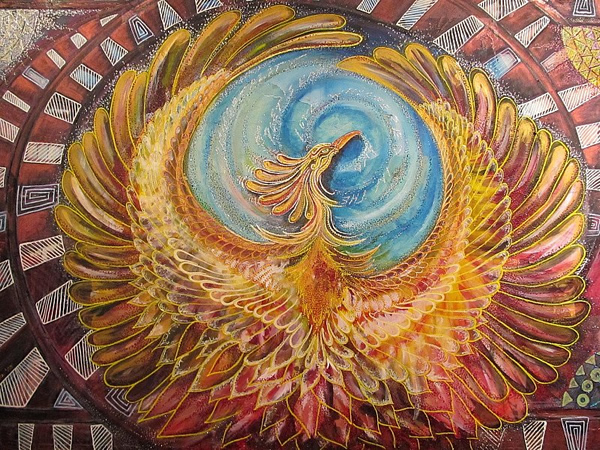 “At our core we are good and it is about the process of unfolding human beings to their highest potential and it is the belief that when we are in an atmosphere of acceptance and unconditional positive regard and empathy, then we can grow to be our best selves. We also transcend what it is to be a single individual and recognize our place in the larger whole; becoming bigger than just ourselves and recognizing that the whole is larger than the sum of all its parts and that we can be better through collaboration and working together.”
As part of Aurora’s Ph.D. research, she worked with teenage girls through paintings. Aurora explained that a lot of the paintings ended up dark. One of the girls explained that she had drawn a picture about her thoughts and that she was surprised because she thought her thoughts would be lighter than the darkness of the actual painting. Aurora explained that the fact that she was able to identify that and talk about it was grounding. She had an impression about what was going on inside her head but when she saw it on the canvass she was more curious about it. The way she talked about it indicated her realization that her thoughts can turn dark. So even though it seemed like a sad realization, it felt comforting for her to be able to show other people and to have it outside herself and for other people to validate it as well.
Another teen would put feathers all over an otherwise abstract painting. She said she used feathers because she had a mind like a feather, floating every which way and it was really hard for her to control her thoughts. But simply expressing that was comforting; just to acknowledge that this was the way her mind was in that moment.
The teens that Aurora worked with on a mural project had some incredible words of wisdom. One such teen expressed "Thoughts can be hard to catch and it is nice to have space in between to think about what I want to say. My picture is abstract because words can be difficult to put together when feelings get to be a lot. There are a lot of colors in my painting because I feel a lot; there are a lot of feelings inside of me and they can get all layered on top of each other. I use art to separate these feeling and to figure out what to do with them."
Art as a Tool for Social Change
Working with trauma inevitably led Aurora to experiment with its connection to larger social progress. She explained that large projects such as murals require group cohesion and give people one direction to work towards.
Murals can be an important form of social change because one group of people is working together, guided by a similar vision.
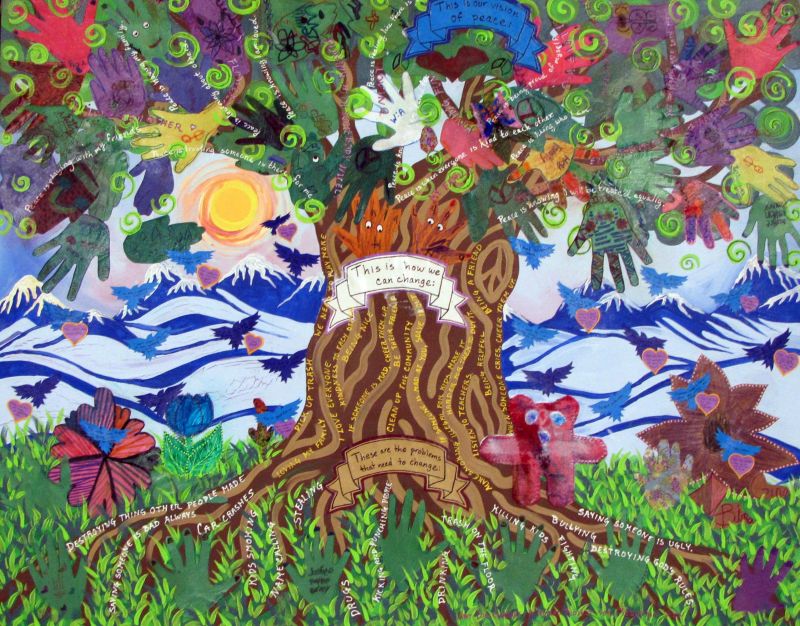 For example, with the "Tapestry of Life" program, Aurora worked with a group of teenagers and one in particular really stood out. For the purposes of this conversation, this young girl’s name was Anne. Ann was a young teen who identified herself as being socially awkward and afraid of being with other people and being in crowds. She had really long hair that she wore like a veil over her face and she said that she didn't like people and didn't want to be around them. Anne wanted to be a part of the mural because she said, "I can paint my words." She also said she wanted to create something beautiful for her community.
“I thought that was beautiful coming from a 15-year-old girl. The level of insight I got from the teens in this project, when I really listened, was incredible. It was a great learning experience for me to pay attention to young people because there are glimmers of knowledge in everybody and it just takes that attention and awareness to pick up on it.”
These girls collaborated, argued and fought with each other and not all of it was pleasant. There were times when they had strong personality clashes and the group would end with upturned chairs and slammed doors but at the end of the project one of the girls said, "I believe that everyone should get along and we can make this happen by accepting one another and recognizing that the world is not perfect. We can help make the world more perfect by being more understanding of each other. When no one hears me I feel terrible, the world feels like a bad place. People should listen to each other."
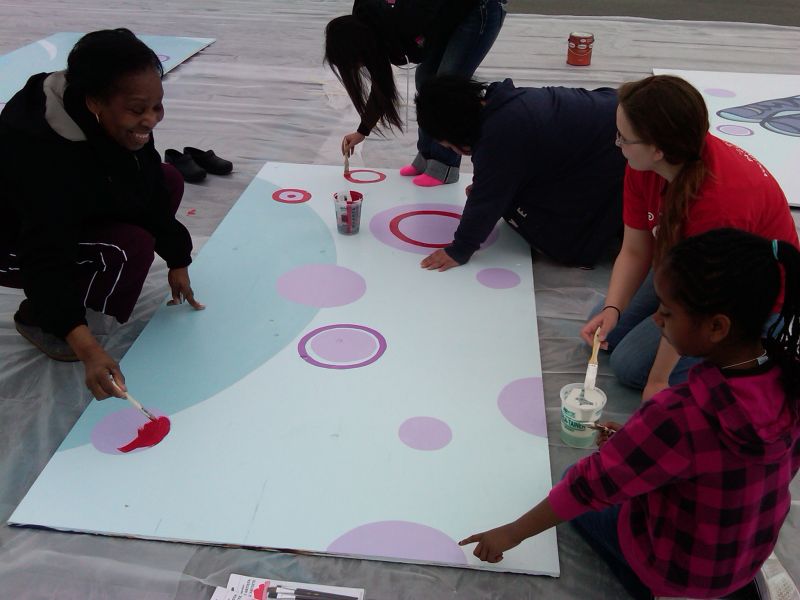 This was learned partially through conflict. When they were asked to reflect on the group dynamics and how their thinking on peace and community had evolved throughout the project one of the girls said, "Everyone has a different perspective and it was a lot of fun. When people listened to each other we seemed to get along better and I didn't like it when people stopped listening. Some had strong opinions and started judging others and that's when fights happened and that part wasn't fun. I wish we had gotten along. And this teaches me that peace is about feeling good with others and helping others to feel good too and listening."
Aurora also teaches people how to manipulate art materials in a way that is empowering.
“The pleasure of having any sort of physical impact on the world is pretty great. By giving people simple activities to do with art materials, even if it is just putting color on a piece of paper, they're effectively changing the physical world. When they see how they can change something so small, it is a nice step towards helping foster their own power. This gives them permission to think what else they can change because they've manipulated this clay a little bit or they've put paint on this canvas and they've changed something just a little bit. So what else can they do underscore their own power?”
Aurora explains that creating art also gives us a tool for noticing how our minds start judging us, telling us not to do something. We may have to work through some resistance, which can be incredibly powerful too. When Aurora work with clients, she suggests that they talk to their minds and ask why is it fighting and what is this resistance about? This form of engagement shifts the power balance in the way one approaches resistance, because instead of something you have to overcome it becomes a point of curiosity and learning. You can say to yourself, "Alright, you don't want to do this. But what is the value in not doing it? What do you gain from putting up this wall? What is this wall about?"
Everyone is an Artist
There is this idea that only some people are artists; it is not widely accepted that there is an artist residing in of us. As a clinician, many of the people that Aurora works with resist art because they’ve grown up to believe that they can’t create. When she encounters this resistance in her clients, Aurora asks them to do something that is going to purposely limit their skill level, such as drawing with their eyes closed or creating something with their non-dominant hand. This way, they understand from the outset that this is not something that needs to be skill-based and it is something that is purely self-expression. Often using the non-dominant hand or keeping the eyes closed is to be encouraged as this is an easy way to tap into the unconscious as you are not trying to create an end product; you are just allowing yourself to create. And this can be very freeing.
For people that are new to art and feel resistance to beginning, Aurora suggests creating definite limitations. For example, you can set art dates for yourself and that time is dedicated to artistic exploration. She urges everyone to approach it with a playful attitude and really make a commitment and do it regularly and have an array of things to explore in order to discover what it is that really speaks to you.
When one caller expressed how art is almost completely nonexistent in his life and that he feels like an art klutz, Aurora’s response was that if he could call himself an art klutz then perhaps he has a unique style and that if he could draw things that didn't look like anybody else's that is incredibly valuable too. She suggested to the caller to create some really fun art pieces through patterns. Aurora likes to close her eyes and scribble all over a piece of paper and once she has finished she will end up with some really cool shapes. She colors in those shapes in different colors or tries to pick out different shapes within the scribbles. She also suggested creating mandalas, patterned shapes that build on each other and are fairly analytical.
Ultimately, Aurora’s hope is that we are creating for own self-expression and the joy of the process rather than the end product.
Spiritual Healing through Art
One caller expressed that art has had a powerful healing effect on her life. She is at the tail end of a long recuperation from Encephalitis. While experiencing the slow miracle that is the healing of the nervous system, she has struggled with the emotional pain of life changes brought about by the disease. Two wonderful therapists have introduced her to mindfulness via drawing mandalas. This involves penciling in a dinner-plate size circle on a blank page, then using water-based pastel crayons to draw and color in an image within or around the circle. Then you title it and try some pre-association poetry with what has appeared.
For the caller this process has been a mysteriously powerful way of tapping into deeply buried emotions and feelings that can't be categorized or voiced in a logical way. After a hundred days of drawing a mandala every day, I am now in the process of looking at the whole journey with new eyes.
Another caller asked, “Is there something about symmetry and interconnection, which is a typically strong theme in spiritual art? Do they have a different effect on our healing as opposed to something that is unstructured and pretty?”
This question made Aurora think of Carl Jung's work. He was the one who brought the concept of mandalas into the Western notion of how we could use them for our own healing. The way he explained it was that mandalas move little repetitive patterns within the larger whole. It is symbolic of individuals and exploration of self within the context of the larger universe. What Aurora takes from that is looking at the little patterns in spiritual art is one way of getting into a meditative state because it requires less rational thought; here's the pattern and this is how the pattern fits into the larger whole so it is easier to quiet your mind and go into a space where you let go of your ego and rational thought and you can become more of a conduit for pure creation.
Aurora’s Dream
When we asked her about her life dream, Aurora shared the following:
“I want to be an artist and I want to be as inspirational as I have seen other people be in helping people believe that these things are possible and that a better world is possible. The research that I focused on is how to use art for peace and social change so my dream is to put my words into practice and to use what I love to create inspiration in others and to draw them into the sense that they can take risks and do what they love too. And use that to create a better world. And learning to be the best human being I can be. So how do I put that into action? It means learning to be very self-aware and foster the relationships that are close to me so that we can all grow stronger, creating a network of people who feel accepted and good and very aware. So that we can help others do the same thing, and through that growing to create this really strong, better world of evolved human beings, almost like ripples in a pond.”
“I grew up with the belief that you could make it as an artist. Why wouldn't you be able to do what you love? Why wouldn't you be able to live on the beach and eat fresh coconuts and watch the sun set and watch gold blow away in the wind?”Yet when Aurora grew up to become a professional artist, she didn’t live on a beach and eat fresh coconuts. Instead, she chose to study humanistic and transpersonal psychology and learn how to integrate this field with artistic expression in order to help young people process and heal from trauma. Through the sharing of her gift, Aurora is offering medicine for the soul.
Discovering the Canvas of Expression
She discovered at a young age the expressive power of art. As a shy kid in school, a book to hide behind accompanied Aurora everywhere she went. In the third grade, Aurora recollected a class presentation where she stood frozen and without words.
Painting, on the other hand, created an entirely different experience and medium of expression. From the moment she painted her first canvas these became her classroom presentations.
“In my own journey, I feel that it has made me a stronger person. There is power in being able to manipulate art materials and to exalt in my ability as a human being to take colors and shapes and put them together in ways that I can't always control as much as I would like. It makes me feel like a conduit for something bigger than myself.“
Aurora’s shyness, mixed with her discovery of the expressive power of art, may have planted the seeds for her current work. Her first job out of college involved the utilization of art to communicate with children in homeless shelters. She shared the story of a little girl who would say, "I love my mother and I want to be with her." Yet this little girl had been severely beaten by her mom and her drawings illustrated her mom with really angry teeth and eyes. Aurora explained that the girl was probably terrified of her mom and verbally saying anything against her felt like a betrayal that would cause her further harm.
In another story, Aurora described a six-year-old boy who had a homeless, alcoholic father that was absent from the boy’s life. Verbally the little boy would tell Aurora, "I don't miss my dad. I don't really care." But every single drawing that he made with Aurora was of him and his dad doing something together. Instead of asking the boy direct questions, Aurora began talking with the boy about the story he was telling through his drawings. The boy explained that it was he and his dad taking a road trip together or he and his dad playing catch. Aurora explained that it was as if he was wishing all these things could happen, but it probably felt scary and uncomfortable for him to actually say that.
“Art became an important tool that I utilized to give kids a different kind of language, a language without words.”
Humanistic and Transpersonal Psychology
These profound experiences are partly what influenced Aurora’s decision to study humanistic and transpersonal psychology at Saybrook University. She needed a lot more information and education to be able to manage all the emotion that came up from the intense trauma that these children were suffering from. She also felt that society was really broken in a lot of ways and she felt helpless to do anything about it. Aurora determined that psychology would give her the tools she needed for her work to be more effective.
Humanistic and transpersonal psychology is an evolving field that takes into consideration human emotions, consciousness, and things that aren’t quantifiable.
“At our core we are good and it is about the process of unfolding human beings to their highest potential and it is the belief that when we are in an atmosphere of acceptance and unconditional positive regard and empathy, then we can grow to be our best selves. We also transcend what it is to be a single individual and recognize our place in the larger whole; becoming bigger than just ourselves and recognizing that the whole is larger than the sum of all its parts and that we can be better through collaboration and working together.”As part of Aurora’s Ph.D. research, she worked with teenage girls through paintings. Aurora explained that a lot of the paintings ended up dark. One of the girls explained that she had drawn a picture about her thoughts and that she was surprised because she thought her thoughts would be lighter than the darkness of the actual painting. Aurora explained that the fact that she was able to identify that and talk about it was grounding. She had an impression about what was going on inside her head but when she saw it on the canvass she was more curious about it. The way she talked about it indicated her realization that her thoughts can turn dark. So even though it seemed like a sad realization, it felt comforting for her to be able to show other people and to have it outside herself and for other people to validate it as well.
Another teen would put feathers all over an otherwise abstract painting. She said she used feathers because she had a mind like a feather, floating every which way and it was really hard for her to control her thoughts. But simply expressing that was comforting; just to acknowledge that this was the way her mind was in that moment.
The teens that Aurora worked with on a mural project had some incredible words of wisdom. One such teen expressed "Thoughts can be hard to catch and it is nice to have space in between to think about what I want to say. My picture is abstract because words can be difficult to put together when feelings get to be a lot. There are a lot of colors in my painting because I feel a lot; there are a lot of feelings inside of me and they can get all layered on top of each other. I use art to separate these feeling and to figure out what to do with them."
Art as a Tool for Social Change
Working with trauma inevitably led Aurora to experiment with its connection to larger social progress. She explained that large projects such as murals require group cohesion and give people one direction to work towards.
Murals can be an important form of social change because one group of people is working together, guided by a similar vision.
For example, with the "Tapestry of Life" program, Aurora worked with a group of teenagers and one in particular really stood out. For the purposes of this conversation, this young girl’s name was Anne. Ann was a young teen who identified herself as being socially awkward and afraid of being with other people and being in crowds. She had really long hair that she wore like a veil over her face and she said that she didn't like people and didn't want to be around them. Anne wanted to be a part of the mural because she said, "I can paint my words." She also said she wanted to create something beautiful for her community.“I thought that was beautiful coming from a 15-year-old girl. The level of insight I got from the teens in this project, when I really listened, was incredible. It was a great learning experience for me to pay attention to young people because there are glimmers of knowledge in everybody and it just takes that attention and awareness to pick up on it.”
These girls collaborated, argued and fought with each other and not all of it was pleasant. There were times when they had strong personality clashes and the group would end with upturned chairs and slammed doors but at the end of the project one of the girls said, "I believe that everyone should get along and we can make this happen by accepting one another and recognizing that the world is not perfect. We can help make the world more perfect by being more understanding of each other. When no one hears me I feel terrible, the world feels like a bad place. People should listen to each other."
This was learned partially through conflict. When they were asked to reflect on the group dynamics and how their thinking on peace and community had evolved throughout the project one of the girls said, "Everyone has a different perspective and it was a lot of fun. When people listened to each other we seemed to get along better and I didn't like it when people stopped listening. Some had strong opinions and started judging others and that's when fights happened and that part wasn't fun. I wish we had gotten along. And this teaches me that peace is about feeling good with others and helping others to feel good too and listening."Aurora also teaches people how to manipulate art materials in a way that is empowering.
“The pleasure of having any sort of physical impact on the world is pretty great. By giving people simple activities to do with art materials, even if it is just putting color on a piece of paper, they're effectively changing the physical world. When they see how they can change something so small, it is a nice step towards helping foster their own power. This gives them permission to think what else they can change because they've manipulated this clay a little bit or they've put paint on this canvas and they've changed something just a little bit. So what else can they do underscore their own power?”
Aurora explains that creating art also gives us a tool for noticing how our minds start judging us, telling us not to do something. We may have to work through some resistance, which can be incredibly powerful too. When Aurora work with clients, she suggests that they talk to their minds and ask why is it fighting and what is this resistance about? This form of engagement shifts the power balance in the way one approaches resistance, because instead of something you have to overcome it becomes a point of curiosity and learning. You can say to yourself, "Alright, you don't want to do this. But what is the value in not doing it? What do you gain from putting up this wall? What is this wall about?"
Everyone is an Artist
There is this idea that only some people are artists; it is not widely accepted that there is an artist residing in of us. As a clinician, many of the people that Aurora works with resist art because they’ve grown up to believe that they can’t create.
When she encounters this resistance in her clients, Aurora asks them to do something that is going to purposely limit their skill level, such as drawing with their eyes closed or creating something with their non-dominant hand. This way, they understand from the outset that this is not something that needs to be skill-based and it is something that is purely self-expression. Often using the non-dominant hand or keeping the eyes closed is to be encouraged as this is an easy way to tap into the unconscious as you are not trying to create an end product; you are just allowing yourself to create. And this can be very freeing.For people that are new to art and feel resistance to beginning, Aurora suggests creating definite limitations. For example, you can set art dates for yourself and that time is dedicated to artistic exploration. She urges everyone to approach it with a playful attitude and really make a commitment and do it regularly and have an array of things to explore in order to discover what it is that really speaks to you.
When one caller expressed how art is almost completely nonexistent in his life and that he feels like an art klutz, Aurora’s response was that if he could call himself an art klutz then perhaps he has a unique style and that if he could draw things that didn't look like anybody else's that is incredibly valuable too. She suggested to the caller to create some really fun art pieces through patterns. Aurora likes to close her eyes and scribble all over a piece of paper and once she has finished she will end up with some really cool shapes. She colors in those shapes in different colors or tries to pick out different shapes within the scribbles. She also suggested creating mandalas, patterned shapes that build on each other and are fairly analytical.
Ultimately, Aurora’s hope is that we are creating for own self-expression and the joy of the process rather than the end product.
Spiritual Healing through Art
One caller expressed that art has had a powerful healing effect on her life. She is at the tail end of a long recuperation from Encephalitis. While experiencing the slow miracle that is the healing of the nervous system, she has struggled with the emotional pain of life changes brought about by the disease.
Two wonderful therapists have introduced her to mindfulness via drawing mandalas. This involves penciling in a dinner-plate size circle on a blank page, then using water-based pastel crayons to draw and color in an image within or around the circle. Then you title it and try some pre-association poetry with what has appeared.For the caller this process has been a mysteriously powerful way of tapping into deeply buried emotions and feelings that can't be categorized or voiced in a logical way. After a hundred days of drawing a mandala every day, I am now in the process of looking at the whole journey with new eyes.
Another caller asked, “Is there something about symmetry and interconnection, which is a typically strong theme in spiritual art? Do they have a different effect on our healing as opposed to something that is unstructured and pretty?”
This question made Aurora think of Carl Jung's work. He was the one who brought the concept of mandalas into the Western notion of how we could use them for our own healing. The way he explained it was that mandalas move little repetitive patterns within the larger whole. It is symbolic of individuals and exploration of self within the context of the larger universe. What Aurora takes from that is looking at the little patterns in spiritual art is one way of getting into a meditative state because it requires less rational thought; here's the pattern and this is how the pattern fits into the larger whole so it is easier to quiet your mind and go into a space where you let go of your ego and rational thought and you can become more of a conduit for pure creation.
Aurora’s Dream
When we asked her about her life dream, Aurora shared the following:
“I want to be an artist and I want to be as inspirational as I have seen other people be in helping people believe that these things are possible and that a better world is possible. The research that I focused on is how to use art for peace and social change so my dream is to put my words into practice and to use what I love to create inspiration in others and to draw them into the sense that they can take risks and do what they love too. And use that to create a better world. And learning to be the best human being I can be. So how do I put that into action?
It means learning to be very self-aware and foster the relationships that are close to me so that we can all grow stronger, creating a network of people who feel accepted and good and very aware. So that we can help others do the same thing, and through that growing to create this really strong, better world of evolved human beings, almost like ripples in a pond.”
Want the full experience?
Listen to the complete conversation with Aurora Sidney-Ando.