Two Ways of Learning Relaxation
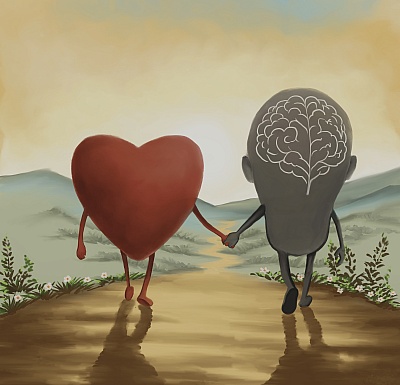
There are two ways of learning relaxation, because there are two distinct levels at which a person can relax. I speak of top-to-bottom relaxation versus bottom-to-top relaxation. "Top" refers to the surface conscious mind, "bottom" the deep unconscious.
Top-to-bottom relaxation is what most people think of when they think of relaxation. It's voluntary relaxation, like a progressive relaxation where you make an effort to relax. When a person sits to meditate I think it is good to do whatever possible to relax the overall body. I usually try to get an overall sense of the body relaxing. I call it a "settled-in" sense. For example, I notice that during sitting sometimes my shoulders will come up, so I'll relax them as an act of conscious intention.
This form of relaxation, although it's valid and useful, is also limited, because there are certain things that you can't relax intentionally, like the kind of intense sensations that come up when you stub your toe. You can't go through a progressive relaxation, and just relax the sensations going on in your stubbed toe. And what about the sensations that go with a stubbed ego? For that type of phenomenon, it is desirable to learn about a second kind of relaxation which I call bottom-to-top.
Bottom-to-top relaxation deals with the source of tension which is deep within the unconscious mind and way out of the range of conscious control. How can you relax tensions that are not within conscious control? By observing them with skill. "Skill" means heightened awareness, a sense of accepting the tension as is. Bottom-to-top relaxation is an attitude. You watch the tension very, very carefully. You get very specific in terms of location, shape, flavor, rates of change, etc. You just keep pouring awareness and equanimity, awareness and equanimity on the tension pattern.
That tension pattern is a conduit into the unconscious mind. By flooding the tension area with the "super-adult" qualities of "witness awareness" you are helping the unconscious infant/animal levels of the mind to untie their own "knots". The tension pattern will start to break up on its own. Paradoxically, the quickest way to have it break up is to stop wanting it to break up. The attitude of wanting it to break up adds subtle new knots. For the really deep relaxation, a person has to be willing to watch tension in a skillful way, without desiring relaxation.
--Shinzen Young, in an interview with Charles Tart
Some audio clips from last week's circle of sharing (and a special thanks to Bhikhsu Samata and Ajahn Ghun for joining us!) ...
Great insight, my own spiritual practices have made me aware of the different top down and bottom up approaches however it will be helpful to have this clearer understanding for explanations.
Thanks
The only way to relax is to relax. While you can add layers to your thoughts about relaxing, explore it in thought and discuss the various knots and relaxing from inside-out, top-down, bottom-up and whatever permutations of relaxation you can think of, the basic error is thinking. You cannot achieve relaxation with the chattering mind.
So. If you want to relax - then relax. Become the relaxation. There is nothing else.
The the idea of renouncing all attachment to relaxation in order to get to deep relaxation brings up mixed feelings and thoughts for me. I'm skeptical about any idea being away to relaxation and peacefulness. Renouncing is more than an idea. Renouncing attachment is something worthwhile to help one be aware of what is. The idea sounds great but I sometimes think if I had one more and better idea, peace, harmony and relaxation would arise. Noticing that one is attached to ideas rather than action and peaceful attitudes may be worthwhile. Thank you for giving me the opportunity to respond. You and all your readers have my gratitude.