The Other Side Of The Threshold
We do not need to go out and find love; rather, we need to be still and let love discover us. — John O'Donohue
Since we were children, we have been told a patchwork of stories about love. We expect love to give us exaltation, bliss, affection, fire, sweetness, tenderness, comfort, security, and so very much more—all at once.
But apart from all these stories, as human beings we naturally live our lives wanting belonging, connection, a home in this world. We yearn for warmth, for possibility, for the more abundant life that love seems to promise. We sense there is a quality of real love that is possible beyond the narrow straits we have been told to navigate, a possibility that is not idealized or merely abstract. We have an intuition that we can connect so much more deeply to ourselves and to one another.
One of my own turning points came in 1985 when I did a meditation retreat in Burma. I was practicing intensive lovingkindness meditation, offering phrases of wishing well to myself and others all day long, like, "May I be happy; may you be happy."
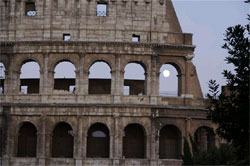
As I practiced, at one point it felt as though I came to a threshold. On the nearest side was the conventional idea of who I had thought myself to be—that is, someone completely dependent on another person to feel any love in my life. It was as though I considered love to be like a package, in the hands of the all-powerful delivery person, and if that person changed their mind at my doorstep and walked away, I would be bereft—irredeemably incomplete, lacking the love I so longed for.
On the further side of the threshold was the reflection of who I suspected I actually was—someone with an inner capacity for love, no matter who was present or what was happening, someone who could access love that another person might enhance or challenge, but there was no one who could either bestow that capacity on me or take it away. I stepped over.
I saw I couldn't flourish as a human being as long as I saw myself as the passive recipient of love. (There's an awful lot of waiting in that position, and then damage control when it doesn't work out, and also numbness.) But I could certainly flourish as love's embodiment.
I see real love as the most fundamental of our innate capacities, never destroyed no matter what we might have gone through or might yet go through. It may be buried, obscured from view, hard to find, and hard to trust . . . but it is there.
I believe that there is only one kind of love—real love—trying to come alive in us despite our limiting assumptions, the distortions of our culture, and the habits of fear, self-condemnation, and isolation that we tend to acquire just by living a life. All of us have the capacity to experience real love.
Real love comes with a powerful recognition that we are fully alive and whole despite our wounds or our fears or our loneliness. It is a state where we allow ourselves to be seen clearly by ourselves and by others, and in turn, we offer clear seeing to the world around us. It is a love that heals.
Excerpted from her book, Real Love.
Sharon Salzberg describes a moment when she realized she had been living as though love were a package someone else could deliver — or take away. How do you relate to this tension between our very human longing to be loved and the possibility that love is also a capacity already alive within us? Can you share a personal story of crossing such a threshold — perhaps a time when disappointment, solitude, or an unexpected encounter shifted you from waiting for love to discovering your own capacity to offer it? Sharon suggests that others may enhance or challenge our capacity for love, but cannot ultimately bestow it upon us or take it away. How might this change the way we enter relationships, especially when love isn't reciprocated, when boundaries are needed, or when someone we cherish is no longer present? What helps you keep your heart open without losing yourself?