You Can't Get There From Here
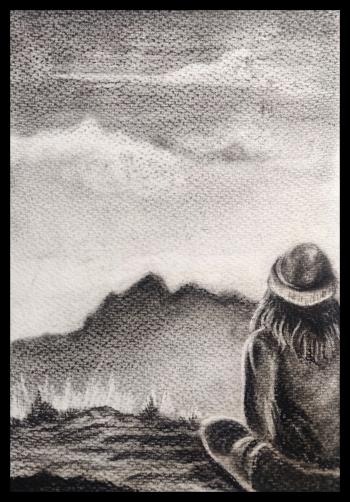
When you sit down to meditate, you can bring to your practice the notion of the threefold purity: not being caught up with ideas about yourself, not being caught up with ideas about the practice, and not being caught up with ideas about the result. [...]
To begin with, just give up any expectations of yourself. That’s a simple good instruction for how to meditate. Liberate yourself from any sort of idea of how you’re supposed to be, and just sit. Then remember this instruction occasionally during the meditation period, because you’re going to do a lot of talking to yourself about how right or how wrong you are. You’re going to spend a lot of time on center stage as the star of your own movie. You can spend a lot of time planning, worrying, and trying to get it all right.
Instead of holding on to a limited identity of yourself, do your best to observe yourself minute after minute. Observe what’s happening. You’ll keep freezing it by fixating on it, because you do have an idea of who you are; we all have an idea of who we are. But if you’ll just observe instead of fixating, the meditation itself will begin to shake that identity up a lot. You’ll begin to have doubt about being just one way; you’ll see that who you are and how you are keep changing. The first five minutes of the meditation period you’re depressed; the gong rings and you feel happy. In walking meditation you’re bored; you sit down on your cushion again and your back hurts. The gong rings and you realize you’ve been on a shopping spree in New York City. The changes go on and on. Observe them with no expectation of how you’re supposed to be, or who you are. Just sit there and see what happens. [...]
The second guideline of the threefold purity is “No meditation.” Don’t make your meditation a project or a special event; don’t bring into it an attitude of great seriousness and solemnity. For that matter, have no concept of your meditation at all, no religiosity. Don’t hold any notions about it, not even, “Oh, meditation is meant to be completely natural; you just sit down, relax the mind, and be cool.”
We have a lot of ideas about what’s good meditation, what’s bad meditation. The notion here is that we sit down with no expectations of ourselves and no expectations of what the practice is. We simply follow the instructions, without imagining that meditation is supposed to be this way or that way. We can continuously let go of any solid views on the meditator or the meditation, any caught-upness. That’s the whole training—to let go and observe without judgment, without bias. We can just let go. [...]
The third quality of threefold purity is “No result.” Give up all hope of fruition. Practice without hope of anything beyond right now. That’s all there is; there’s no later. Being on the spot is the only way any transformation of your being occurs. If you practice with hope and fear, if you practice in order to become what you think you should be—even a calmer, more loving, more compassionate person—you’re just setting yourself up for disappointment. You can’t get there from here. Being fully here for each moment—that’s the point, from now until you die.
What do you understand by "you can't get there from here?" Can you share a personal story of a time you let go of all expectations of yourself, your meditation, and results from your meditation? What helps you be fully there in each moment?