Tulip Poplar Tree
El tulípero (árbol).
- Por Victoria Crawford
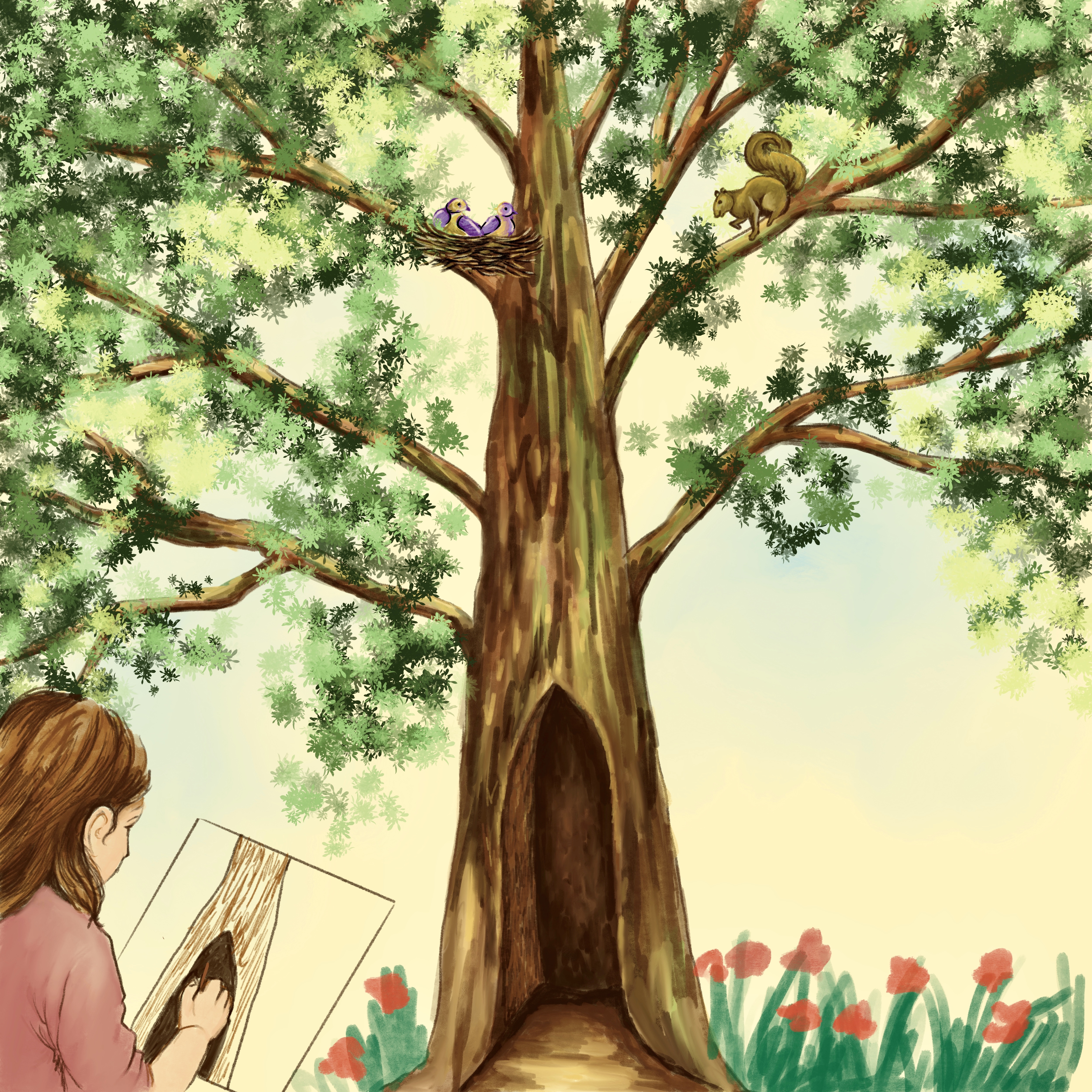
Durante mi infancia, había un magnífico tulípero en nuestro patio trasero. Estaba cerca de la casa y se podía ver desde los tres pisos. Nos contaron a mis herman@s y a mi que, cuando nuestros padres estaban construyendo la casa, el contratista quiso talarlo porque el árbol tenía algún tipo de enfermedad. En lugar de eso, mis padres decidieron tratarlo y dejarlo vivir.
El tratamiento erosionó una buena parte de la base del tronco, creando una pequeña cavidad, justo del tamaño adecuado para que nosotr@s, l@s niñ@s, pudiéramos meternos dentro.
De niña, esta herida me llamaba mucho la atención. En una ocasión, estaba haciendo un dibujo del árbol y me centré en la oscura cicatriz de aquella herida. Cuando mi madre lo vio, suspiró.
«¿Por qué haces eso? ¿Por qué dibujas la oscuridad?», me preguntó. No sabía la respuesta. En aquel entonces, me resultaba natural buscar aquello que estaba herido o que faltaba.
Con el paso de los años, el tulípero creció mucho más allá de aquella herida inicial; pronto alcanzó los *75 pies de altura y *16 pies de circunferencia. Se convirtió en un hogar acogedor para nidos de aves y otras pequeñas criaturas. Y, año tras año, la cavidad oculta en su base se fue haciendo más pequeña.
Aunque sus ramas estaban demasiado altas para trepar, me encantaba contemplarlo. Después de que mi hermano se mudara, cuando buscaba un lugar tranquilo, solía subir a su habitación en el ático solo para observar cómo las ramas y las hojas se mecían con el viento, y cómo una familia de ardillas subía y bajaba por el tronco.
Con el tiempo, el tulípero llegó a alcanzar los *150 pies de altura. Para rodearlo, ahora hacían falta cinco personas con los brazos abiertos. Y de aquella pequeña oquedad, solo quedaba una diminuta abertura oscura.
Sin embargo, durante muchísimos años, cada vez que pensaba en este árbol, lo primero que me venía a la mente era la herida. Recordaba lo grande que había sido el hueco en el tronco, lo dañado que estaba, lo cerca que estuvo de no sobrevivir. En lugar de ver el árbol tal como era, veía aquello que, según mi recuerdo, estaba mal en él.
Décadas más tarde —mucho después de haberme mudado al otro extremo del país y de haber formado mi propia familia en el oeste—, regresé de visita. Habían pasado unos meses desde la muerte de mi padre; estaba en el jardín trasero, caminando. Levanté la vista y, de repente, fue como si viera aquel árbol por primera vez. Se alzaba ante mí en todo su esplendor: hojas bien formadas, ramas extendidas y un tronco ancho y robusto. ¡Qué fuerte, equilibrado y poderoso era!
Mientras lo contemplaba, una revelación me invadió: no hay nada malo en este árbol.
Es cierto que, en el pasado, había sufrido una herida, pero eso ya no era así. Había crecido mucho más allá de aquello y había sanado. En lugar de aquella vieja herida, ahora había tanta belleza. Tanta... fortaleza.
Al igual que el árbol, yo también sufrí heridas en mis primeros años. Durante mucho tiempo, solo fui capaz de verme como una persona rota y frágil. Pero eso era solo una parte de mi historia. Yo también había sanado y crecido. Había amado, me habían amado, aprendí a perdonar y encontré una paz mayor. Y, allí mismo frente a mí, este magnífico árbol me devolvía el reflejo de toda su belleza, su bienestar y su fortaleza, recordándome, en silencio, la mía propia.
En ese momento, que resultó ser a la vez aleccionador y transformador, todo cambió. No solo no había nada malo en este árbol; tampoco había nada malo en mí.
Dos años más tarde, tras el fallecimiento de mi madre, la casa se vendió. Los nuevos propietarios decidieron retirar el tulípero. Querían construir una terraza y, lamentablemente, este querido árbol estorbaba.
Regresé unas semanas después de que lo talaran. Recogí algunos trozos de corteza para honrar su vida y mis entrañables recuerdos. Al acercarme a la ancha base del árbol —recién cortada—, pude ver las marcas de la sierra; sin embargo, la corteza interior, el interior del árbol, estaba libre de cualquier signo de podredumbre o deterioro. El único rastro que quedaba de que, en algún momento, el árbol había tenido una herida importante era una línea oscura, muy pequeña.
Victoria Crawford es coach, mentora y fundadora de *The Way of Discovery*. Ha dedicado años a dirigir retiros personales, empresariales y grupales, diseñados para ayudar a individuos y equipos a bajar el ritmo y desarrollar una confianza genuina en sí mismos, en l@s demás y en el camino que se despliega ante ellos en la vida. El fragmento anterior pertenece a su próximo libro, *Ruffled... in a Good Way*.
Preguntas semilla para la reflexión
¿Cómo te resuena la idea de que podemos pasar décadas «viendo lo que recordamos como algo malo» en algo —o en alguien—, en lugar de verlos tal y como son ahora? ¿Podrías compartir una experiencia personal en la que, de repente, te viste a ti mism@ —o a otra persona— con una mirada nueva, dejando atrás una vieja herida para apreciar la plenitud de lo que había crecido en su lugar? ¿Qué te ayuda a volver a la realidad presente de quién eres, en lugar de aferrarte a la historia de aquello que, en algún momento, estuvo roto?
*1 pie= 0,3048 metros
Victoria Crawford is a coach, mentor and the founder of The Way of Discovery, who has spent years leading personal, business, and group retreats designed to help individuals and teams slow down and build genuine trust in themselves, each other, and the unfolding journey of life. Excerpt above from her upcoming book, Ruffled: Stories of Healing and Hope.
How do you relate to the notion that we can spend decades "seeing what we remembered was wrong" about something - or someone - rather than actually seeing them as they are now? Can you share a personal story of a moment when you suddenly saw yourself, or another person, with fresh eyes - past an old wound and into the fullness of what had grown in its place? What helps you return to the present reality of who you are, rather than the story of what was once broken?