Art Does Not Ask For Proof

Image of the Week
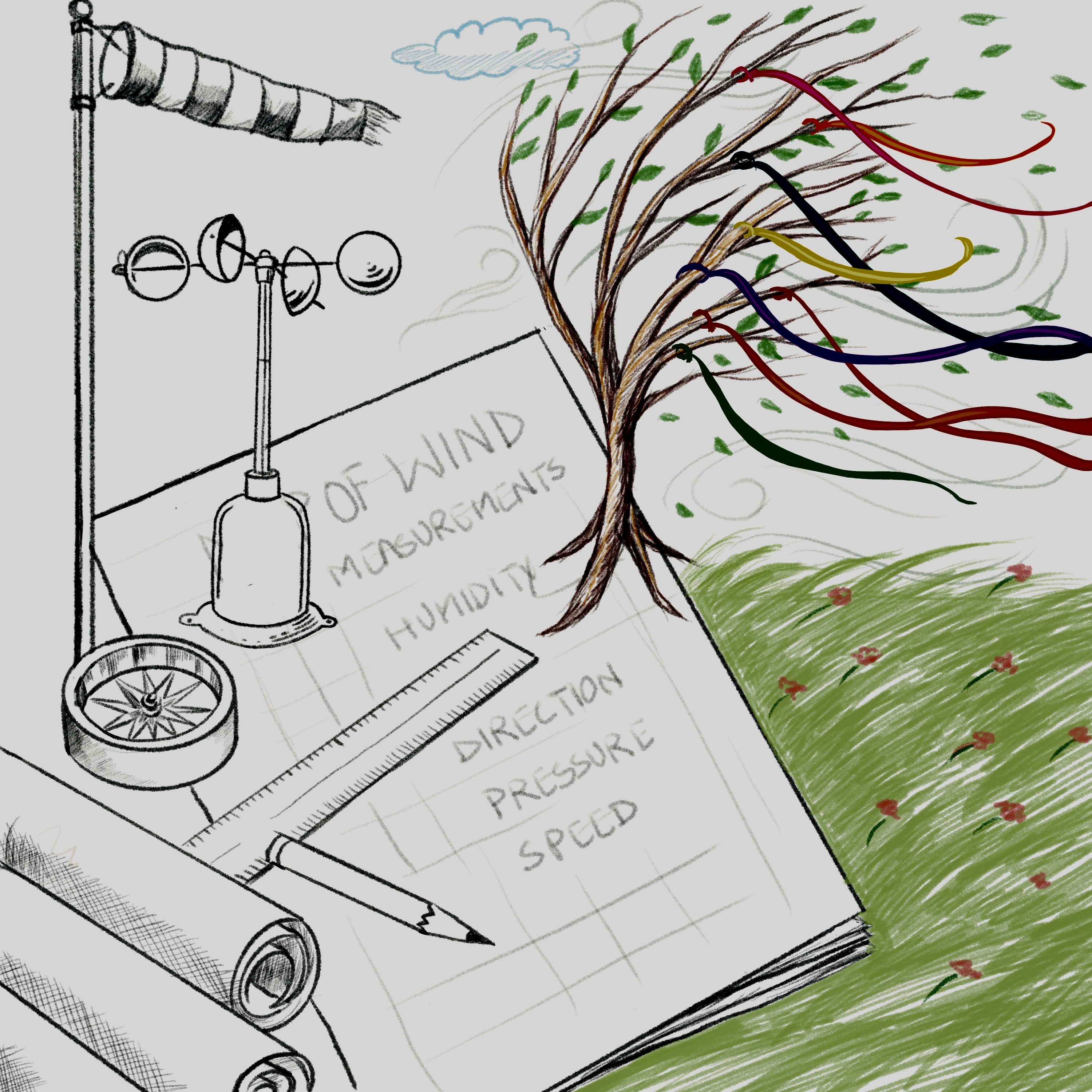
Hand-drawn art by Rupali Bhuva
Image of the Week
El arte no exige pruebas
—Por Nora Bateson


Vivimos en un mundo de evidencias. Las infraestructuras de nuestras ciudades y nuestra planificación ambiental, nuestros planes de estudio y nuestras predicciones económicas, todo se filtra a través del embudo de datos que compila los mecanismos de la «ciencia». Es comprensible. Necesitamos saber cuánto costará el nuevo puente o cuántos tratamientos de quimioterapia puede soportar un paciente; necesitamos calcular y medir el éxito de nuestro trabajo. Pero es evidente que hemos cometido graves errores de cálculo en los últimos cien años. Ninguna prueba del mundo nos ha proporcionado la información necesaria para comprender la complejidad del mundo en que vivimos. No lo entendemos. Tomamos decisiones que se despliegan en consecuencias impredecibles y caóticas. La prueba no era suficiente. Necesitábamos el patrón.


El arte no exige pruebas; nos invita a buscar patrones.


Entre los acordes de una canción flamenca se encuentra la empatía de mil años de amor y dolor. En los gestos de una bailarina contemporánea podemos recordar todo aquello que jamás imaginamos y seguir la forma del cuerpo hacia un diccionario desconocido de emociones. En las pinceladas de color sobre una pared londinense, encontramos el humor y la ironía de nuestros propios errores. En un lienzo, en una fotografía, en la pantalla, nos vemos a nosotros mismos viendo el mundo. Lo vemos, nos vemos a nosotros mismos, captamos el encuadre ladeado que inclina nuestras cabezas y pone nuestro statu quo patas arriba. La poesía está ahí, indestructible. Cada un@ de nosotr@s es un/a artista, plasmando ritmos, colores, metáforas y armonías en nuestros momentos.


Aunque los conceptos abstractos puedan hacernos sentir emociones encontradas en el arte que no comprendemos, las metáforas penetran en nosotr@s y, algún día, tal vez dentro de muchos años, nos hablarán. En la crudeza del arte descubrimos nuestra vulnerabilidad y nuestra sangre. Tengo un pequeño póster de «Mujer llorando» de Picasso en mi cómoda para recordarme que ser un/a estudiante de la vida implica estar dispuest@ a romperte. La oscuridad en el arte nos ofrece una experiencia visceral de ser desenterrados, vaciados de las semillas de la confianza y esculpidos en la ira o los celos que nos han invadido. Hay motivos para enfadarse en la vida, y el arte nos permite explorar la experiencia compartida. A través de la ruptura, el hormigueo, el crujido, la suavización y la apertura, nos encontramos inmersos en el arte, con resonancias innombrables que nos recorren. Nos desprendemos de la ilusión de poder observar la vida desde la seguridad de la ventana. Somos participantes del proceso.


En todas sus formas, el arte puede ofrecer una experiencia de integración que apela a nuestro lenguaje cultural de símbolos, nuestra imaginación, nuestra historia, nuestro intelecto y nuestras emociones. Si bien a menudo enfatizamos la importancia de la «expresión creativa», quizás sea más vital en este momento de nuestra historia explorar lo que el arte tiene que decir sobre la posibilidad de que nuestra propia percepción se integre en circuitos cognitivos más amplios mediante la metáfora. La apreciación de una obra de arte puede entenderse como el reconocimiento del patrón que conecta. En mi opinión, el arte nos permite percibir desde múltiples perspectivas simultáneamente. Para que la ciencia pueda abordar la complejidad con eficacia, necesitamos el arte que ayude a los científicos a desarrollar una mayor capacidad de percibir el contexto, uno que incluya todas las disciplinas, emociones, símbolos culturales y recuerdos personales. Como dijo Blake en «El monje gris»: «Una lágrima es algo intelectual».


Preguntas semilla para la reflexión: ¿Qué opinas de la idea de que el arte no exige pruebas, sino que nos invita a «buscar patrones»? ¿Puedes compartir alguna anécdota personal sobre alguna ocasión en que una obra de arte —una canción, una pintura, un poema, una danza— te reveló algo que la comprensión racional había pasado por alto, tal vez hablándote meses o incluso años después de haberla visto por primera vez? ¿Qué te ayuda a cultivar la disposición a «quebrarte», como la mujer que llora en el cuadro de Picasso, a participar plenamente en la vida en lugar de observarla desde la seguridad de la ventana?


Nora Bateson es una cineasta galardonada, experta en sistemas y presidenta del Instituto Internacional Bateson, donde fue pionera en el concepto de "datos cálidos" para analizar sistemas vivos complejos. Hija del renombrado polifacético Gregory Bateson, es autora de libros aclamados como Small Arcs of Larger Circles y Combining, y su obra utiliza el arte, la poesía y la ciencia para redefinir nuestra comprensión de los desafíos ecológicos y sociales globales.
Seed Questions for Reflection

What do you make of the idea that art does not ask for proof, and instead directs us to "look for pattern"? Can you share a personal story of a time when a piece of art - a song, a painting, a poem, a dance - revealed something to you that rational understanding had missed, perhaps speaking to you months or even years after you first encountered it? What helps you cultivate the willingness to be "shattered," like Picasso's weeping woman, to participate fully in life rather than watching safely of the window?

Moved by this reading? Join a live Awakin Circle to discuss in community.
Join this week
More ways to connect

Add Your Reflection

9 Past Reflections
GU
Jun 6, 2026
This complex piece made me ponder deep and long relative to the other weekly readings. Reflections of some of you here (especially Nipun's) were another factor to get back to the piece and probe what is it I have experienced about life in the light of what Nora Bateson is saying (a piece of Art , isn't it ?!).
For me ( and many other Indians too, I suppose) the songs from our movies have a great impact. The actual depiction on the screen is usually forgettable but , by themselves, the music and lyrics of the songs are very evocative. A short phrase conveys a lot and the music tugs the heart. The remembrance of them brings a certain charm to individual and collective situations of life.
Life (and humans) seem to be becoming more and more automatised by the major forces shaping us - science, economics, etc. Attention spans are becoming briefer. Only when creative, sublime art 'informs' our lives , can we break out of set patterns
KA
Jun 5, 2026
At a concert in a historic theater, Jay and Molly Unger played a tune: The Lover's Waltz. The tune was so simple and pure. It evoked images of the dance of life, sometimes easy breezy, sometimes bittersweet. The pattern of dance steps. The art of loving. Years later, my daughter had it played at her wedding.
A
Jun 5, 2026
I watched a disturbing yet Artistic movie, based on a play and made into a film directed by the writer. Is God Is a never before story told but inspired by relationships, violence, revenge and love/ wanting to belong to someone. A main actor in the film described it as a Greek Odyssey, Southern Gothic with twin maimed main characters orphans from New Jersey. The brilliance of bringing such things together is Art. Art is disturbing and tragic but one usually comes out the other side better. Your last line "All disciplines, emotions, cultural symbols and personal memories is powerful!" I hope we are headed in that direction.
DD
Jun 4, 2026
There is the objective world of form, of limited and measurable information, evidence, and proof. There also is the subjective world of art, intuition, complex process and pattern. Art and many disciplines are telling us that reality is interconnected pattern and relationship. There is much wisdom in Nora Bateson's statements. I love her saying that Picasso's 'Woman Weeping' says to be a student of life is to be willing to be shattered. Art -- be it poetry, painting, or music -- typically penetrates my deep indoctrination of rational understanding slowly, and slowly my consciousness expands enough to see and hear a deeper message. I'm not willing to be shattered; I have learned through age and paying attention that life is complex, uncertain, and uncontrollable, shatterings will happen like it or not, and I can learn from them. I don't like the shattering but I love the learning that it brings. A shattering is a growth opportunity.
NM
Jun 3, 2026
I'm opening our local circle, and here are the five beautiful questions from the passage that stood out for me: The lazy reading is "feelings vs. facts," and Nora refuses it. Her father's line is that 'science probes, it does not prove' — and the real prize is "loose and strict thinking" held together. So the live question isn't "which do we trust." It's: why are we so bad at holding both? "A tear is an intellectual thing." (Blake) Emotion is a form of cognition, not its opposite. We've been trained to keep the tear and the spreadsheet in separate rooms. What if the tear is data — just warm data, the kind that won't submit to a spreadsheet? "To be a student of life is to be willing to be shattered." Nora keeps Picasso's Woman Weeping on her dresser as a reminder. It cuts against every self-improvement frame we know — we want growth without breakage, depth without being dug up. Can we actually learn the deep things any other way? "We are pulled from our illusion that ... View full comment
CD
Charly Drobeck
Jun 3, 2026
Around 1990 I was working in a metaphysical bookstore, and came upon a poem by then lesser-known Mevlana Jelaluddin Rumi, “Out beyond ideas of wrongdoing and rightdoing, there is a field, I’ll meet you there…” The final lines struck my non-rational heart very strongly, and I have never been the same, thanks to so many teachers, lessons and the trust which is enfolded in his lines. The heart is beyond rational, and I approach most art-poetry, music and the fine arts, with my heart in the lead. What a gift!
LA
Laura
Jun 2, 2026
Robert Wilson's design/concept of Van Cleef&Arpels' Noah's Ark...a fwe years ago I was wandering in this darkened gallery-space, somewhere west of the High Line...one of the dioramas--a bird? A cheetah?--transfixed my faltering steps and I began to weep. I have seen the Pieta, Van Gogh, Calder, Judy Chicago's table...but these sudden, unbidden tears were an anointment. One of the lovely galleristas floated over, curious? Concerned? And I could not speak or explain. It was a moment of transendence. Never before, not yet repeated
CR
May 31, 2026
"Each of us is an artist" - indeed. And if we allow ourselves to be the artist and it bubbles up and appears in our daily activities humor is but a breath away. As evidence of the meeting of science, art, and perhaps even spirituality. As movement artist now also engaging with Social Presencing Theatre practices I witness the patterns in my own life, especially. Where and how I become contracted and stifled through self-doubt and lack of courage and the pattern of opening to quiet confidence and courage.
JP
May 29, 2026
We, as human beings, are looking for truth, love, compassion and forgiveness. How can we attain strength , courage, and patience for attaining such attributes? According to my understanding it requires, patience, compassion and kindness. We all love to have such wonderful qualities in our life. Wishes are not enough. We need to invest our energy, have patience and courage to attain such qualities. We do need proof to show it. Truth, love, and forgiveness are self evident. Such inner qualities do not need any proof. Living such inner qualities in our daily life reveals the truth. It is evident in my personal life. It takes time, passion, patience and compassion to attain and preserve such qualities. As we say "Rome was not built in a day." As we know, building an inner bridge that unites us doesn't happen in a day. It takes time. But once we build such an inner bridge we can walk on it and help others to walk on it. If we all make sincere efforts to walk on this bridge life become... View full comment