The False Self From Childhood

Image of the Week
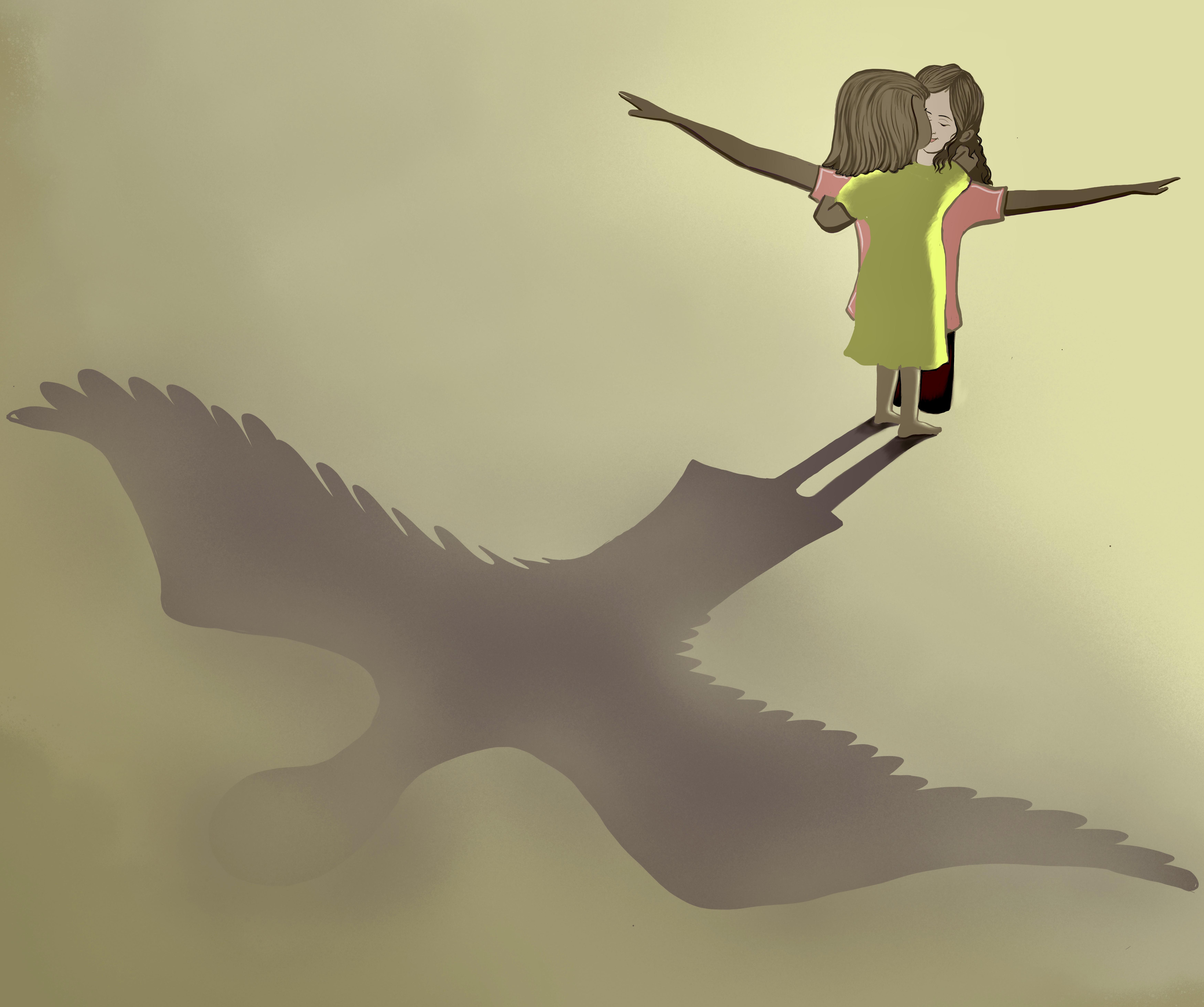
Hand-drawn art by Rupali Bhuva
Image of the Week
El falso yo de la infancia
Por --- Eric Jones

No hace mucho me encontré con una teoría de la psicología del desarrollo que he tenido dando vueltas en mi cabeza desde entonces. Proviene del pediatra y psicoanalista Donald Winnicott, quien acuñó el término “madre suficientemente buena” para describir el tipo de padre cotidiano que hace todo lo posible para satisfacer las necesidades de sus hijos y sólo falla en hacerlo de maneras ordinarias y comprensibles, incluso inevitables. Su teoría trata sobre los orígenes y el desarrollo de dos yoes distintos en cada un@ de nosotr@s, un "yo verdadero" y un "yo falso".

Winnicott dice que cuando somos bebés y niñ@s muy pequeñ@s, cada un@ de nosotr@s expresa instintivamente nuestr@ verdadero yo: lloramos cuando tenemos hambre, estamos cansad@s ​​o estamos angustiad@s; Cuando somos niñ@s pequeñ@s, actuamos con creatividad y espontaneidad sin pensar mucho (si es que pensamos algo) en lo que es correcto o apropiado, y podemos tener los arrebatos emocionales más dramáticos cuando no conseguimos lo que queremos. No podemos evitar expresar nuestro verdadero yo cuando somos muy jóvenes, porque no podemos hacer otra cosa; Necesitamos lo que necesitamos y queremos lo que queremos, y hacemos todo lo posible para conseguirlo.

Y aquí está el quid de la cuestión: si nuestros cuidadores están en sintonía y son capaces, si tienen la habilidad de leer nuestras verdaderas expresiones de necesidad y deseo y (en su mayoría) gratificarlas la mayor parte del tiempo, esto fortalece la creencia en nosotros de que nuestras necesidades más honestas están bien y que nosotr@s mism@s somos identificables y dign@s. Si recibimos este reconocimiento y tranquilidad de nuestro “verdadero yo” cuando somos niños, entonces es mucho más probable que lleguemos a la edad adulta conectad@s con nuestro verdadero yo, dispuest@s a vivir abiertamente, viv@s y presentes a nuestros anhelos más profundos.

Pero algun@s de nosotr@s no obtenemos ese consuelo tan necesario. Cuando somos niñ@s muy pequeñ@s expresamos nuestras necesidades más verdaderas y nuestr@s cuidadore/as no pueden responder de manera adecuada o consistente, debido a cosas como la depresión o la adicción, y llegamos a aprender que nuestras necesidades más básicas no son aceptables ni identificables. Winnicott dice que en casos como este un/a niñ@ se vuelve "dócil", lo que significa que no simplemente deja de expresar sus necesidades más verdaderas a l@s cuidadore/as que no pueden o no quieren satisfacerlas, sino que pierde el contacto con esas necesidades más profundas al convencerse a sí mism@ de que no eran cosas que necesitaban de verdad. Esta historia adaptativa es, según Winnicott, el nacimiento del “falso yo”, que también es el yo dócil.

Dicho de manera más simple, creo que la teoría es que cuando somos muy jóvenes, necesitamos tener adult@s a nuestro alrededor que sean lo suficientemente fuertes, capaces y amoros@s como para que podamos expresar nuestras necesidades y anhelos con el mayor autocontrol antisocial y centrados en nosot@s mism@s como sea humanamente posible, y que constantemente nos amen incondicionalmente, nos acepten y nos den lo que necesitamos la mayor parte del tiempo. Al hacerlo, nos enseñan que realmente podemos ser nosotr@s mism@s más auténticos y que el mundo aún nos abrazará, nos aceptará e incluso nos amará. Y cuando no lo entendemos, aprendemos lo contrario: que el mundo podría no aceptarnos y casi con seguridad no nos amará si expresamos nuestras verdaderas necesidades o llamados. Y aún más, hacemos un buen trabajo convenciéndonos de que no queremos lo que en realidad necesitamos, que viviremos vidas divorciadas de nuestra creatividad y pasiones porque no podemos encontrar el camino de regreso a ellas después de esas primeras y formativas mentiras. Estaremos perdidos en nuestro falso yo, complaciéndonos con los demás, sin confiar en que el mundo sea lo suficientemente fuerte o capaz para cuidarnos.

Para apoyar a un amigo, Eric Jones inició el desafío de escribir algo a diario. Esta fue su entrada del 29 de mayo de 2022. Una de sus otras prácticas inspiradoras es ocupar el asiento del medio en los vuelos y apoyar a las personas a su lado izquierdo y derecho. :)

PREGUNTAS SEMILLA PARA LA REFLEXIÓN: ¿Cómo te relacionas usted con la necesidad de seguridad de l@s jóvenes, de modo que sus necesidades y anhelos básicos puedan expresarse con tanto egocentrismo antisocial como sea humanamente posible y aun así ser amad@s incondicionalmente? ¿Puedes compartir una historia personal de alguna vez en la que conservaste la conexión con tu yo auténtico debido a la aceptación incondicional de tu necesidad? ¿Qué te ayuda a equilibrar la necesidad de autenticidad con el daño causado por la expresión poco hábil de nuestra necesidad?
Seed Questions for Reflection

How do you relate to young people’s need for safety such that basic wants and desires can be expressed with as much anti-social self-centeredness as humanly possible, and still be loved unconditionally? Can you share a personal story of a time you retained the connection to your authentic self due to unconditional acceptance of your need? What helps you balance the need for authenticity with the harm caused by unskillful expression of our need?

Moved by this reading? Join a live Awakin Circle to discuss in community.
Join this week
More ways to connect

Add Your Reflection

14 Past Reflections
KA
karen
Oct 23, 2024
Regardless of the variety in life of what the child may experience, while I agree parents must make the child their top priority in all beneficial ways possible...when can the adult child be expected to choose to see their parents with the compassion and acceptance that they feel they were deprived? Such as this being the discussion vs. to notice where in life as adults their parents fell short raising them, and to blame that? How is it so obvious we grow up and know what we lived growing up as good or not good enough? What if their memory is incorrect? Why not instead give in return and all the more, in ways that they feel they lacked receiving growing up as young children? I've witnessed this scenario where the adult kids seem compelled to retaliate, as they've been counseled to do for parents who lived with struggles while managing them well enough to provide very good lives for their children. Only to be judged and disowned by their children due to their dissatisfaction with lif... View full comment
DA
dana
Jun 26, 2024
This is a very interesting reflection. I ponder - what if we shifted our mindset from this individual, isolated family unit with one individual responsible for raising a child to navigate the world, to a community mindset with all of us responsible for nurturing and tending to the needs of one another?
QU
Quique Jun 29, 2024
Excelente reflexión, el cuidado comunitario es mucho mejor y desapegado. Seamos responsables del bien común.
SH
Jun 25, 2024
Children deserve unconditional love from parents.
CT
Jun 25, 2024
I am sick and tired of mothers and "caregivers" being expected to be the be-all and end-all of "giving a child x y z" or the poor child "won't develop properly." Why not just accept that we all don't get what we want or need all the time and this World is NOT here to do this?

Stop blaming mothers and expecting them to be some kind of SAINT. If the child was fed and clothes and lived to adulthood with the help of the mother, then say THANK YOU to her and let the child grow up in the REAL WORLD as WE KNOW IT and AS IT IS.

The world is NOT always "helpful, cozy, welcoming and warm." Growing into adulthood has some self-obligations as well.

Yes, that is what it means to GROW UP.
JL
Jun 25, 2024
When ma son was wee he said to me it a huff da a don't love you and a said tae him son a love you no matter wit and that stopped the hissy fit.

And writtin this in the vernacular of ma scots tongue is an expression in an' off itself of me mettin ma authentic need fir expression assumin the wirld will accept me as who a um.
AP
Jun 25, 2024
Coaching children to differentiate between 'NEED' and 'GREED' is vital. It is best taught through own behaviour and examples.
CO
Jun 25, 2024
Very true. According to Dr. Gabor Mate, infants need two things: to express authenticity and attachment to caregivers: if you are taught by your parents that you'll only be loved if you don't cry, you learn to repress your real self (i.e. not express your authentic true self) in order to still get the attachment you need for survival. I think it's a real tragedy in our society that too many parents expect their babies to adapt to Mom and Dad's expectations, thereby repressing the child's true self. This creates traumatized people, who in turn, end up being traumatized parents. A must-read book regarding this is Dr. Mate's most excellent "The Myth of Normal" .
JP
Jun 23, 2024
A long time ago I had read that childhood is the fatherhood of a human being. How I am raised as a 2 to 3 year old child lays the foudation of my adulthood. Seeds of "true self" or authentic self are planted in early childhood. Our "true self" is naturally developd by the unconditional love and positive regard by our parents or care takers. If as children we were raised by adults who were raised in authoratarian ways our adult self will be shaped by such experiences. I was raised by parents who were neither authoritarian or "do as you please"- laissez faire ways. They woud let me follow my needs, wishes and passion if that way of behaving did not hurt me and hurt others. This way of being raised by my parents created wholesome balance in my life. There are many examples of narcisstic, self-centered and autocratic leaders in the world we live in. It is very imporant for us as parents to raise our children in loving, caring and authentic ways. This is a challening task for us a... View full comment
ST
Jun 22, 2024
Hmmm- I appreciate what Eric is exploring here, however my experience is that there are many variables in the way I have formed and continue to create “ a true self” that accepts my needs and is learning how to meet needs. The basics for me is to love and be loved. The complexities come from self doubt and fear which have formed from experiences as diverse as my mother’s hormones , dysfunctional teachers and neighbors and on going world events.
Learning Marshall Rosenberg’s compassionate communication model has helped me and I think has revolutionary potential for change.
AW
Jun 21, 2024
In our perfectly imperfect world I wonder what percentage of people actually experience sustained unconditional nurturing support. I doubt it is many, and on this the wheel of our perfectly imperfect world turns.
DD
Jun 21, 2024
I think it's important that basic wants can be expressed with non-social, not anti-social, self-centeredness. I think it's also important that a child start learning at an early age (maybe by 4 or so) that the world isn't there for him -- if he doesn't learn that, he may grow up to be president but he's a big problem to society. The world doesn't always hold, accept, or love us -- to me that's reality. Connection to my authentic self has been up and down. I do know connection to my authentic self has been helped by acceptance from others. I think unconditional acceptance ends by the time a person is 2 or 3 (Winnicott may have said that too), and I think any acceptance or amount of acceptance is helpful. What helps me balance the need for authenticity etc is accepting that my want is authentic and accepting that many of my expressions are lacking skill and not done well.
SH
Jun 20, 2024
It is very sad to see infants and very young children especially surrounded by adults who are not available emotionally to respond in appropriate ways. Most likely the parents themselves are likely to have suffered such negligence and deficiency as youngsters. Yes I have experienced the same lack of response too and got into the habit of receiving it from other adults who luckily did not betray that trust.
ST
Jun 20, 2024
The 'need' 'urgency' to live... harmoniously as well as authentically
... ie according to our unsanitised 'urgecies'
is a basic tension and a basis for... education for life....for all living beings...(esp humans)