Las escaleras más largas no te llevan a la luna
--por Michael Gordon
Los relojes de sol surgieron hace más de 3.000 años y daban la hora basándose en las sombras proyectadas por el sol. Pero fueron desechados por las variaciones en la duración de los días y las diferencias de latitud.
La geometría se utilizó sólo parcialmente con éxito para solucionar estos problemas y, por supuesto, los relojes de sol eran inútiles por la noche.
Los relojes basados en la gravedad (en lugar de sombras) intentaron solucionar estos problemas. Los relojes de agua (agua que gotea a través de una abertura estrecha) podrían usarse en cualquier estación o latitud. Pero eran frágiles, no fácilmente transportables (algo necesario para la navegación) y difíciles de usar y producir con suficiente precisión para decir la hora. Los relojes de arena, todavía basados en la gravedad (pero ahora usando arena en lugar de agua), resolvieron algunos de estos problemas, pero aún no eran particularmente precisos ni fáciles de estandarizar.
Al menos no en comparación con la siguiente generación de relojes, que dependían de resortes y engranajes.
Si avanzamos rápidamente hasta el día de hoy, existen relojes atómicos, que son increíblemente precisos y confiables, que funcionan contando electrones que se mueven hacia adelante y hacia atrás casi 10 mil millones de veces por segundo.
Observa que cada avance no sólo es más preciso y útil, sino que también se basa en un principio completamente diferente al de sus sucesores: la rotación de la Tierra; gravedad; mecánica (física); y la oscilación de los átomos.
Y así es como se producen cambios no incrementales en la tecnología: aplicando nuevos principios.
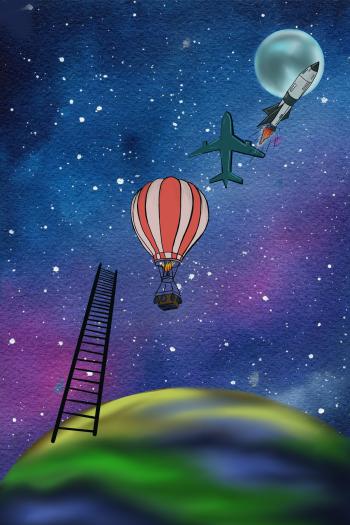
No se puede seguir modificando una tecnología y obtener resultados cada vez mejores. Con el tiempo, un principio debe cambiar. Escaleras cada vez más largas no te llevan a la luna.
La economía, aunque es gigantesca, es en sí misma una tecnología. [...] Y tal vez necesite nuevos principios. Diferentes principios según los cuales la economía podría operar para beneficiar a más personas y respetar que somos parte de la naturaleza, no aparte de ella. ¿Qué aspecto tendrían?
¿Qué hay para mí ahí? subyace a la mayor parte del pensamiento económico. Los economistas que se remontan a Adam Smith han argumentado que actuar por interés propio producirá una economía vibrante para tod@s. Quizás deberíamos preguntarnos ¿Qué hay para nosotr@s ahí? para equilibrar las cosas.
No es personal, es estrictamente empresarial: como lo expresó Michael Corleone en El Padrino, este principio explica cómo llevar la puntuación: por resultados y consecuencias. Quizás una mejor orientación sea centrarse en las relaciones y en lo que es personal en la forma en que operamos y dejar que los resultados fluyan desde allí.
La supervivencia del más fuerte: trata sobre el poder, y es a la vez un consejo (hazte fuerte) y una amenaza (para no ser invadido por aquellos más fuertes que tú).
Probablemente, este principio sea el que más nos atrapa. Porque siempre hay alguien (o algo) con más poder, más dinero, más influencia o comportándose de forma más agresiva que nosotr@s. Lo que puede convencernos de que nosotr@s (y los sistemas que creamos) también debemos volvernos más poderos@s. Nuestro continuo esfuerzo, superación, nuestra necesidad de ser competitiv@s y ser recompensad@s, de eclipsar, de cosechar las recompensas: estos patrones se filtran en nuestras vidas y sustentan los sistemas que construimos y de los que vivimos.
Sin embargo, por muy alto que subamos en la escalera del poder, nunca llegamos a un lugar seguro en la cima. Hasta que, finalmente, reconocemos que la escalera está apoyada contra una pared que no hay forma de pasar. A menos que cambiemos un principio fundamental. A menos que abandonemos nuestra creencia de que con suficiente poder, las cosas mejorarán. Y hacia lo que los líderes espirituales podrían llamar amor o compasión.
¿Esto parece una locura? (A mí me lo habría parecido hace unos años). Si es así, aquí hay algo en que pensar (atribuido al filósofo alemán del siglo XX Nietzsche): “Y aquellos que eran vistos bailando eran considerados locos por aquellos que no podían escuchar la música”. Escuchemos.
Preguntas semilla para la reflexión: ¿Cómo te relacionas con la necesidad de nuevos principios para hacer evolucionar nuestro pensamiento económico? ¿Puedes compartir una historia personal de alguna vez en la que descubriste nuevos principios para dar un salto no incremental en tu esfuerzo? ¿Qué te ayuda a escuchar profundamente para descubrir nuevos principios? Michael Gordon es profesor jubilado de la Universidad de Michigan y autor de Doing Good With Money (¡ofrecido gratuitamente con un acto de bondad!).
Michael Gordon is a retired professor at University of Michigan, and author of
Doing Good With Money (offered freely with an act of kindness!).
Seed Questions for Reflection
How do you relate to the need for new principles for evolving our economic thinking? Can you share a personal story of a time you discovered new principles to make a non-incremental leap in your endeavor? What helps you listen deeply to discover new principles?