La diferencia entre conocimiento y comprensión
--por Aldous Huxley
El conocimiento se adquiere cuando logramos encajar una nueva experiencia en el sistema de conceptos basados en nuestras viejas experiencias. La comprensión llega cuando nos liberamos de lo viejo y así hacemos posible un contacto directo e inmediato con lo nuevo, el misterio, momento a momento, de nuestra existencia.
La comprensión no es conceptual y, por tanto, no se puede transmitir. Es una experiencia inmediata, y sólo se puede hablar de ella (de manera muy inadecuada), nunca compartirla. En realidad, nadie puede sentir el dolor o la pena de otra persona, el amor, la alegría o el hambre de otra persona. Y de la misma manera nadie puede experimentar la comprensión de otro sobre un determinado evento o situación… Siempre debemos recordar que el conocimiento de la comprensión no es lo mismo que la comprensión, que es la materia prima de ese conocimiento. Es tan diferente de la comprensión como la prescripción médica de penicilina es diferente de la penicilina.
La comprensión no se hereda ni se puede adquirir laboriosamente. Es algo que, cuando las circunstancias son favorables, nos llega, por así decirlo, por sí solo. Tod@s nosotr@s somos conocedores, todo el tiempo; sólo de vez en cuando y a pesar de nosotr@s mism@s comprendemos el misterio de una realidad dada.
Este descubrimiento puede parecer al principio bastante humillante e incluso deprimente. Pero si los acepto de todo corazón, los hechos se convierten en fuente de paz, motivo de serenidad y alegría.
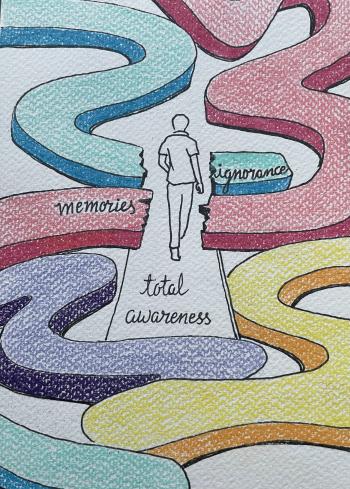
En mi ignorancia estoy seguro de que soy eternamente yo. Esta convicción tiene sus raíces en una memoria cargada de emociones. Sólo cuando, en palabras de San Juan de la Cruz, la memoria ha sido vaciada, puedo escapar del sentido de mi separación estanca y prepararme así para la comprensión, momento a momento, de la realidad en todos sus niveles. Pero la memoria no puede vaciarse mediante un acto de voluntad, ni mediante una disciplina sistemática, ni mediante la concentración, ni siquiera mediante la concentración en la idea de vacío. Sólo puede vaciarse mediante una conciencia total. Por lo tanto, si soy consciente de mis distracciones (que en su mayoría son recuerdos cargados de emociones o fantasías basadas en tales recuerdos), el torbellino mental se detendrá automáticamente y la memoria se vaciará, al menos por un momento o dos. Nuevamente, si tomo plena conciencia de mi envidia, mi resentimiento, mi falta de caridad, estos sentimientos serán reemplazados, durante el tiempo de mi conciencia, por una reacción más realista a los acontecimientos que suceden a mi alrededor. Mi conciencia, por supuesto, no debe estar contaminada por la aprobación o la condena. Los juicios de valor son reacciones condicionadas y verbalizadas a reacciones primarias. La conciencia total es una respuesta primaria, imparcial y sin elección a la situación presente en su conjunto.
El sentido común no se basa en una conciencia total; es producto de convenciones, o de recuerdos organizados de las palabras de otras personas, de experiencias personales limitadas por la pasión y los juicios de valor, de nociones sagradas y del desnudo interés propio. La conciencia total abre el camino a la comprensión, y cuando se comprende cualquier situación dada, la naturaleza de toda la realidad se manifiesta y las declaraciones sin sentido de los místicos se consideran verdaderas, o al menos tan cercanas a la verdad como es posible para un individuo expresar verbalmente al inefable ser. Uno en todos y todos en Uno; el samsara y el nirvana son lo mismo; la multiplicidad es unidad, y la unidad no es tanto uno sino no dos; todas las cosas son el vacío y, sin embargo, todas las cosas son el Dharma (Cuerpo del Buda), etc. En lo que respecta al conocimiento conceptual, tales frases carecen por completo de significado. Sólo cuando hay comprensión tienen sentido. Porque cuando hay comprensión, hay una fusión experimentada del Fin con los Medios, de la Sabiduría, que es la realización eterna de la “Talidad”, con la Compasión que es la Sabiduría en acción.
Preguntas semilla para la reflexión: ¿Cómo te relacionas con la diferencia entre conocimiento y comprensión? ¿Puedes compartir una historia personal de alguna vez en la que tuviste una conciencia no contaminada por la aprobación o la condena? ¿Qué te ayuda a desarrollar la comprensión?
Aldous Leonard Huxley fue un escritor y filósofo inglés. Escribió casi 50 libros, tanto novelas como obras de no ficción, así como una amplia variedad de ensayos, narrativas y poemas.
Aldous Leonard Huxley was an English writer and philosopher. He wrote nearly 50 books—both novels and non-fiction works—as well as wide-ranging essays, narratives, and poems.
Seed Questions for Reflection
How do you relate to the difference between knowledge and understanding? Can you share a personal story of a time you had an awareness uncontaminated by approval or condemnation? What helps you build understanding?