We're Voting With Our Attention

Image of the Week
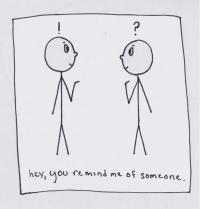
Hand-drawn art by Rupali Bhuva
Image of the Week
Estamos votando con nuestra atención
- por Leah Pearlman


En la base del tronco encefálico hay un conjunto de neuronas llamado Sistema de Activación Reticular (SAR). El SAR actúa como una especie de rebote para el cerebro. Nuestros sentidos absorben demasiaaaaaaaada información para que nuestra mente consciente pueda procesarla, por lo que debemos filtrar los datos que no son relevantes para nosotros y permitir que pasen los que importan. El SAR realiza el filtrado.


¿Cómo sabe el SAR qué dejar pasar? Al enfocarnos en algo, le decimos al SAR "Esto es importante para mí". Entonces, de toda la miríada de datos que encuentran nuestros sentidos, el SAR permite que nuestra mente consciente procese principalmente lo que hemos declarado que es importante al prestarle nuestra atención.

Por eso respondemos a nuestro propio nombre cuando alguien lo pronuncia en una habitación llena de gente. Porque el SAR ha determinado que esa la mezcla de sonidos sea más importante que otras mezclas de sonidos.


Sin embargo, el SAR, y quizás el resto de nuestro cerebro, realmente no entiende "No" . Se comunica consigo mismo mediante imágenes, impresiones y sentimientos. Si digo, "NO imagines un corazón rosa", probablemente no solo imagines uno, sino que es más probable que te fijes en el próximo corazón rosa que se cruce en tu camino. Si le dices a tu cerebro (pensando) "Odio estar solo", es probable que prestes más atención a cuando cenas solo, pero filtra todo el tiempo que pasas conectándote con personas en Zoom. Si te preocupa "Me voy a arruinar", entonces es más probable que notes tus propios gastos que la generosa comida que tu amigo te acaba de preparar. El SAR está diseñado para dejar pasar lo que has expresado que es importante para ti por lo que se enfoca y excluye todo lo demás. En estos ejemplos, deja pasar evidencia de soledad y ruptura, y excluye evidencia de conexión y riqueza.


Cuanto más nos enfocamos en lo que NO queremos, más evidencia vemos de esas cosas y menos notamos evidencia u oportunidades de lo que SÍ queremos. Esta evidencia desigual refuerza nuestras creencias en nuestros problemas, lo que hace que nos enfoquemos más en lo que no queremos y el ciclo continúa.


Entonces, ¿cómo interrumpimos este ciclo? Centrando nuestra atención en lo que nos gusta y queremos ver crecer. Si queremos ver un mundo más saludable, entonces literalmente tenemos que entrenar nuestro cerebro para poder verlo enfocándonos en lo que vemos que ya es saludable. Busquemos ejemplos existentes en nuestras vidas de lo que decimos que queremos, y pongamos más atención en eso, que en lo que creemos que falta. Como dijo Bucky Fuller: "Nunca cambias las cosas luchando contra la realidad existente. Para cambiar algo, construye un nuevo modelo que haga obsoleto el modelo anterior". Cuanto más hagamos eso, más evidencia de positividad veremos y más esperanza tendremos. Y estaremos más energizados y motivados para seguir creando un mundo más hermoso.

Estamos votando con nuestra atención.

Preguntas semilla para la reflexión: ¿Cómo te relacionas con la noción de que al obsesionarnos con las cosas que no queremos, estamos entrenando nuestro cerebro para ignorar lo que sí queremos? ¿Puedes compartir una historia personal de un momento en que te diste cuenta de que los patrones de hábitos de tu cerebro estaban haciendo que te concentraras en lo contrario de lo que deseabas? ¿Qué te ayuda a re-entrenar tu cerebro para que se concentre en lo que realmente valoras?

Leah Pearlman es artista, cocreadora del botón de “like” de Facebook y, más recientemente, fundadora de Dharma Comics. Extracto anterior de su boletín informativo más reciente.

Seed Questions for Reflection

How do you relate to the notion that by obsessing about things we don't want, we are training our brains to ignore what we do want? Can you share a personal story of a time you became aware that your brain's habit patterns were causing you to focus on the opposite of what you wanted? What helps you retrain your brain to focus on what you truly value?


Moved by this reading? Join a live Awakin Circle to discuss in community.
Join this week
More ways to connect

Add Your Reflection

12 Past Reflections
EL
Oct 25, 2020
Wow! Such an important brain function to understand and observe in daily living. Thank you so much for helping me further attend to the best daily focuses and observations ❤️
SG
Oct 14, 2020
We find what we seek. If we are concentrating on the negativity , we are sure to encounter that and if we are concentratingon positivity we are again sure to encounter that too. It is up to us , what we train our minds to do. When we are deeply focussed on shortcomings of a person or a thing , our mind conveniently misses the goodness in the person or the beauty of the object. I remember going on a trek. It was a beautiful place . However we started concentrating on how bad the roads were , how difficult the trek was, poor facilities and we were finding no joy in the trek . Someone pointed out that there was so much beauty around , which we were missing and the moment we started concentrating and appreciating the beauty around we almost forgot about the difficultiesof the trek. By being mindful of our thought process, we can train our mind into positive sid eof things and making it focus on them. We will find what we seek. We just need to be mindful what we are seeking.... View full comment
AJ
aj Oct 15, 2020
So true! Amen!
AP
Oct 13, 2020
Thoughts lead to Action ; Actions form Habit ; Habit develops Character and Character reaps Destiny. Indeed very thought provoking to sync ourselves with DOs.
SH
Oct 13, 2020
This is so true especially with close relationships, where we tend to focus on the negatives and now I understand why they seem to be glaring down on me each time I want to make a change for the better. The focus is so much on the errors and what things should not be like that they are pretty soon compounded and a Molehill becomes a mountain :-). I needed this lesson today.
MN
Oct 13, 2020
We are what we think about. And what we think about expands. In our lives, in our world. Ancient concept, continued truth.
SG
Shyam Gupta Oct 14, 2020
Yes, so true. We only find what we seek.
MP
Oct 13, 2020
Paying attention to the positive in the midst of this election is important because it is so easy to be seduced into the incessant rants and anger about the present administration which will be repeated with the next one. It is really about knowing what is important and what is not... thinking of you from the peaceful place of canada.
RA
Oct 11, 2020
Loved this articulation of voting with attention in our era where attention is being ever more deeply mined and manipulated by the most powerful corporations in the world. Training attention to stay where we'd like it is 'concentration'. Aiming concentration at the deeper layer of reality is 'meditation'. Becoming accomplished in meditation is the ultimate rebellion, the final revolution that is beyond any change we seek in the ordinary dysfunction of the world. Until the final revolution has awakened in my own being, besides voting with my attention, I'll vote with my ballot as if my life depended on it even as I attempt to hold any electoral outcome equally lightly.
BU
Brenda Ullrich Oct 13, 2020
Love your writing, Rahul
All the best
DD
Oct 10, 2020
Pearlman's essay is a complex way of saying we think about what we think about. It says the RAS lets in what we obsess about, so if we obsess about something we don't want, we train our brains to ignore what we want and focus on what we don't want. Sometimes I obsess over something. Yes, that's a brain habit pattern that is a problem. Obsessing over something leads to obsessing more over it and not thinking about other things. The cure is to break the habit of obsessing, which can be difficult to accomplish -- I've been messing with it for years. Redirecting my thinking to intentionally focus on what I value helps retrain my brain to allow in what I value and keep out what I don't want. In some situations, reducing my thinking altogether helps.
JP
Oct 9, 2020
I have learned a long time ago that our mind is the cause of liberation or bondage. How do I use my mind is in my hand. If I dwell on negative thoughts negative feelings and actions I get negative outcomes. Research studies done by positive psychologists show how we create our own happiness or misery by what we think and what choices we make. We can reinforce our brain's negative bias by thinking negatively. It is up to us to decide how to use our mind. The inner light of wisdom os pure consciousness helps us to make positive changes in our mind and that way rewiring our brain. And this way we are creating positive or constructive brain's habitual patterns. It is helpful to have information about how the application of positive psychology creates positive changes in our brain and in our personal behavior and our social transactions. Transformation takes place when we apply the information in our actions.I know what I need to do to preserve and enhance my physical health. It is... View full comment