We're Voting With Our Attention

Image of the Week
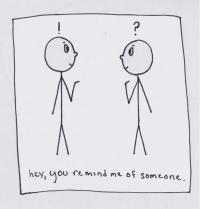
Hand-drawn art by Rupali Bhuva
Image of the Week
Nous votons avec notre attention
-- de Leah Pearlman

A la base du tronc cérébral, il y a un paquet de neurones appelé Système d’Activation Réticulaire (SAR). Le SAR agit comme une sorte de videur de boîte de nuit pour le cerveau. Nos sens absorbent beaaaauucoup trop d’informations, bien plus que notre esprit conscient ne puisse traiter, donc nous devons éliminer les données qui ne nous sont pas pertinentes et nous concentrer sur celles qui importent. Le SAR effectue ce filtrage.

Comment est-ce que le SAR sait ce qu’il faut laisser passer ? En nous concentrant sur quelque chose, nous disons au SAR « Ceci est important pour moi. » Alors, parmi toute la myriade de données que nos sens rencontrent, le SAR permet à notre esprit conscient de traiter principalement celle que nous avons déclarée comme importante, en lui donnant notre attention.

C’est pourquoi nous répondons à notre prénom lorsque quelqu’un le dit dans une salle remplie de monde. Le SAR a déterminé que ce fouillis de sons était plus important que d’autres fouillis de sons.

Cependant, le SAR, et peut-être le reste de notre cerveau, ne comprend pas vraiment « Non » ou « Pas. » Il communique lui-même en images, impressions et sentiments. Si je dis « NE te représente PAS de cœur rose, » non seulement vous allez vous imaginer un cœur rose, mais vous allez probablement remarquer le prochain cœur rose que vous rencontrerez. Si vous dites à votre cerveau (en pensant) « Je déteste être seul », alors vous allez faire plus attention au fait que vous dîniez seul, mais faire abstraction à chaque fois que vous vous connecterez avec des gens sur Zoom. Si vous vous inquiétez en pensant « Je vais faire faillite », alors vous allez faire plus attention à vos propres dépenses qu’au repas que votre ami vient juste de vous préparer généreusement. Le SAR est conçu pour laisser passer ce que vous avez exprimé être important pour vous, en retenant ce sur quoi vous vous concentrez. Et il exclut le reste. Dans ces exemples, il a laissé passer les indices de solitude et de faillite, et a exclu les indices de connexion et de richesse.

Plus on se concentre sur ce que l’on NE veut PAS, plus nous voyons des indications sur ces choses, et moins nous remarquons les opportunités et les indications de ce que nous VOULONS. Ces indices bancals renforcent nos croyances sur nos problèmes, raisons pour lesquelles nous nous concentrons plus sur ce que nous ne voulons pas, et le cycle continue.

Alors, comment interrompons-nous ce cycle ? Nous concentrons notre attention sur ce que nous aimons et ce que nous voulons voir plus souvent. Si nous voulons voir un monde en meilleure santé, alors nous devons littéralement entraîner nos cerveaux à être capables de voir cela, en nous concentrant sur les choses en bonne santé que nous voyons déjà. Nous cherchons des exemples existants dans nos vies, de ce que nous disons vouloir, et nous portons plus notre attention sur cela, plutôt que sur les choses que nous croyons manquer. Comme Bucky Fuller le dit, « Vous ne changez jamais les choses, en vous battant contre la réalité existante. Pour changer quelque chose, construisez un modèle qui rend le vieux modèle obsolète. » Plus nous faisons cela, plus nous verrons les indications de positivité, et plus nous aurons d’espoir. Et plus nous serons stimulés et motivés pour créer un monde meilleur.
Nous votons avec notre attention

=====

Questions pour faire germer la réflexion : Comment vous identifiez-vous au fait qu’en étant obsédés par des choses que nous ne voulons pas, nous entraînons notre cerveau à ignorer ce que nous voulons ? Pouvez-vous partager une histoire, dans laquelle vous êtes devenu conscient que les habitudes de pensées de votre cerveau vous ont poussé à penser l’opposé de ce que vous vouliez vraiment ? Qu’est-ce qui vous aide à ré-entraîner votre cerveau pour vous concentrer sur ce que vous estimez vraiment ?

=====

Note du traducteur : SAR (Système d’Activation Réticulaire) a été traduit de l’anglais RAS (Reticular Activating System).
Seed Questions for Reflection

How do you relate to the notion that by obsessing about things we don't want, we are training our brains to ignore what we do want? Can you share a personal story of a time you became aware that your brain's habit patterns were causing you to focus on the opposite of what you wanted? What helps you retrain your brain to focus on what you truly value?


Moved by this reading? Join a live Awakin Circle to discuss in community.
Join this week
More ways to connect

Add Your Reflection

12 Past Reflections
EL
Oct 25, 2020
Wow! Such an important brain function to understand and observe in daily living. Thank you so much for helping me further attend to the best daily focuses and observations ❤️
SG
Oct 14, 2020
We find what we seek. If we are concentrating on the negativity , we are sure to encounter that and if we are concentratingon positivity we are again sure to encounter that too. It is up to us , what we train our minds to do. When we are deeply focussed on shortcomings of a person or a thing , our mind conveniently misses the goodness in the person or the beauty of the object. I remember going on a trek. It was a beautiful place . However we started concentrating on how bad the roads were , how difficult the trek was, poor facilities and we were finding no joy in the trek . Someone pointed out that there was so much beauty around , which we were missing and the moment we started concentrating and appreciating the beauty around we almost forgot about the difficultiesof the trek. By being mindful of our thought process, we can train our mind into positive sid eof things and making it focus on them. We will find what we seek. We just need to be mindful what we are seeking.... View full comment
AJ
aj Oct 15, 2020
So true! Amen!
AP
Oct 13, 2020
Thoughts lead to Action ; Actions form Habit ; Habit develops Character and Character reaps Destiny. Indeed very thought provoking to sync ourselves with DOs.
SH
Oct 13, 2020
This is so true especially with close relationships, where we tend to focus on the negatives and now I understand why they seem to be glaring down on me each time I want to make a change for the better. The focus is so much on the errors and what things should not be like that they are pretty soon compounded and a Molehill becomes a mountain :-). I needed this lesson today.
MN
Oct 13, 2020
We are what we think about. And what we think about expands. In our lives, in our world. Ancient concept, continued truth.
SG
Shyam Gupta Oct 14, 2020
Yes, so true. We only find what we seek.
MP
Oct 13, 2020
Paying attention to the positive in the midst of this election is important because it is so easy to be seduced into the incessant rants and anger about the present administration which will be repeated with the next one. It is really about knowing what is important and what is not... thinking of you from the peaceful place of canada.
RA
Oct 11, 2020
Loved this articulation of voting with attention in our era where attention is being ever more deeply mined and manipulated by the most powerful corporations in the world. Training attention to stay where we'd like it is 'concentration'. Aiming concentration at the deeper layer of reality is 'meditation'. Becoming accomplished in meditation is the ultimate rebellion, the final revolution that is beyond any change we seek in the ordinary dysfunction of the world. Until the final revolution has awakened in my own being, besides voting with my attention, I'll vote with my ballot as if my life depended on it even as I attempt to hold any electoral outcome equally lightly.
BU
Brenda Ullrich Oct 13, 2020
Love your writing, Rahul
All the best
DD
Oct 10, 2020
Pearlman's essay is a complex way of saying we think about what we think about. It says the RAS lets in what we obsess about, so if we obsess about something we don't want, we train our brains to ignore what we want and focus on what we don't want. Sometimes I obsess over something. Yes, that's a brain habit pattern that is a problem. Obsessing over something leads to obsessing more over it and not thinking about other things. The cure is to break the habit of obsessing, which can be difficult to accomplish -- I've been messing with it for years. Redirecting my thinking to intentionally focus on what I value helps retrain my brain to allow in what I value and keep out what I don't want. In some situations, reducing my thinking altogether helps.
JP
Oct 9, 2020
I have learned a long time ago that our mind is the cause of liberation or bondage. How do I use my mind is in my hand. If I dwell on negative thoughts negative feelings and actions I get negative outcomes. Research studies done by positive psychologists show how we create our own happiness or misery by what we think and what choices we make. We can reinforce our brain's negative bias by thinking negatively. It is up to us to decide how to use our mind. The inner light of wisdom os pure consciousness helps us to make positive changes in our mind and that way rewiring our brain. And this way we are creating positive or constructive brain's habitual patterns. It is helpful to have information about how the application of positive psychology creates positive changes in our brain and in our personal behavior and our social transactions. Transformation takes place when we apply the information in our actions.I know what I need to do to preserve and enhance my physical health. It is... View full comment