The False Self From Childhood

Image of the Week
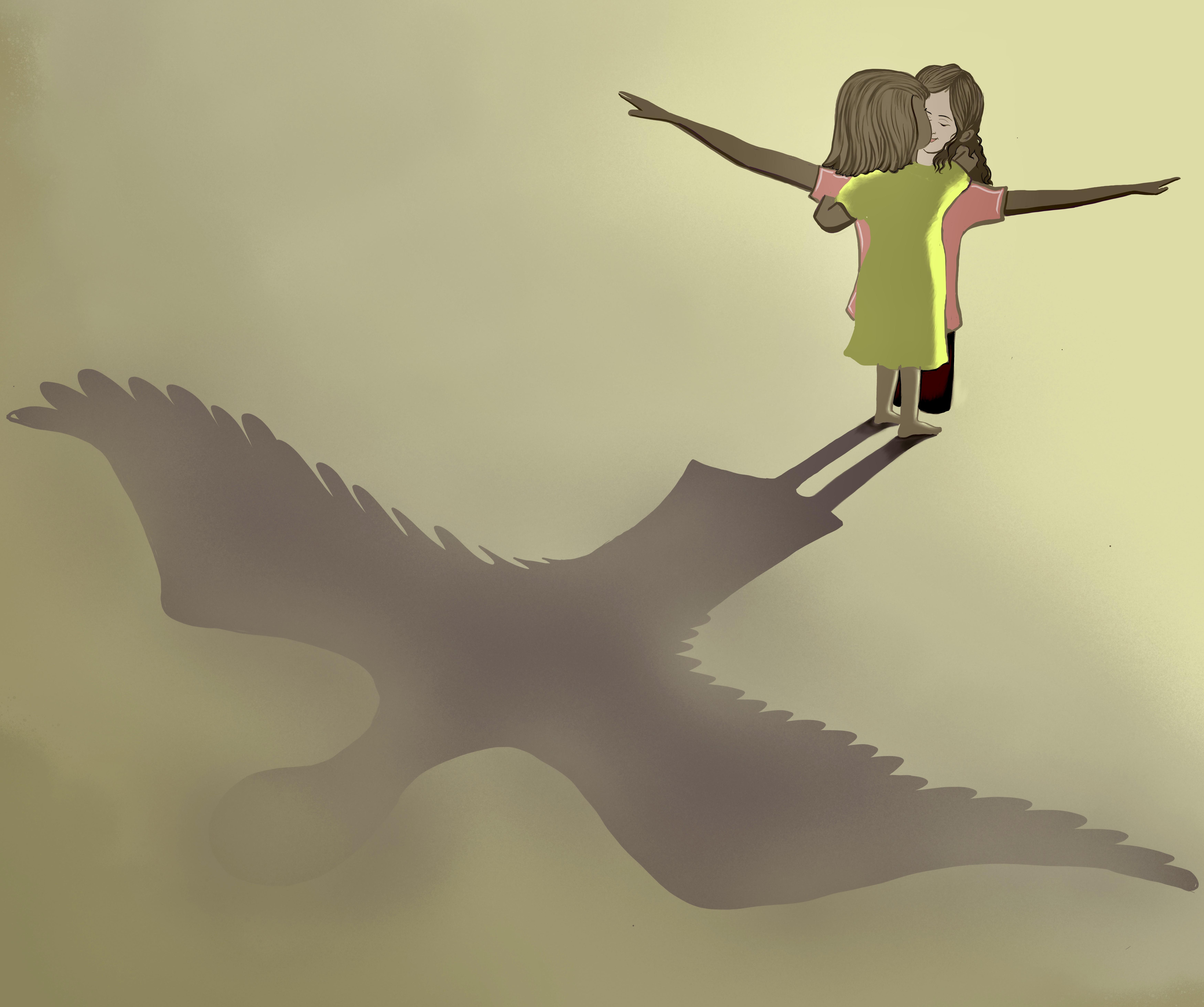
Hand-drawn art by Rupali Bhuva
Image of the Week

I ran across a developmental psychology theory not long ago that I’ve had bouncing around in the back of my head ever since. It comes from the pediatrician and psychoanalyst Donald Winnicott, who coined the term “good-enough mother” to describe the everyday kind of parent who does their best to meet their child’s needs and only fails at doing so in ordinary and understandable, even inevitable ways. His theory is about the origins and development of two distinct selves in each of us, a “true self” and a “false self.”

As babies and very young children, Winnicott says, each of us instinctively expresses our true selves: we cry when we’re hungry or tired or in distress; as toddlers, we act with creativity and spontaneity without much (if any) thought about what’s correct or proper, and we can have the most dramatic emotional outbursts when we don’t get what we want. We can’t help but express our true selves when we’re very young, because we can’t do otherwise; we need what we need and we want what we want, and we do our best to get it.

And here’s the crux of the whole thing: If our caregivers are attuned and capable, if they’re able to read our true expressions of need and want and (mostly) gratify them most of the time, it strengthens a belief in us that our most honest needs are okay, and that we ourselves are relatable and worthy. If we receive this “true self” recognition and reassurance as children, then we’re much more likely to move into adulthood connected to our true self, willing to live openly, alive and present to our most deeply felt longings.

But some of us don’t get that much-needed reassurance. As very young children we express our truest needs and our caregivers can’t respond adequately or consistently, due to things like depression or addiction, and we come to learn that our most basic needs aren’t acceptable or relatable. Winnicott says that in cases like this a child becomes “compliant,” meaning they don’t just stop expressing their truest needs to caregivers unable or unwilling to meet them, they lose touch with those deepest needs by convincing themselves they weren’t the very things they needed in the first place. This adaptive story is, according to Winnicott, the birth of the “false self,” which is also the compliant self.

More simply put, I think the theory is that when we’re very young, we need to have adults around us who are strong enough and capable enough and loving enough that we can express our wants and desires with as much anti-social self-centeredness as humanly possible, and they will consistently love us unconditionally, accept us, and give us what we need most of the time. By doing so, they teach us that we can truly be our most authentic selves and the world will still hold us, accept us, even love us. And when we don’t get that, we learn the opposite: that the world might not accept us and almost certainly won’t love us if we express our true needs or callings. And even more, we’ll do such a good job convincing ourselves we don’t want what we in fact need, that we’ll live lives divorced from our creativity and passions because we can’t find our way back to them after those first and formative lies. We’ll be lost in our false selves, accommodating others, not trusting the world to be strong or capable enough to hold us dearly.

Seed Questions for Reflection

How do you relate to young people’s need for safety such that basic wants and desires can be expressed with as much anti-social self-centeredness as humanly possible, and still be loved unconditionally? Can you share a personal story of a time you retained the connection to your authentic self due to unconditional acceptance of your need? What helps you balance the need for authenticity with the harm caused by unskillful expression of our need?

Moved by this reading? Join a live Awakin Circle to discuss in community.
Join this week
More ways to connect

Add Your Reflection

14 Past Reflections
KA
karen
Oct 23, 2024
Regardless of the variety in life of what the child may experience, while I agree parents must make the child their top priority in all beneficial ways possible...when can the adult child be expected to choose to see their parents with the compassion and acceptance that they feel they were deprived? Such as this being the discussion vs. to notice where in life as adults their parents fell short raising them, and to blame that? How is it so obvious we grow up and know what we lived growing up as good or not good enough? What if their memory is incorrect? Why not instead give in return and all the more, in ways that they feel they lacked receiving growing up as young children? I've witnessed this scenario where the adult kids seem compelled to retaliate, as they've been counseled to do for parents who lived with struggles while managing them well enough to provide very good lives for their children. Only to be judged and disowned by their children due to their dissatisfaction with lif... View full comment
DA
dana
Jun 26, 2024
This is a very interesting reflection. I ponder - what if we shifted our mindset from this individual, isolated family unit with one individual responsible for raising a child to navigate the world, to a community mindset with all of us responsible for nurturing and tending to the needs of one another?
QU
Quique Jun 29, 2024
Excelente reflexión, el cuidado comunitario es mucho mejor y desapegado. Seamos responsables del bien común.
SH
Jun 25, 2024
Children deserve unconditional love from parents.
CT
Jun 25, 2024
I am sick and tired of mothers and "caregivers" being expected to be the be-all and end-all of "giving a child x y z" or the poor child "won't develop properly." Why not just accept that we all don't get what we want or need all the time and this World is NOT here to do this?

Stop blaming mothers and expecting them to be some kind of SAINT. If the child was fed and clothes and lived to adulthood with the help of the mother, then say THANK YOU to her and let the child grow up in the REAL WORLD as WE KNOW IT and AS IT IS.

The world is NOT always "helpful, cozy, welcoming and warm." Growing into adulthood has some self-obligations as well.

Yes, that is what it means to GROW UP.
JL
Jun 25, 2024
When ma son was wee he said to me it a huff da a don't love you and a said tae him son a love you no matter wit and that stopped the hissy fit.

And writtin this in the vernacular of ma scots tongue is an expression in an' off itself of me mettin ma authentic need fir expression assumin the wirld will accept me as who a um.
AP
Jun 25, 2024
Coaching children to differentiate between 'NEED' and 'GREED' is vital. It is best taught through own behaviour and examples.
CO
Jun 25, 2024
Very true. According to Dr. Gabor Mate, infants need two things: to express authenticity and attachment to caregivers: if you are taught by your parents that you'll only be loved if you don't cry, you learn to repress your real self (i.e. not express your authentic true self) in order to still get the attachment you need for survival. I think it's a real tragedy in our society that too many parents expect their babies to adapt to Mom and Dad's expectations, thereby repressing the child's true self. This creates traumatized people, who in turn, end up being traumatized parents. A must-read book regarding this is Dr. Mate's most excellent "The Myth of Normal" .
JP
Jun 23, 2024
A long time ago I had read that childhood is the fatherhood of a human being. How I am raised as a 2 to 3 year old child lays the foudation of my adulthood. Seeds of "true self" or authentic self are planted in early childhood. Our "true self" is naturally developd by the unconditional love and positive regard by our parents or care takers. If as children we were raised by adults who were raised in authoratarian ways our adult self will be shaped by such experiences. I was raised by parents who were neither authoritarian or "do as you please"- laissez faire ways. They woud let me follow my needs, wishes and passion if that way of behaving did not hurt me and hurt others. This way of being raised by my parents created wholesome balance in my life. There are many examples of narcisstic, self-centered and autocratic leaders in the world we live in. It is very imporant for us as parents to raise our children in loving, caring and authentic ways. This is a challening task for us a... View full comment
ST
Jun 22, 2024
Hmmm- I appreciate what Eric is exploring here, however my experience is that there are many variables in the way I have formed and continue to create “ a true self” that accepts my needs and is learning how to meet needs. The basics for me is to love and be loved. The complexities come from self doubt and fear which have formed from experiences as diverse as my mother’s hormones , dysfunctional teachers and neighbors and on going world events.
Learning Marshall Rosenberg’s compassionate communication model has helped me and I think has revolutionary potential for change.
AW
Jun 21, 2024
In our perfectly imperfect world I wonder what percentage of people actually experience sustained unconditional nurturing support. I doubt it is many, and on this the wheel of our perfectly imperfect world turns.
DD
Jun 21, 2024
I think it's important that basic wants can be expressed with non-social, not anti-social, self-centeredness. I think it's also important that a child start learning at an early age (maybe by 4 or so) that the world isn't there for him -- if he doesn't learn that, he may grow up to be president but he's a big problem to society. The world doesn't always hold, accept, or love us -- to me that's reality. Connection to my authentic self has been up and down. I do know connection to my authentic self has been helped by acceptance from others. I think unconditional acceptance ends by the time a person is 2 or 3 (Winnicott may have said that too), and I think any acceptance or amount of acceptance is helpful. What helps me balance the need for authenticity etc is accepting that my want is authentic and accepting that many of my expressions are lacking skill and not done well.
SH
Jun 20, 2024
It is very sad to see infants and very young children especially surrounded by adults who are not available emotionally to respond in appropriate ways. Most likely the parents themselves are likely to have suffered such negligence and deficiency as youngsters. Yes I have experienced the same lack of response too and got into the habit of receiving it from other adults who luckily did not betray that trust.
ST
Jun 20, 2024
The 'need' 'urgency' to live... harmoniously as well as authentically
... ie according to our unsanitised 'urgecies'
is a basic tension and a basis for... education for life....for all living beings...(esp humans)