Featured Speaker
Satyan Mishra
Beneficiaries to Stewards: Twenty-Five Years with Rural India
Reflection Question
When have you watched someone you were helping become the owner of their own path?
Share Your Reflection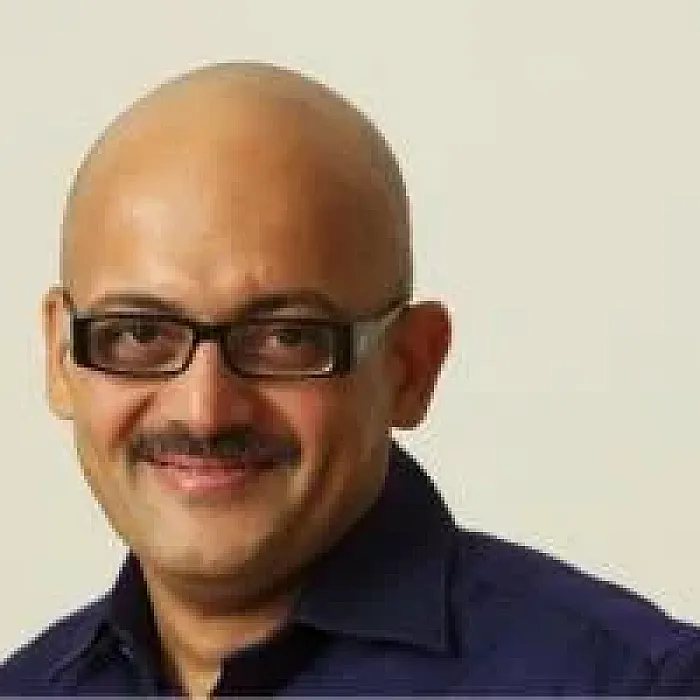
In January 2000, a government project took Satyan Mishra, then running a computer business in Bhopal, to a village in Madhya Pradesh. It "felt like homecoming." Twenty-five years on, Drishtee, the rural enterprise network he co-founded, has supported more than 15,000 rural entrepreneurs; he has been an Ashoka Fellow since 2004. The road ran through failure, a stress episode and Mount Kailash, into a question he still lives: how do communities come to own what they build, and what must change in those who serve them?
Today Drishtee runs through women-led entrepreneur collectives, village banking agents and a COVID-era barter system valuing goods by time and skill rather than price. Its symbol, he says, is a young rural artisan handing him her visiting card with "CEO" above her own brand name. With his wife and co-founder, Swapna, he is now building Deuka Communities to take that ownership further. "Systems change," he says, "is to leave all your prior certainties behind and just be with the community. I learnt empathy from the women we work with."
He grew up in Bihar and spent most school holidays in its villages. At eight, he watched a watershed project near his village -- an earthen structure built to hold back a flooding river -- succeed, then stall when its international funding was withdrawn. His father died while Satyan was in college in Delhi, and he supported the family by tutoring. A stock market crash later took his savings. In the city, he said, "I lost track of many things."
After an MBA, he started Cyber Edge, a Bhopal computer school that became the city's largest website-design business within two years, buying him a car and a house. "That was the end of all my dreams; I never wanted to become a millionaire." A government project put him in charge of Dhar's village kiosks -- one-person shops selling services from passport photos to insurance -- where he swapped salaried staff for local entrepreneurs who, he marveled, learned fast: "I had not imagined that such a creature could be found in the village."
That project went on to win the Stockholm Challenge Award, and the district's top government officer invited Satyan to receive it with him. Holding it, he says, is when he first realized the scale of what they had built: "I had never realized that it was so big."
Drishtee grew to more than a thousand such kiosks by 2007, though not smoothly. "By 2003, I thought that we had made it," he said. "Then things crashed." A telemedicine kiosk he set up in Saurath, his childhood village, connected patients to distant doctors; visits fell from twenty a day to one or two. "We were too smitten by our technology and our business model to see its cracks," he wrote. Social enterprises, he concluded, should be "first and foremost, listening enterprises."
On a flight to an investment meeting, he could not breathe. "The diagnosis was simple, I was stressed." Six months later he stood beside Lake Manasarovar, below Mount Kailash, with his mother, who had first met the plan with an "immovable NO." "The ego surrendered itself," he recalls, "and for the first time I felt devoid of control but completely safe." Still "not a great believer" in meditation, he came home to a daily breath practice.
He now calls himself a "spiritual entrepreneur" -- his own term for what that journey left him with. Entrepreneurship, he has written, leans on what he calls "the male ego characteristic"; without the "female characteristic" of caring and sharing, "the system heats up causing stress." Service changes, he suggests, when communities "cease to be beneficiaries and become stewards."
Join us in conversation with this listening entrepreneur, still learning when to step in and when to step back...
Five Questions with Satyan Mishra
What Makes You Come Alive?
I am alive because I am happy. I am happy because I love to take responsibilities. I would like to make the world a happier place by building models which gives agency to the beneficiaries.
Pivotal Turning Point in Your Life?
The day a young rural woman artisan gave me her visiting Card with her brand name in bold and CEO written above it.
An Act of Kindness You'll Never Forget?
A rural elderly woman inviting my do not to eat rice when she came to know that rice does not grow from he came.
One Thing On Your Bucket List?
Building a rural health voice based health diagnostic model
One-Line Message for the World?
Do good for others and remain happy
Related Calls
Prof. Anil Gupta
Sep 4, 2021
From Knowledge to Wisdom
Carrie Newcomer
Mar 21, 2020
Asking the Right Questions in Song
Terry Patten
Jul 28, 2018
A New Republic of Heart