Call Nuggets
Gunther Weil
Portals to Presence
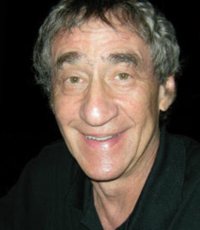 Last Saturday, we had the privilege of hosting Awakin Call with Gunther Weil.
Gunther Weil is a Harvard-trained psychologist, executive coach, and lifelong student of consciousness. The bulk of his life's work sits at the intersection of psychology, philosophy, and spirituality. He brings others to what he calls a Portal to Presence — a simple doorway that effortlessly opens to an expansive awareness. He has worked with executives and organizations around the world. Eckhart Tolle, bestselling author of The Power of Now, has personally invited him to teach and facilitate the Practice of Presence. An important Portal to Presence for Weil has been the internal arts of Tai Chi and Qigong. In 1996, Weil became the founding chairman of the National Qigong Association and has studied or taught with direct lineage holders in the wisdom traditions of Taoism, Buddhism, Advaita, and The Gurdjieff Work.
Nuggets from the Transcript
7:46 Family rising above trauma But basically growing up in a cultured family, an educated family ... my dad had worked with a number of different psychologists in Europe and when he was a young man, his early training was in the field of synesthesia. He lost his teaching position when the Nazis came to power, and in Kristallnacht he was actually taken to Buchenwald. He was released because he was a French citizen. He was born in Alsace-Lorraine [between] the first and second world war. So technically he had French papers. So my mom was able to get him out. Through all that trauma and, at the same time, a very loving family and, as I said before, very supportive of my interests. So I’m extremely grateful to my parents for who they were and how they dealt with their trauma too, which was very acute and very challenging for them.
11:27 Change begins and ends with the individual It’s a really Taoist concept, you know that change begins at the individual level, then the family, then the neighborhood, then the community. It grows in a series of concentric circles. So unless the work is done on an individual level, it's never sustainable. So any social movement, you know, whatever it may be, capitalism, communism, whatever the social movements and economic movement may be that has been conceived and developed, ultimately, if the individuals are not transformed, with a deepening of understanding, compassion of presence, then all of these institutional forms, all of these creations, are basically doomed to turn in on themselves to become the very thing that they were attempting in their inception to resolve.
13:21 Formative “portals to presence” Yeah, this awakening happened through psychedelics. I was a product of a loving cultural, academic, upper middle class Jewish family. I majored in philosophy and psychology in my undergraduate days of Kenyon. And then I was accepted for a Fulbright and spent a year working with Arnie Mets in Oslo. Then I came back to Harvard and met Tim Leary, my faculty advisor.
So, you know, those elements of my biography all kind of prepared me, in some ways for the epiphany that happened… an interest in this whole question of one’s inner life and how to make that more sustainable. The whole question for anyone who has that type of psychedelic epiphany is, “How do I integrate this now into my life?” Because it just seems like my ordinary life and this epiphany, they don't seem to have a connection. That is where the great challenge is.
16:42 Daily life as the laboratory of contemplative practice One of the other beautiful things about the Gurdjieff work is that it is located, the work, the spiritual work, in daily life, in the laboratory of daily life, as opposed to being in a monastery or an ashram or sitting on a mountain or living in a cave. It really requires that kind of observation and participation and engagement in ordinary life.
So then everything in ordinary life is looked through the lens of how it relates to one’s inner life, to one’s spirit. And choices that are made or not made, things that we're attracted to or attract us. All of that is basically run through this lens, if you will, of one’s inner life.
23:09 The current-day hype of psychedelics is concerning What we're seeing now is a medicalization and commercialization of the psychedelics. Last night, as I was going to Facebook, I actually saw a feed for an organization that's doing a kind of mail-order ketamine, basically, where you have a psychiatric diagnosis done via Zoom, and then you're sent ketamine. And then you are given a guide to work with remotely. I have no idea what the quality control or the lack of that, but there's a lot of hype around it so that really concerns me.
We had a really different set of issues in the early sixties, when we were leading edge – actually bleeding edge – of doing this. Not only us at Harvard, but people like Oscar Janiger in L.A., who was treating people like Cary Grant and other movie stars with psychedelics. Humphry Osmond in Canada; there are other places in the world, too, Israel and Switzerland, certainly Hofmann. We were working with Albert Hofmann at Sandoz, who gave us the psilocybin tablets. But nothing like the commercialization we're seeing now. There, we were dealing with a whole different set of issues, in terms of just kind of educating -- in the U.S. -- educating American consciousness around what these substances could do. And of course, it being connected to the civil rights movement, the hippie movement, the women's movement, all of this. There were a lot of different confusing streams and provocative elements that were at play.
29:27 The importance of knowing and living our values The people that were most successful -- and I don't mean by that just financially successful but were leading successful lives, in a balanced triple bottom line way that you described earlier when you introduced this question -- they really knew what their values were, and they were consciously living their values or attempting to live their values.
31:04 Values as a currency I came to see that values are sort of like a currency, a language that everyone can exchange and work with, left, right, or center politically.
We may differ about how we want to have those values lived or how we incorporate those in our daily life. But there is a potential for tolerance, for communication, for clarity, or even for alignment, when people understand what their values are and what values they may share with people they disagree with, let's say on the other side of the political aisle or your next door neighbor or what have you.
37:53 Different practices like Qigong as useful portals to presence The first and fundamental, there needs to be a certain level of calmness, of the absence of the monkey mind. We call the monkey mind — a certain stability in awareness where one is not tormented or dominated by thought and by memory and by fear of future. So I believe the mindfulness movement with respect to a kind of an initial level of stabilization is really helpful and important, although, again, that there are some interesting commercializations that are happening at that level that concern me. But fundamentally, having a working with the mind in the form of what's called in the Buddhist tradition, Shaman Tao or basic mindfulness is, I think, a really important beginning point.
Then there are issues that relate to things like one's life force, one's energy, ones vitality, the whole set of embedded topics that relate to that where mind-body practices — such as Qigong, Yoga, Tai Chi, and a range of other even Western practices like Alexander method or Feldenkrais method and others — really have a place. And in my own explorations that were over many, many years now, what I've come to is a kind of two-pronged approach where Tai Chi and Qigong have done a very good job of allowing me to manage my life force to preserve a certain vitality…you have to work on the level of physical health and vitality and not just fitness. Because fitness is a whole other kind of preoccupation that has to do with performance and often it's more stress inducing actually, you know.
47:10 On how to scale (or not) the fruits of inner work Let us take the example of a hypothetical individual sitting in their meditation room or in their office or their living room, and is doing deep heart-centered meditation, compassion work, is delving into the non-dual and beyond, and doing that with sincerity and discipline. Who is to say that that individual is doing less than someone working in movements such as Civil Disobedience or in Black Lives Matter?
Traditionally we would argue that that person is navel-gazing and is narcissistic. I really don't believe that. We're all called in different ways to use our gifts. So I would echo your point. There's no need to climb on some kind of ego wagon around going to scale. If your karma is to do that, then you'll find yourself doing that. If it isn't, then you'll do something else.
53:15 Gunther guides a brief meditation
So, everyone who wants to join on this little journey, let's begin by sitting comfortably, wherever you are sitting. Uncross your legs, adjust your body, so that you are as comfortable as you can be, given the circumstances, you find yourself in. And let's begin by some simple breathing. For example, as you inhale, maybe for a count of four and then exhale for a count of six or seven. So, inhale, count four and exhale to a count of six or seven. It helps sometimes to press your lips slightly as you're exhaling, which will slow the exhalation down a bit. We want the exhalation to be a little bit slower.
And notice how that, that very simple breathing exercise of lengthening the exhalation, pressing the lips, can actually activate your parasympathetic system. If there is any edginess or any kind of nervousness, it can quiet down, in just this very simple, initial breathing practice.
No big deal, you are not changing much, other than the ratio of inhalation and exhalation slightly and slowing down the exhalation. So now let yourself become aware of the sensation of your back against your chair and you feel the sensation of your feet on the floor. Again, become aware of your breathing, without changing anything about it. Just becoming aware of your breathing.
I'm going to give you a very simple mantra. As you inhale, you say to yourself sub-vocally, “I,” as you inhale, and as you exhale, you say the word “am” as you exhale, to yourself. Inhale, I, exhale, am.
See if you can notice, as you exhale and you say the word “am” to yourself, see if there is any kind of resonance of that word, “am,” amness, in your chest.
A couple more times at your own pace.
Let your eyes open. Or if they are already open, just sit quietly tuning into your body, bodily sensations and ask yourself the question. This is not designed to have an answer. It is a question that has a different purpose, which is, “Who is looking out through my eyes?”
1:00:33 Both inner and outer work as necessary Again, that the real work happens in day-to-day life. A life, again, is the laboratory in which we experiment to observe how we are, what shows up, our thoughts, our feelings, our conditioned patterns, our mechanical responses, our prejudices, our blind spots. We have to really work with all those aspects of our human character, of our personalities at the relative level, as well as at the level of our inner or spiritual life.
The two are closely connected and ignoring either one — being preoccupied or obsessed with a kind of a spiritual materialism of focusing explicitly on one's inner life, and ignoring the person, the personality, what our function or karma may be in this lifetime, what we're here to do, why we have shown up so to speak — ignoring that is equally an error as is to be totally preoccupied with material objectives at the level of our egos and our personalities, our insecurities and our financial issues and all of it. So both are needed for harmonious development of the mind, body and spirit.
1:04:34 More gradual and integrated experiences of presence There are many different practices, approaches, methods, tools that can be utilized to support what we are describing as the so-called integration of awareness, which is actually really more and more of the uncovering or the rediscovery of who we actually are at our core. So it's not about adding something to one's life. It's actually more about unlearning and removing.
One of the spiritual traditions that has influenced me a lot is the work of Advaita Vedanta's Ramana Maharshi's teachings, who talked about using a thorn to remove a thorn. So we use a tool like the mind to remove the thorn. But then the thorn is thrown away basically. So, I don't want to sound particularly mysterious here. But the answer is yes, there are things one can do to support the so-called integration of more and more presence awareness into daily life — the embodiment of it, basically. And a lot of it has to do with having a sincere and deep wish for the truth. Without that we're just playing around the edges.
1:06:40 Being willing to go through discomfort and surrender There's a divine efficiency at work. You know the divine really has a very efficient way of bringing to us what we need to learn and work with. And that actually accelerates and speeds up the deeper you go into this kind of inner exploration. It's not always comfortable. You can sometimes be very uncomfortable. So if you're seeking commercial-grade happiness, this is not the place to look.
1:13: 47 How to bring psychedelics in a safer, legal, and honored way I think there would need to be a lot of focus on developing guides, not a superficial training, but a deep training in becoming a guide. You know, either as a -- I would see that as a medical specialty, but not in the narrowest sense. For example, in the old days, if you wanted to practice psychoanalysis, you had to be an MD, in the old, old days of psychoanalysis. Then cultural pressure and other influences changed so people that were psychologists or even lay counselors, for example, could get trained in psychoanalytic theory and practice. So I think something like that, where there is a core of psychiatric or MD’s or PhD psychologists who have not only solid training in their medical specialties, but very specific training as guides, as journey guides, and making it as part of that to allow for lay guides to be trained, with no less rigorous training and evaluation.
…I would like to see a lot more attention paid with an organization like Maps (Multidisciplinary Association for Psychedelic Studies.) They have a training program for therapists, in San Francisco, I believe, there’s a graduate studies program. I believe the Naropa Institute here in Boulder, Colorado is interested in developing a program. There are a few other institutions that are starting to look at this, as well. [In San Francisco, it’s the C.I.I.S.—the California Institute for Integral Studies.]
1:21:33 How to stay more in presence with the divine So one thing is to appreciate that you recognize presence awareness -- to honor that, to appreciate, to have the awareness of the awareness which you have now, then to look at broadening your capacity for hosting that experience beyond the yoga mat. Because for you, it's become, I believe, a kind of condition by special circumstance, a crucial set of conditions: namely, doing asanas or being in a room on a mat with certain stimuli that for you have been associated with this experience. And it's true, but you may be limiting your capacity there by associating that with only that particular tool, if you will.
So again, as it was mentioned earlier, there are all kinds of things you could explore. For example, just starting with the simple exercise that I gave earlier, which is basically returning to the source, being in nature more, beginning to explore what some of the traditional spiritual lineages may have to offer. But also being prudent there about not falling into cults or groups that may be dead-ended.
1:23:10 Sincere desire as a catalyst I can tell you this: once you have a sincere desire, if you have a really sincere desire to wake up and you put yourself into situations where that becomes more possible, it will happen. It's like a fundamental law, that 'like attracts like,' that these influences -- these so-called esoteric influences -- will come to bear more and more into your life. And you will find more and more moments of spontaneous awakening and you will also find different ways to lend yourself to that. Someone once described enlightenment is like an accident. And spiritual work is like becoming accident-prone. [Laughs] So that's kind of a strange way of positioning that. But another way of saying it is if you have a sincere desire to wake up and to embody awakening, life will show you, it will present people, teachers, influences of all types.
1:27:59 Distinguishing between past conditioned patterns and life’s deeper calling [in response to Gunther’s statement that, if it’s your karma to do something, you will find yourself doing that]
First of all, it requires a deep sincerity. So you have to really want to uncover the samskaric, karmic patterns -- physical, emotional, mental -- that you come in with, so to speak. So in addition to any particular traumas or other types of psychic woundings or injuries that have occurred in your current lifetime, whatever they may be. For me, it was the Holocaust experiences. For example, I was two years old on Kristallnacht and in my mother's womb almost three years before that when the Nazis were really creating a lot of havoc and destruction. And so it's one of the things that I've had to work with a great deal and psychedelics have been very helpful to me in kind of deconstructing some of the core stories that came about through those early influences, a lot of which were pre-verbal, which makes them difficult to access through verbal therapy. So it requires a lot of sincerity.
And secondly, you have what the Buddhist describe as skillful means, skillful teachings, skillful teachers. You have to kind of approach things in a methodical way, in a careful way. You have to not take things on faith or just on blind trust. You have to do your research basically, but there are a variety of methods ranging from, let's say trauma work in terms of a psychotherapeutic repertoire to working a deeper level -- with trauma sometimes psychedelics can accelerate that process. There are all kinds of other practices that that can help us to kind of un-fog the mirror of our personality. Which can really cloud and really get in the way of developing our inner life, when the mirror is murky. It cannot really accurately represent... When consciousness is murky as a mirror, it cannot really reflect reality. So you have to do the work on multiple levels.
Lots of gratitude to all the behind-the-scenes volunteers that made this call happen!
Want the full experience?
Listen to the complete conversation with Gunther Weil.