Call Nuggets
Kate Munger
Compassion Through Song at Life's Thresholds
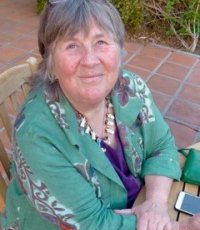 Last Saturday, we had the privilege of hosting Awakin Call with Kate Munger.
There's no time Kate Munger can remember that her mother wasn't singing. Every night, Kate and her four siblings would be graced with lullabies at their bedsides. The physical proximity of the vibrations of her mother’s body would activate the cells in Kate. Now, Kate brings that gift of voice and vibration in service to those at the threshold of the other end of life – singing songs as lullabies at bedside to those near death. In 2000, she founded Threshold Choir, a decentralized, distributed community of more than 1300 volunteer singers in more than 180 locally-formed Threshold Choirs around the world. The vision is to spark a movement for “a world where all at life’s thresholds may be honored with compassion shared through song.” For Kate, the voice, as the original human instrument, is a true and gracious vehicle for compassion and comfort. Singing at the bedside is “more a prayer than a performance”.
Below are some of the nuggets from the call that stood out for me ..
- In Threshold Choir we hold that being sung to is foundational.
- Singing at the bedside of a dying person helps people understand that the dying process. It calls us to sit quietly, tell the person what they meant to us, share memories, read poetry, hum, simply be present.
- As Choirs were forming all over the country, we would sit in a circle. One by one, a choir member would go into the center of the circle and be sung to. In this way we shared this spiritual experience. Some said it felt like being in a fountain or like floating.
- I have felt guided since the first time I found this way to use my singing gift. All my past experiences enriched this purpose. This sensation was deliriously wonderful! From age 50 until now I have felt “carried.”
- Threshold Choir has over 500 songs. More recently, there has been a surge in new songs being written. Songs have simplicity, imagery, depth.
- Singing helps create a bridge between our feelings and the great mystery.
- We sing in prisons. We want to help inmates live in a concrete box; in situations where they couldn’t see their children; where they could not walk freely. Singing created a spiritual space. We give song as medicine: to give comfort, to slow breathing, to give a fleeting sense of freedom. Singing to people who are restricted is the best use of song. We encountered people ready for deep spiritual connection.
- Threshold Choir is aimed at people who are spiritual but not in a religious community. We’re going back to tribal offerings: ancient experiences of singing to people who are experiencing difficulties.
- Use your voice, offer it as a gift! Singing is kindness made audible!
--Sally Mahe
Additional Nuggets from the Transcript
08:36 Simple songs, accessible to the heart The songs that Kate has written are simple and repetitive, shimmering, translucent, immediately accessible to the heart and the spirit. She says, "A song is a bridge between what we know, what we can feel, and the big mystery.”
13:01 Empowering others to sing Kindness ripples outward and I think our purpose is to empower family members and loved ones of the person who is dying to actually be doing the singing. The people who can be close -- at home, in a hospital, in a hospice, in a nursing care facility -- are the ones who are singing. Our organization is founded on the concept that singing is available to anyone and that it's not just the best voices that should sing. You know, this choir was based on the idea that choral singing is singing without a soloist. It's the blending of our voices that creates a spiritual sense and creates the connection and creates the fellowship.
15:05 What singing leaves in its wake And it really helps people, I think, understand that when someone is dying, it often affects us, so we get busy: We start cleaning, we start baking and really what this moment calls us to do is to sit quietly, to tell the person who's dying what they have meant to us, to remember things that we used to do together and to meditate and to read poetry and to sit quietly and sing, or hum. And that's just not American tradition -- to sit quietly -- but it's what we are hoping this work will create in its wake.
19:30 Experiencing the gift they are giving [During training for a new choir] Well, I would put all the chairs in the circle when everyone arrived. I would teach them three new songs. Then I would put the reclining patio chair in the center of the circle and one by one we would take turns singing to one another so that we could experience the sensation of this spiritual act being just like, what [gesturing], like a fountain over us and people got the experience of what it's like to be sung to in the softest, most intentional way. And they signed up right and left.
25:56 500 songs and counting! What started as just lovely songs coming as a result of an experience at a bedside where there wasn't a song for that particular thing that happened, now people who have never written songs before are finding that it's just coming up out of them. And there are new songs every month… To me, it's an extraordinary body of work. I don't know anything like it in our modern culture.
38:42 Singing with those in prison It was a way to create camaraderie, fellowship, a spiritual space without it being a religious situation and also to give them a song as medicine so that in the middle of the night, when they woke up in a concrete box hot and sweating and afraid, they have a song that can give them comfort and slow their breathing and give them a fleeting sense of peace. … singing with people who are restricted is to me the best use of song. It's giving them freedom while they're singing and freedom while they're thinking of singing and freedom while they remember thinking of singing! And I think that it's been really powerful.
43:46 Singing to those without a tribe My conscious goal with the choir was to address the needs of people who were deeply spiritual but not part of a religious community, because I feel that the choir, the pastoral committee, and the minister of a church will round up their people when they're dying and offer support; but it's the people who don't have a spiritual community around them who need this tribal offering. We are going back to a very old tradition of tribal music, where when someone is in a difficult position, the tribe who all know the same songs gather around and sing to the person who is experiencing difficulty. So that's who I wanted to serve.
45:22 Sharing the pain of not understanding I'd also like to mention within the last six months I wrote a song for families who have experienced the death by suicide of a family member. If death is a frontier then responding when there's been a suicide in the family is even a deeper, darker frontier. And I wanted there to be a song for this situation.
Walking this path of broken hearts, / We may never understand, / All we know / We share this pain together
I sang because I wanted your listeners to know that you don't have to have a perfect voice to go to a bedside. I also want people to hear the line, "we may never understand" because I think it's important. The mystery is designed to be just that. And especially when there's been a death by suicide, often families have absolutely no idea and all they can do is share their not understanding with one another.
1:02:05 Native language is important, so is humming It's really important to sing to someone in their native language if it's at all possible. We also often hum. At the end of a song before we stop and have silence, we'll also hum so that the language isn't primary, every time we sing the song.
1:03:05 Even over Zoom, kindness is made audible I witnessed a Zoom session yesterday with two singers in separate places, and a third -- the client -- was in a facility. And the client, who is non-verbal, sang along during the entire session, which was really lovely. She was engaged and sitting up and I thought it was giving her a wonderful experience. It's challenging, but it's so much better than not doing it at all. The kindness -- and that's our motto: "kindness made audible" -- the kindness is absolutely palpable in this situation, even over Zoom. And I'm very grateful that we have it because it allows the friendship among choir members to flourish and they work really beautifully together in the Zoom context.
1:05:54 Singers grow into friends at bedside The singing for someone, to offer a song when someone has days, hours left is a tremendous honor. And I think choir members feel very strongly that they are fulfilling some very important destiny to be there at that very moment. Besides that there is the camaraderie, the fellowship of being one of three people who has earned the right to go to a bedside, who is listening, who is trusting, who is showing up in a situation where almost anything can happen. So with two other very courageous people, that in itself builds friendships that are really important.
1:16:30 Balance! Sally: you're always keeping a dynamic balance, aware of the balance between confidence in your singing and humility, to offer the voice as a gift between silence and song, between containment and excitement. I think that's such a refined awareness to hone a sense of that balance. I wondered if we may not be the greatest singers but we can have a sense of balance. How would you guide us in tuning to that kind of balance?
Kate: I was inspired and led to take choir members to the island of Bali nine different times in this past 22 years. And the Balinese spirituality says a couple of things. It says that everyone is an artist and it says that balance in life is where success happens and where depth happens. When Balinese people are honoring something, they will wrap it in a black and white cloth, a plaid cloth that honors balance. And to me, I spent enough time there that it really has become a guiding principle. And I try to live that.
Want the full experience?
Listen to the complete conversation with Kate Munger.