Call Nuggets
Deo Niyizonkiza
Healing What Remains
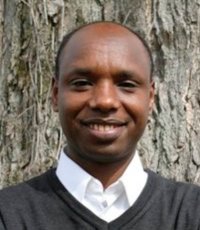 Last Saturday, we had the privilege of hosting Awakin Call with Deo Niyizonkiza.
A young man arrives in the Big City with two hundred dollars in his pocket, no English at all, and memories of horror so fresh that he sometimes confuses past and present. When Deo first told me about his beginnings in New York, I had a simple thought: “I would not have survived.” This is one of many reflections by Pulitzer Prize-winning author Tracy Kidder in the bestselling book, Strength in What Remains, written about Deogratias “Deo” Niyizonkiza. Following a childhood witnessing unspeakable horrors, Deo founded and today leads Village Health Works, a nonprofit world-class medical clinic in Burundi. Honoree of numerous awards including Unsung Heroes of Compassion presented by the Dalai Lama, such honors interest him only inasmuch as they generate interest in his clinic and in Burundi. "Where there is health, there is hope," he says.
Below are some of the nuggets from the call that stood out for me ...
- Childhood landscape in rural Burundi: Deo’s classroom would begin over-full, with students standing for lack of desks and chairs. The graveyard was right next to the school, and they would often hear people crying. By the end of the school year, the class size would decrease by half. Either the children died, or their parent(s) did, and the orphaned children were raising their younger siblings. Deo would reflect, “If I were to be given the opportunity to make it through, what would I do?”
- The guiding wisdom that got him through these tremendous times was his mother’s message: “You are not poor, you are not alone. We are here for you. We love you.” This was also the inspiration that got him through challenges when he later found himself homeless in New York City, plagued by trauma.
- Many people outside of Burundi have implied to Deo that atrocities and manmade tragedies are “just how things are over there,” as if “those people have been created by God to hate and kill each other.” Deo reminded us that’s not how it is, that structural violence and dehumanizing conditions are the direct result of colonial systems, which can lead to these tragedies. For a long time, he couldn’t understand how the country he loved so much had neighbors and friends killing each other. Then he read books about the Holocaust and slavery, and how under conditions of terror and dehumanizing conditions, most people would comply to those in power.
- “It’s important to not look at the consequences of something we don’t understand, but rather, to try to understand the root causes of the problems. Just as in medicine.” Deo’s response was to ask, “What can be done in this kind of situation?” and to focus on compassion, kindness, empathy, and integrity, toward yourself and others.
- When the community in Burundi gathered to begin building the road and buildings that would become Village Health Works, Deo witnessed these former enemies not only as collaborators, but as friends. The beginning of Village Health Works was community engagement to restore the basic decency that had been lost. The great work has always been to remove the barriers to human dignity, which is intricately related to equity.
- Village Health Works is now 600+ employees strong, with all but ten based in Burundi. In addition to a clinic and hospital that sees 200 patients a day, some of whom travel from neighboring countries, they have a food security program, an education program based on critical thinking, and soon to have a 150-bed teaching hospital to train healthcare professionals.
- “It’s not my journey. It’s our journey.” Deo likes to shift the focus away from himself, to use his personal experience to understand someone else, and then doing something about it. This gives him a sense of purpose. Deo’s “last name,” Niyizonkiza, is in fact not a family surname. In Burundi, names are given to reflect specific contexts. His mother almost died when he was born, so she named him Niyizonkiza, which means “God, you are my Savior.” Maternal healthcare has been a primary focus of Village Health Works.
- “Healthcare should never be politicized.”
Want the full experience?
Listen to the complete conversation with Deo Niyizonkiza.