Call Nuggets
Adam Hochschild
Lessons for a Dark Time: What Can History Teach Us?
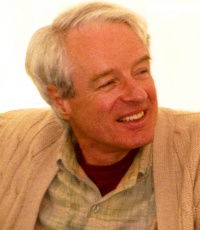 Last Saturday, we had the privilege of hosting Awakin Call with Adam Hochschild.
With the skill of a journalist, the eye of a historian, and the heart of an activist, Adam Hochschild has been a leading voice on human rights issues for the past 40 years. He is the author of 10 books, including the acclaimed King Leopold’s Ghost and To End All Wars. His works explore the timeless struggle of good versus evil in the hopes of creating a better world. After beginning as a reporter for California daily newspapers examining the roots of injustice, he spent ten years as a magazine editor, most of it at Mother Jones, which he co-founded. His subjects include some of the darkest of human history—like Stalin’s death camps, or a forgotten Holocaust in the Congo—yet Hochschild’s spirit remains light and quietly assured. Join us with this gifted historian whose hindsight might provide us with the foresight to restore the threatened values of justice, peace, and compassion.
Below are some of the nuggets from the call that stood out for me ...
Nuggets
- A formative experience Adam recalled that shaped him as a writer of human rights: when he was a teenager, his father, an executive in an American mining company, took him along on a business trip to central Africa (what’s now Zambia), where many of the mines were. “This might have been a mistake,” Adam recounted, because he began to see more clearly that the very comfortable lifestyle they had in the States was based on the labor of African miners working in terrible and dangerous conditions on the other side of the world.
- Other formative elements: coming of age in the 1960’s, visiting Mississippi during an enormous struggle for social justice during segregation, opposing the Vietnam War
- His first book was a memoir, Half the Way Home, largely about reconciling his relationship with his father. “Getting the memoir helped loosen up the other stuff.” Fiction didn’t come easily. “In my next life I will be a fiction writer.”
- On picking subjects for his books: he looks at times and places of great political and moral dilemmas, and looks for people who can see "evil" in institutions others take for granted (e.g., the British slave trade, the mass murders in the Congo). "The capacity to be clear-seeing is a remarkable human trait, though I’m not sure how people get it.” Many of Adam's books begin with a moment of clear-seeing. For example, in King Leopold’s Ghost, Edmund Morel, employed by a British shipping company to supervise the docks and tally cargo, noticed ships returning from Africa loaded with ivory and wild rubber, but being sent back empty of merchandise; rather, they were loaded with ammunition, firearms, and soldiers. Upon realizing this, Morel deduced that a slave labor system was involved. Adam is fascinated by these kinds of a-ha moments of moral awakening.
- Young people often have the ability to see things their elders do not.
- On how to find optimism in dark times: “I think we have made a great deal of progress in many ways… for example, the idea that people should be free to speak their minds, to write their minds, to broadcast their minds, without censorship.” These were ideas that were not common a couple of hundred years ago. “In long range terms, I’m an optimist.”
- There is a business of “othering” that threads through history, as seeing immigrants as invaders. For example, when Trump uses the phrase “an enemy of the people,” he’s quoting Stalin’s phrase for people who’d been targeted for execution. Most commonly throughout history, the othering is done through some racial, ethnic, or religious terms to keep a particular group in power.
- On how to stay connected to purpose and heart: find your passion, stay connected to a place of joy. “There is nothing that is such fuel as knowing you’re making a difference.”
Want the full experience?
Listen to the complete conversation with Adam Hochschild.