Call Nuggets
Jim Ritchie-Dunham
From Scarcity to Abundance: Rethinking Money and Other Human Agreements
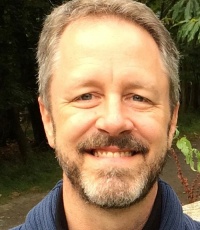 Recently, we had the privilege of hosting an Awakin Call with Jim Ritchie-Dunham. A full transcript of the call has also been posted, but herein are some notable excerpts.
James L. Ritchie-Dunham is a student of human agreements, exploring how we make them, why we don’t see most of them, and how to change them. His work blends esoteric wisdom traditions, rigorous science, organizational frameworks, and sacred practice across a diverse set of cultures. “The problem with most agreements is that you don’t see them,” James says. “They just are." To help organizations bring clarity and awareness to their underlying agreements, James has helped introduce the notion of “ecosynomics”, which takes scarcity-based agreements which he says lead to "energy-depleting" experiences, and highlights the abundance-based practices and agreements that help "achieve Olympic level experiences and outcomes on a sustainable basis.” He is helping re-think the societal agreement around the concept of money, which he says is not an object, but a verb signifying flow of spirit.
Below are some of the nuggets from the call that stood out for me ...
From Scarcity to Abundance: Family Background in Oil and Gas Industry to Human Relationships: Jim grew up with a father that was involved in the oil and gas industry, and went on to study the oil and gas industry in college -- which in some ways, by definition, trades and competes in a fundamentally finite resource, a scarce resource, and yet he shifted from that to seeing from a place of abundance. Key influence for him growing up was the cultural exposure to lots and lots of international visitors and exchange students. Early in his working life, he was exposed to Peter Senge's work in system dynamics -- "at organizational learning, and that brought a whole human dimension to the work that I had been doing from more of a technical, mechanical part -- and wanting to see how to bring in the human development and the human social element of that. And so that started me off on a completely different track back in the early nineties that I've run on since."
Example of an agreement based on abundance: We're not limited in how much we can laugh or smile. There isn't a set amount, and whether we choose to engage that or not is our choice -- it's how we see the world; it's our inner work or we're born that way. But it's a choice. ... And what we mean is there's infinite potential in relationship. So it all depends on how we're in relationship with something, and nature's spirit can continue to renew what is available to us. And ... what we call scarcity is when we use it up faster than it can replenish, or we can replenish it. But if we see how we're in relationship with it, then it's not limited in what's available, in relationship and understanding the dynamics of that relationship.
Changing the employee dynamic and shifting performance reviews: Up until a few years ago, I took that as normal, and there are best practice ways to do performance reviews. But the observation is, nobody likes doing performance reviews. Nobody like giving them or receiving them. And we started to visit some groups that were these more vibrant, higher performing groups coming from more of an abundance in relationship perspective. And I asked them, "well, what do you do for performance reviews? And they were like, "what are you talking about?" And I thought I was going to give them a teaching moment about how to do best practices in performance reviews 15-20 years ago. I started explaining it. They said, "Oh, you mean that thing where I make judgments on you about what you should do, without it really asking or inquiring with you into what you've learned? And then I judge you on whether you did what we think I said you should do?" And I said, "yeah." And they said, "well, we don't do that." I said, "well, then what do you do?" They said, "we're in a continuous roll growth conversation. And so it's 'what do you see about who you are in your being-ness? What are you learning about your becoming-ness? And what are you learning about what you're manifesting in the world? And is this continuing to be the right place for you to manifest your becoming-ness?' Now that doesn't mean that it's only soft and fuzzy, right? And super nice. It can be, 'you said you were going to try these things. You said you were going to take this on, and what's limiting you in that?'" Then I said, "well then how often do you have that conversation, because we only have performance reviews every six months or every year or at the end of every project because people don't like them." They say, "well with this, we're continuously in that conversation because you can't be the same person that you were 24 hours ago, because you went and had experiences in life, and you certainly can't be the same person that I was talking to a month ago or a year ago. So what have you learned?" The starting point is, "I know I want to be with you. I know that there's some connection and so I'm looking inwardly. I think there's something in me that tells me that we are in relationship to how we're serving and the contributions we're making. So that I can feel, and now I'm questioning and inquiring with you to what you're learning about that so that I can support you in that process?" ... Well, there's another name for that. What is your role, your contribution, and what are you growing in and how can we support you in that -- in making a bigger contribution and you're becoming? It still gets to the same performance results, right? The knowing and measuring, but now being much clearer on the deeper process that's happening and how we're orienting with ourselves and with the other as we entered that conversation.
Lots of "invisible" communities living with abundance-based agreements: My estimates are there have to be tens to hundreds of millions of people that have been living this way for decades. And what we found that's common to them is often they know that they're different, they share with everybody in their communities and then their industries what they're doing. And most people think of them as sort of weird or lucky. And I said, well why are they weird? And they'd say, "because we tried to do what they did, because they get great results, but we weren't able to replicate it. And they're lucky." I said, "well how long have they been lucky?" "Well, like 20 or 30 years." I said, "that's not lucky. That's sustainable. That's resilient. And so why then aren't you able to see it?” And I think it's because -- what we observe is, because if you come in from a scarcity mindset, as you accepted what we taught you in school, then you can't see that somebody is acting out of love. You can't see that somebody is acting at a sacred hospitality. And you can't see that somebody is actually acknowledging the value that they're experiencing in this exchange. ...
I think one of the challenges that many of these communities are finding is, they either reject some of the core things we have learned from things like economics, or they accept it wholesale and then try to explain the more humanistic way of looking at it. I think both of those are challenging, simply because we've actually learned something. All the people that have thought about extractive and resource and economics and scarcity for the last century have learned a lot. So it is valuable to say, in this moment, how much value do I give to something?
That's valuable. So we don't reach it and throw that away. But we shouldn't say that's the basis of everything. So one of our colleagues -- and I really love this statement -- he said, "I don't know anybody that's smart enough to be 100% wrong." Right? So they've learned something, but what did they learn? So we don't have to reject it all, but we don't have to accept it all either. I think there are a lot of people now working on that. So I suspect there are hundreds of millions of people who are playing with this and working on this, and they're starting to come together in the last decade to say, "maybe we can start sharing what we're learning and be more aware of what we're learning and how do we frame it so that we can see what we're learning that can be shared with others?"
Integrating our sacred cosmologies into our agreements: People have all kinds of ways of connecting with the nature and spirit being-ness of themselves and their community. And what I find is everybody has those. And what I also find is many people, at least in my communities, have been trained to not talk about those things. That it's weird to talk about those things. Or they have only a couple of people that they would talk about them with. And so we start to say, "but if it helps you align what you're doing and the choices that you're making and what you're aware of, why would you hide that? And how do you reintegrate that into your daily practice, and share that gift with others?" So the way that we're doing to connect it is, what do you observe is actually happening? And what is the cosmology that you have that can help you understand what's happening?
And then second -- and this is where we're trying to make the agreements explicit as we started with, because I think a lot of these agreements that we have or ways that we interact are very implicit and subconscious or unconscious -- and start to say, "well, I have this cosmology and this is the way I see the world." "Good. Do you operate that way? Meaning, do you actually make most of your decisions and based on those criteria, and are you evolving your understanding of that criteria, or do you hold that criteria until you arrive here and then you check that at the door? Do you leave that at the door?" I mean, "you end up doing a lot of things that are inconsistent with what you actually hold to be true, the cosmology that you actually bring."
So we find that people have that nature and spirit cosmology in some form. And what often happens is they've learned, been socialized, to leave that when they come into business or when they go into certain settings. And so they say, "well, why? If it helps you do things, why would you stop doing that? And how do we be explicit about what you know to be true and evolving, so we can see what is in your big 'yes.' What do you say yes to? What do you give that intention to? Do you hold that to be sacred?"​​​​​​​ ...
If we are sacred beings having a human material experience, then my belief is that ... you are this becoming-ness and this being-ness. You are a sacred being having this earth experience. So if that's true, then there are probably these gifts all over and people are more or less conscious of them. ... So that's why we call them treasure hunts. We said, "If I knew that I had access to being able to see that, because you can see it and you're in my circle, why ... and I know what cues to look for when you're having that insight, then I certainly want that information. So the spirit brought it into our circle through you, through your portal, through the way you're constituted and contextualized. And if I can be aware of that, that you have that, and I know what it looks like when you're having it, then I can invite that into, well, 'what are you seeing?' And that gives me a fuller picture of what's happening." And so then the question is, "why wouldn't you do that normally? And if you check that at the door, if you leave it at the door, then you don't benefit and nobody else does either. If you do bring it in, then this more dimensional or infinitely-dimensional reality that we are experiencing, we can bring greater texture to it, through these gifts that everybody has and brings."
Manifesting love and purpose: So if we were to believe and understand that maybe part of the reason that this whole reality exists -- if you want to think of it as an experiment or an evolution -- is that we have the opportunity to manifest something. So the question then is what's being manifested? And many cosmologies talk about this as the evolution of love, and what if the experiment, the evolution is, can we incarnate love? And what does that mean to bring it ever more into existence? And so then all of us that are being born, depending on your cosmology of who decides and what designs you as you're constituting -- but we all have, we each have, completely different experiences because how we're contextualized and the space that we're perceiving from and how we're constituted.
So then what are we constituting into, and why is it that we connect so deeply to purpose? And what are those primary agreements as Orland points at them? What do you know to be true for what your calling is? What is the thing that pulls you? What is a deeper purpose to which you will give your love, the will for which ... for this future, a love for the future to which you give your will? That's a statement he has that I love. And people know that if you ask that question, and you can explore it -- and that can evolve and change, and there can be multiple facets of it, but there is something that calls us. And what if it's different ways of being in relationship with the spirit being of earth, which is a being of love.
And what if today -- not a hundred thousand years from now, not a a hundred thousand years ago, but today, right now -- that being is incarnating even more, and asking something different of us? And part of what we're experiencing is "what will you say yes to?" Because this being is born, meaning exists in this realm, at another and new level. And it's asking something different of us than was asked of generations in the past. But it's a cosmology that says, "what if we incarnate, we come into this realm to experience and say, 'can we say yes to being this reality?' And this reality is relationship. This reality is sacred. This reality is hospitality, being hospitable to that which is." So, and some definitions are where the word guests and hosts come from -- in English, it comes from the same root -- and to say, "can you be in relationship with that which is sacred, which is yours to incarnate, and can we do that together? And how are we doing that together?" And that can be a beautiful experience.
Jim's spiritual journey: Raised Presbyterian in Southern United States; was introduced to and started following Tibetan Buddhist path in late 1990s. Then, when living far away from a convenient sangha, he discovered anthroposophy and the Steiner school -- around the Waldorf school and the biodynamic farm of his region in New Hampshire. "And that brought together some of the Eastern traditions that I had been studying and working with, and practices, and helped me understand my Christian upbringing better. And so started connecting with that. So I'd say that's sort of ... the root is a Buddhist practice with Christian cosmology. And in the meantime, in my work, and a lot of that's happened with Orland [Bishop] also, I started working in Guatemala and there working with the Mayan, introduced me to other forms of seeing time and understanding cosmology. Some of the work we've been doing in Africa -- Burkina Faso and South Africa -- have brought other cosmologies that started saying "there are other ways of understanding what's happening underneath this." And so now I feel very comfortable working in Catholic communities in Christianity, in Baptist communities, and other Protestants. So, a wide variety. And how do we bring that, what we know to be true in our own practice, and can we language it in other forms, and respecting the other cosmologies?"
Importance of community support for our awareness of our agreements: "the importance of community as these spirit beings that we are. And when I fall asleep to my awareness, when I collapse into the scarcity of the moment, will you be there to support me in remembering who I am and what I'm committed to? Will you be in that dialogue and that exploration with me, and when I fall asleep, will you help me remember? And I think a lot of what's happened in society today is we've made it difficult for people to be in those, make those kinds of commitments to each other, to be there for each other and give each other that feedback -- another form of sacred hospitality, right? Will you be there for me, with me, as I step into what I'm stepping into, the choices I'm making, and when I forget or when something happens and it's difficult for me to see, will you support me in that seeing and remembering? And so we can do that individually and collectively. And you can start that at a very young age." ...
"What are you saying yes to? What is ... do you have some understanding of what a friend of mine calls the big yes? What is it that you know right now that you're really called to, and what are the different ways that you can contribute? And some of those might lead directly to what your passion is, and others might not be. But can you say, I want to give space to my yes, to my call, to my pulling, to my primary agreements and these other ways? And that's for now. And what community do you have around you to support you in saying, 'okay, this is what I'm experiencing now. It's not that I'm signing up to be an engineer at this company forever. It's not that this is the last thing that I'll ever do. This is how I'm being in relationship to what I'm learning and what I can contribute.'"
Employment contract v. "contract" (constrain/reduce/limit) as a verb: "We have another way of pronouncing that word [contract (agreement)] is 'contract' [constrain/limit]. So you contract that infinite potential and that love for a future together with somebody that you've sensed, and you contract it into a job description with proven capacities from the past."
His commitment to "E cubed": Everyone, everywhere, everyday. "And so we believe that it's completely possible that everyone, everywhere, every day -- E cubed equals 100% -- can experience greater vibrancy, greater choice in their life. And we can achieve this as humanity within the next 20 years. And what that requires of my generation is to say there are certain agreements that are still in place, whether they were ever useful or not I'm not going to judge, but they don't need to be anymore. As humanity we've consistently gotten rid of agreements that we had accepted before because they proved to not be useful anymore, and we can come to a new agreement. So what if we said, as society, as humanity, that everybody deserves the right to choice and greater vibrancy in their life on a daily basis. Everyone, everywhere, every day. And what I see at the core of what I've understood so far about ServiceSpace and this global community is that that's at the core of what we're saying yes to -- is how do we awaken to the choices that we have? So any service that's done in that space is of great service to what we're doing."
Lots of gratitude to all the behind-the-scenes volunteers that made this call happen!
Want the full experience?
Listen to the complete conversation with Jim Ritchie-Dunham.