Featured Speaker
Maya Soetoro-Ng
Peacebuilding is Teachable: Pragmatic Peace Studies for Social Change
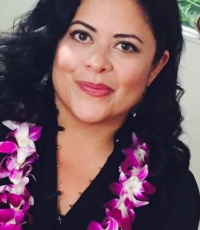
Her brother is former US President and Nobel Peace Prize recipient, Barack Obama. But as a peace educator herself, Maya says we can't leave conflict resolution up to governments.
"We are not doing anybody a favor by waiting for government to solve our problems, by looking at top down solutions," she says. "We really need to think about engaging our communities, our resources, human and otherwise, to build a sense of resilience." And Maya believes that resilience will come from ordinary people, not from centralized, powerful institutions or well-tested solutions alone: "It's imperative that we start paying attention to the work that's happening not only in the center of things but also in the periphery, the margins, and the liminal space between things."
Dr. Soetero-Ng is a long-time peace educator. She currently serves as a consultant to the Obama Foundation, where she works closely with the international team to develop programming in the Asia Pacific region. Prior to her work with the Obama Foundation, she was the Director of the Matsunaga Institute for Peace and Conflict Resolution at the University of Hawaii at Manoa where, in addition to leading outreach and development initiatives and running the internship program, she also taught Leadership for Social Change, History of Peace Movements, Peace Education, and Conflict Management for Educators.
Her interest in peacebuilding began in childhood. Named after the American poet Maya Angelou, she was born to an Indonesian businessman father and an American cultural anthropologist mother. She was raised in a bicultural household and within the multilingual worlds of Indonesia (as a young child), Hawaii (as a high school student), and then New York City (as a student and then young teacher). Immersed from an early age and throughout her life in environments that hosted so many cultures, she was allowed "access to more than one space and vista," which she describes as holding value "but also tension and struggles." She came to recognize that culture was not bounded and fully defined; it was something that was always negotiated.
She received her B.A. degree from Barnard College of Columbia University, and was awarded a Master's degree in Secondary Education from NYU's College of Education and later a PhD in Multicultural Education from the University of Hawai'i. In her dissertation, she examined the use of narrative to develop more complex understandings of identity in multicultural classrooms.
Maya has developed and implemented peace education curricula in public high schools and for K-12 teachers in Colleges of Education. For many years, she worked as an Assistant Professor and University Coordinator at the University of Hawai'i's Institute for Teacher Education, where she taught multicultural education, peace education, and social studies methods at both the graduate and undergraduate levels. Earlier, she taught and developed curriculum at a progressive public middle school in New York City, and taught at the Education Laboratory High School and La Pietra Hawai'i School for Girls, both in Honolulu, where she facilitated classes on world cultures, U.S. history and the constitution, and Peacemakers (a course she designed to teach the power of nonviolence). Maya also worked as an Education Specialist at the East West Center, facilitating exchange between teachers in Asia and the United States.
With partner Kerrie Urosevich, Maya is co-founder of the nonprofit Ceeds of Peace, which creates peacebuilding action plan workshops for educators, families and community leaders. Ceeds of Peace offers a 360-degree approach to raising peacebuilding leaders by supporting and building bridges between families, community leaders and educators to share resources and develop action plans to strengthen communities and improve children's lives. It offers tools and practices for children and the adults who interact with them at home, in schools, and in the community to develop skills and daily practice in the key "C's" of peacebuilding: critical thinking; courage; compassion; conflict resolution; commitment; collaboration; community-building; and connection.
In aiming to plant ceeds for peace in "self, between, and service," the organization has developed tools and action plans for developing courage and critical thinking (and creativity and curiosity) within one's self; compassion, conflict resolution, and collaboration for the spaces between and with others; and commitment, community-building and connection for living a life of service, meaning and purpose. Describing this 360 approach, Maya says that "you can dialogue and have discursive opportunities and structure academic controversies, but you need to have home, family and community in mutual support of one another." And she says it's important to focus on all 3 areas of "self, between and service" because "courage (in self) without compassion (between) leads you to be brazen and bold but not necessarily peaceful. If you're compassionate but not courageous, you'll never do anything to help or try to make the world better. So we need to think about developing in young people in all those spaces."
Maya has published a number of book contributions as well as a children's picture book entitled Ladder to the Moon that was inspired by her mother and her two daughters. Published in 2011, the book's title was taken from the 1958 Georgia O'Keeffe painting, which was depicted on a postcard the author had been given by her mother. She is currently under contract to write a book about peace education and a young adult novel entitled Yellowwood. In 2009, Soetoro-Ng helped bring her mother's dissertation to publication in the form of the book Surviving against the Odds: Village Industry in Indonesia, for which she wrote a foreword.
Join us in conversation with this courageous, compassionate, and collaborative educator and leader!
Five Questions with Maya Soetoro-Ng
What Makes You Come Alive?
My children make me come alive each day because they each have such character, courage, and artistry. I love them for who they are, respecting the ways that we are different, and cheering their contributions. What makes me come alive is seeing young people engaging their own stories, tools, and resources to share, inspire, and connect with others both near and far away. I see that there is great potential for social media and technology to build bridges across great distances in this way, provided that we use it wisely. While I am not entirely pleased with the politics and the conflicts of today, I do see a lot of silver-lining opportunities for engagement, grassroots leadership, and peacebuilding, especially coming from young people. I believe that the algorithm we use in Ceeds of Peace (peace within, peace between, and peace in service) presents a good formula for youth leadership and leadership for social change.
Pivotal Turning Point in Your Life?
The person who most shaped who I am today is my mother. She was a pioneer in microfinance, helping mostly women in rural Asian communities to develop cottage industries like basket weaving, tile making, and pottery making. She demonstrated open-minded learning and listening as part of building true connection among individuals and communities. She created a sense of family wherever she was working and she had such a healthy respect for multiple cultures and communities. When she died in 1995 it was the first year that I really started teaching. The first school that I helped to grow was an alternative public middle school on the lower east side of Manhattan. As imperfect as it was, it really ended up setting the standard for what a community school should be. I often looked to my mother's community work to find inspiration for my own work at this school. It was helpful to have my first teacher be someone who understood learning beyond the four walls of a classroom.
An Act of Kindness You'll Never Forget?
Many people have demonstrated immense kindness to me and to my family. One story I often share about kindness comes from my Ceeds of Peace co-founder Kerrie Urosovich. Years ago, her aunt was hit by a car and broke many bones. She almost died. After the accident, her aunt declared, "This experience must have a transformative impact on my attitude and conduct." She decided that from that point forward she would try to make the lives of everyone whom she encountered better by virtue of the encounter. And so, even if a server at a restaurant was rude to her, she tried to make that person's day a little better. It is a difficult undertaking but she encouraged everyone to practice this technique of kindness. After learning of this story, I decided to try it myself and it worked to deepen my sense of optimism and connection. Now, whenever I meet someone I try to find something beautiful about them and I tell them about it. I often give compliments, even if someone is grouchy. I do my best to consider the universal need that might be responsible for their demeanor and challenge myself to respond to their need. While it is not always easy, this idea from Kerrie's aunt has made me feel empowered. It has made me much more mindful and aware. I share this to say that it is not so much the big acts of kindness that matter the most, but rather those small daily commitments to being kind that carry tremendous value, even when at times they require you to lean into your discomfort.
One Thing On Your Bucket List?
I cannot name just one! I want to be a sojourner forever. I'd love to travel with my children exploring, walking, traversing, and visiting spaces where I have never been, seeing communities that I haven't seen. I'd love to write more young adult novels (I have one coming out next year). I love the idea of telling more stories that help to shape personal and moral courage in young women in particular. I'd love to impact global girls education. I am also looking forward to building a series of programs to nurture innovative leadership in the Asia Pacific region.
One-Line Message for the World?
The true purpose of all education and relationships in my view is really to help us to "cuci mata". Cucimata means, "to wash the eyes" in Indonesian. We must remember to cuci mata and persistently revisit and renew our understandings o
Related Calls
Jayesh Patel
Dec 24, 2011
Living Service, at the Gandhi Ashram
Jerry White
Oct 23, 2021
Entrepreneurship, Inner-preneurship and Transpreneurship
Victor Kazanjian
Oct 26, 2019
United Religions Initiative: Seeking Wholeness in a Time of Brokenness