Call Nuggets
Paul Van Slambrouck
The Art of Slow Storytelling
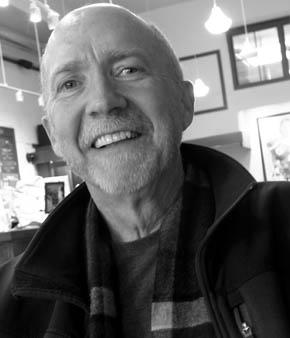 Richard Whittaker and Paul Van Slambrouck first met because of their common interest in media. Paul was a Pulitzer Prize-winning journalist and editor in chief at the Christian Science Monitor; Richard was the founder of works & conversations magazine that published remarkable interviews with artists from all walks of life. They both became actively connected to ServiceSpace. Paul left the Monitor but kept writing, and went on to teaching while Richard removed all dollar signs from his magazine. And one fine day, Richard interviewed Paul. It was a maginificent conversation, that spanned the pursuit of truth in journalism, the power and edges of modern-day mass media, and highlights from Paul's illustrious career, ranging from interviews with Desmond Tutu and Winnie Mandela. It was a conversation that beckoned for a round 2. And on April 19th, Paul joined us as a guest on the Awakin Call, and below is a transcript from that delightful conversation.
Richard: [Introduction] Paul Van Slambrouk is a distinguished journalist who began working at the Christian Science Monitor in 1976. In 1989, for 8 years, he worked for the San Jose Mercury News; after that he went back to the Monitor as the San Francisco Bureau Chief. In 1999, Paul wrote a story about Service Space, (then Charity Focus) and that was when he met Nipun, the founder of Service Space. The article that Paul wrote about Service Space turned out to be a life changing experience for him. I met Paul in 2007 and we became friends. That’s when I began hearing about Nipun and, of course, I wanted to meet him. I thought I’d want to interview him. For each of us, meeting Nipun turned out to be a more important event than either one of us could have imagined. Currently, Paul is teaching at Principia College in the Mass Communications and Journalism Department. He maintains his connection with the Monitor and is a contributing editor for works & conversations. Paul has a great deal of experience in finding and sharing important stories with the public.
The theme of this call is the art of slow story telling, but I think it may be more about the patience, rigor, and commitment required for uncovering stories we need to hear. Maybe we can consider that to be the theme. Can you reflect a little about the patience and rigor part of finding the real story?
Paul: Slow story telling is not my phrase but it’s an interesting one. It runs contrary to what we know today where everything is amped up, including in the world of communication. I’m convinced that visual communication is now becoming the main ingredient in how we talk to each other. We want to be careful that we don’t lose the ability to think deeply and to be patient and understand the value of slowness—and that there are certain things that can’t be done well in this amped up system.
I try to bring news elements into the teaching I do. This hunt for the Malaysian airline is a good example of the public’s short attention span and desire for instant gratification. They can’t understand why we can’t have an instant answer and it was a good reminder of the limits of technology and the vastness of nature. I’ve been impressed with those who really stick with something and are persistent and dogged about something, and also humble enough to realize that it’s the pursuit of truth that’s the honorable thing. I don’t know if there is an ultimate truth that we arrive at but there is something honorable about going after it, and being patient. That’s what good journalism comes down to and we all have a stake in preserving it so everything doesn’t get reduced to sound bites.
Richard: The public’s short attention span seems to be a really prevalent fact of life, so given this reality, what can support this other operation, the pursuit of truth or getting to the bottom of the story? That takes rigor and persistence. What can keep a reporter going on this quest that isn’t necessarily so popular?
Paul: There can be something noble about being involved in a contrarian effort. It would seem that all the social barometers are pointing in the opposite direction. There’s a pervasive awareness that we have short attention spans and that something is being lost moving at warp speeds. If you take the last 40,000 years of history and pretend that this is one calendar year, we can divide it into months. Then looking back at what we think of as mass communication, mechanical printing started 4 days ago, radio starred at 9 am this morning, and the Internet started about the time we started this conversation. So how to grasp the meaning of this? There’s a kind of spiritual necessity to ground ourselves in the face of things changing this fast. I don’t really understand what’s happening in the field of communication, but more than ever it reinforces the importance of finding that which is true and lasting—and worth pursuing.
We call it journalism. My students think journalism means newspapers, but it doesn’t. Newspapers were just a form of delivery. The process of how we do it does matter, and that leads into this discussion of a lack of objectivity, but that debate is misplaced. It isn’t about the objectivity of a person. However, there is a process that can be objective, and that’s at the core of good journalism. It’s a process that’s as close to an objective process as is possible, which is distinct from saying that everything has a bias. To give up on the process of objectivity and throwing in the towel—that’s unacceptable to me.
Richard: When you were saying that it’s more important than ever today to take the time and use the rigor to get to authentic and real stories, I had this image of jewels or gold. It may be true that the world is full of sound bites washing over us 24/7 but I was feeling that there’s a metaphor there, that in a sense in this wash of trivia and entertainment that people must have a sort of hunger for that diamond or nugget of gold that’s hard to find but which has that kind of lasting value and importance. There must be a hunger for something true as a way of orienting towards greater questions in life. What do you think of that?
Paul: Whether you’re in something like journalism or not, at an individual level that’s what we’re all about all the time—the pursuit of truth. In a reportorial sense, truth is the beginning of healing. I think that probably holds true on a personal sense as well. Coming to grips with what’s real—separating out all the image making, the costumes we wear, the personalities we put on for certain roles and stripping ourselves increasingly of all of those trappings—we know when we do it. It feels good. It feels like we’re coming in closer to the truth about ourselves. Journalists are trying to do that but they’re engaging, in a sense, in an external world. This is an interesting paradigm shift for journalism.
For centuries it was about identifying important issues. That often meant identifying problems, which has led to the common public perception that the news is always bad. That happened because before there was a one-to-many broadcast model. You had control of the message and you put out there what you wanted, and what you felt was important. And a lot of it was determined by time constraints. If you had only a few minutes to get someone’s attention you might tell them that an asteroid was about to hit the earth instead of something that would put a smile on their face. Now that formula is changing.
There’s incredible potential now for the good news getting out. We’re all now the audience as well as the publishers. Every time you blog, every time you respond to something, you’re engaged in the story and you’re no longer a passive recipient of information. This is a healthy change but at the same time, our filtering abilities are really being tested. There is this uninterrupted flow of messages, many of which are what you described and embedded in them, there’s a diamond. It might be an image, a phrase, or a 10,000-word story. What you need now is to be able discern these things as they come at us. That’s the real challenge for the audience today.
Richard: I was really struck by what you shared, that truth is the beginning of healing. This stirs up hope. There needs to be healing. What do you think of Wikileaks, Julian Assange and Edward Snowden? Have you reflected on this as part of today’s reality and how things are changing?
Paul: To me they’re different stories. I thought it was interesting that I mentioned the Pulitzer Prize being announced earlier in the call. Two newspapers, the Washington Post and the Guardian got awards for their handling of Snowden’s disclosures. It wasn’t a direct endorsement of what he did but it casts a reflective glow on him. What he did led to the President having to deal with this issue in a new way. At the outset there was this debate, is he a traitor or a whistleblower, and the debate shifted to whistleblower. The polls show that the public was divided on it but the polls are in favor of the Washington Post publishing the material, which I found heartening. They felt this information needed public exposure. With Wikileaks, there was much less careful filtering of a lot of information that came through there. I’m in the business where I think the more transparency the better, but there are some limits to that and I think just putting raw data out is not always the best thing to do. The motivation in each case was different, I think.
Richard: You said something about how in your experience journalists tend to be lone wolves. It’s easy to imagine that Assange and Snowden are lone wolves. Can you reflect about the value of the lone wolf and some of the shortcomings, and do you think it’s true?
Paul: If I said it must be trueJ. It’s a question I’ve thought about, too. My experience is that the best reporters are lone wolves. They don’t like to be managed and restrained nor do they usually like to work in groups. I think it’s a function of what journalism was, and that’s changing now; there is more of a collective spirit to it now, which can reveal information that no journalist can ever find on his or her own. There’s something in the nature of an investigative reporter, in particular. They just have an attitude of “step out of my way and let me get the story.” Without that spirit, a lot of what we’ve come to value—from the Pentagon Papers to Watergate—would not have happened. There’s a type of person who excels at that, but they’re functioning within an organization. One of the risks nowadays is that as the mainstream, larger scale institutions involved in journalism shrink, so do the ethical models, and so forth.
Richard: The name Hunter Thompson comes to mind. What do you think of him, and gonzo journalism?
Paul: I’m no expert on his work. He took the idea of bringing a narrative voice to journalism to another extreme. You’re seeing an impressionistic view of the world through his writing. It definitely has a power. Sometimes the impressionistic version of something has huge meaning, but I don’t see it as the kind of core truth-finding that’s accessible to everybody that I think of as the center of what journalism is.
Richard: Sobriety is not a word you would think of associated with Hunter Thompson. And pushing past him, maybe you get Geraldo Rivera and journalism as spectacle and entertainment.
Paul: When something happens in the world, journalists often think, why did it happened? And how can we make people care? Going to great lengths to make something compelling is an important part of the job. How do you make people care about what’s going on in Somalia and Sudan right now? What is the emotional center of this story? What is the center that people will respond to? That is part of the art of effective journalism—finding ways to tell stories. We’re in a world right now where we spend a lot of time wanting to tell our story, but there is a certain discipline to telling someone else’s story—and realizing that the lens you have, the way you’re looking at a story, is colored by your own background and experience.
Richard: This brings me back to photography. You’ve said that the visual image is now becoming a key, if not a central, element in telling stories. When you began working in journalism in San Francisco you worked for the San Francisco business magazine as a photo journalist. Can you reflect about your experience with photography and expand on how photography can make people care?
Paul: I had no intention of becoming a journalist in college. I studied anthropology, but then I didn’t know what to do with the degree. I’d already become interested in photography and one thing led to the next. The imagery that really made an imprint early on was imagery in the Christian Science Monitor. It wasn’t hard news photography; it was black and white and it reflected the integrity of humanity, and was very poetic. That started it for me. After college, I went to the Glen Fishback School of Photography. A fellow student told me there was a business magazine looking for a writer and photographer. I applied and it just so happened that I had assembled a portfolio for a photojournalism project. I came into it through the power of images and when they interviewed me, they asked if I could write. I hadn’t written anything except a college research paper.
It was a magazine published by the Chamber of Commerce, an influential organization at the time, which led to great experiences and stories and the most fun part was that I got to shoot the cover of the magazine each month. I really learned by doing. I was handed a story to write and it was clear, given the nature of the magazine, that the publisher had a point of view about it. It pushed me to recognize the difference between bringing a point of view and the neutrality of a reporter’s eye. I was able to do that at times, even though the magazine had clear point of view. There was a guy, Alvin Duskin, who spearheaded a ballot to limit the height of buildings in San Francisco. The Chamber of Commerce was horrified by the idea. I got a chance to interview him and I went to his house and spent a few hours there. It was a great experience, and a great lesson for me in reporting that story straight up. He couldn’t have been more reasonable; his argument was logical and I presented it that way, and the magazine was ok with it. Even the readership of this magazine mostly opposed this guy, but they needed to know the truth of how this guy really thought about it. They didn’t have to agree with it. There is nothing more frustrating than reading stories that are partisan in one way or the other and don’t acknowledge the logic in the other side of the argument. I think that’s at the most basic level of the public service function of good journalism.
Richard: This was a moment where it became clear in your mind that you didn’t want to spin stories in some direction for someone else; you wanted to go for the real story?
Paul: I can’t do it any other way. Some people come into journalism and they head straight for the op-ed section and they just want to convince people. This goes back to my interest in photography. The photographic record is an attempt to capture the way it is, not the way you want it to be or the way you think it should be, but really the way it is—to behold the beauty of the way something is.
Richard: I can’t think of a better background for a journalist than to have a background in anthropology.
Paul: I’m fond of telling my students that after one day of class they have more classroom training than I do, because I’ve never taken a journalism class in my life. But anthropology is a pretty good foundation because it’s trying to understand the way the world is, and it’s bringing to a certain extent a scientific neutrality to that study. And it’s being adventurous about it at the same time. Anthropology says, “I want to go out in the world and understand the way the world is.”
The international scope for me in journalism is the most alluring part of it, to be able to step outside the context of your culture and your background. Having lived in South Africa for some years, I realized that when you immerse yourself in another culture for a certain period of time, there is a tipping point where you begin to say, “Aha! Now I can see how the world looks very different depending upon where you stand.”
Richard: In the authentic way you represent journalism, it’s very related to social anthropology, I think.
Paul: Understanding and thinking about something in a certain way, getting real information, all of those are very similar. What journalism brings in is ultimately the proficiency in communicating what it is you have to communicate. It’s vital, whether it’s imagery or audio or in writing, that you convey what it is you want to convey, and these tools have to really be tools for you. In the early days of writing stories, I felt that I didn’t have as much control of the words. It took years of doing this before I begin to feel like I could use the words the way I wanted. It’s an art form, and it’s a great thing about journalism.
I’ve always thought of a vital newsroom as a combination of a factory—with the printing presses—and an art studio because you have a staff of illustrators, photographers, and writers, and at their best, they’re performing highly creative functions. As journalists, we need to get to the heart of things, but we need to do it now.
Richard: We can’t hold on to things. Everything changes, but sitting in front of my computer by myself is very different form what I’m imaging a vital functioning newsroom must be like.
Paul: The product has a lot of energy to it. I can click through many different things in a matter of minutes but the environment reminds me more of a high tech office than what a newspaper used to feel like. It is what it is. Some things just change. Is the best media going forward going to come out of a technology company or media company doing technology?
They say that legacy media, as hard as they try, can’t think the way a technology-based company would think about the potential ways of communicating today. At my end of things, I’m learning as much as my students are learning everyday, and that’s what makes being in academia interesting. In this field you better come in ready to learn with your students—because they know nothing but social media.
Bela: I was struck earlier when you said being able to convey the emotional center of a story, especially now where there are just so many stories and so much information, how do you make someone care about a story? Can you share a personal experience of one that really shines, that you really wanted other people to understand and care about? What was your process within the structure and constraints and evolution of journalism to be able to convey that story?
Paul: I was in South Africa and I didn’t know a single soul, and suddenly there’s this story—which an enormous issue, apartheid. It’s this great moral tale, and you tend to think big and cosmic.You think there is this political battle and moral equation going on. But what I learned by doing is that you really have to think small. The best way to tell a big story like that is finding something very granular that people can relate to.
I read a story in a local newspaper about a white woman who went into Soweto without permission and started a soup kitchen. It was a paragraph long in a local newspaper. I read it and thought that’s what it’s going to take for South Africa to change—a woman like her from a working class suburb of Johannesburg being the change. She talked to me about her epiphany one morning, “I woke up and I knew I had to do something.” So much of the white population had that feeling—they didn’t think this was right, but they didn’t know what to do. But she woke up with this feeling that she had to do something. She just drove in with her car and opened up the back of her car and started feeding people.
The Christian Science Monitor put it on the front page. Before the world of the Internet, you never knew what resonance a story was going to have. A month later I received an envelope from a woman in the U.S. with a hand-scralled note, “I don’t have much money but can you please give this to that woman?” She’d read the article and she enclosed a check for five dollars. That was the most touching, satisfying moment in the experience of being over there for four years of covering riots and political upheavals and wars, etc. That story felt like there was some kind of symmetry to it all. The lesson for me was think small.
Caller: I wanted to ask about the use of the word truth, which you used a lot throughout the call. I wondered what you thought about the perspective that everyone seems to have their own version of that word? Even in photography, different photographers can photograph the same scene and you’ll get a different shot.
Paul: There is no absolute truth, no pure truth that is the same for everybody. Having a process in place, although it’s imperfect, is important in guiding us in that pursuit of truth. I worked with a columnist at the Christian Science Monitor, Joseph Harsh. He said, “As journalists we write on water,” which means, you write it, the waves come, and it’s gone tomorrow.
I think it’s important to be really humble as a journalist and realize that, in a sense, the first draft of history might be overblown. You’re contributing what you can; there is no one image that captures the truth of a situation. But over time, there are multiple images so the reader or viewer is not just getting a single depiction of anything anymore. I think an informed, media-literate viewer can have enough information so they can see their own truth in the situation. The journalist is just providing valid information to that end.
Deven: I’m not much of a journalist, but I wanted to know, what do you think would make my ideas more appealing to my audience?
Paul: Half the battle is in thinking about your reader. Be compassionate, generous, truthful, and compelling for your reader; it’s a matter of whether you can do that with your chosen media, and that’s a lifelong process. I tell my students that no one is a good writer. We’re writers just trying to get better. Putting yourself in the shoes of your listener is step one. Does this make sense to you? Is this compelling to you? Respecting the reader is key. Less is more.
Deven: In the U.S. I’ve realized that I need to make my point right away. But for an audience in India, people are used to getting more background before getting to the point. What is the best approach?
Paul: In Africa, I had to quickly learn that the power of a good story is tremendous. That can be a more effective and humane way of getting a point across. A reductionist approach doesn’t get to the emotional heart of anything. For me, it’s a combination of all of the above for the most effective way to communicate. Knowing your intended audience should guide you as to how to tell a particular story. The subject matter also matters. If it’s a storytelling approach that seems to diffuse a really powerful point, it may not be serving you or the reader very well. On the other hand, if only a story could make a central point, then that’s the way to go. A statistic such as “how many people died in country X today”? can’t get your attention today because you’re numb to numbers like that. There, I would have take a more humane approach to make you care about the story. So the approach you want to take is somewhat subject specific.
Caller: At the beginning you mentioned that learning about Service Space was a life changing experience for you?
Paul: At the time I was covering Silicon Valley as the San Francisco Bureau Chief for the Christian Science Monitor. I wasn’t particularly interested in the technology aspect of it per se. What interested me was the sociological aspect of all that wealth being created. I was interested in learning who the new Rockefeller’s and Carnegie’s might be. What was happening with all this money? Was there a budding interest in doing civic good? Were all the people making the money still so young that they weren’t thinking in those terms? That’s when I found out about Service Space, which was then known as Charity Focus.
It was still in its early stages. I was in the middle of an interview with Nipun and two other members at a Starbucks café, taking notes and thinking, “This is really interesting.” At the time they were building websites for nonprofits without charging a fee, and so I was thinking this is a good story. Then Nipun said, “You know, this isn’t really about doing something for someone else. It’s about doing something for yourself.”
I thought, “Wait a second, can we back up? Are you saying that you’re not doing this to help the nonprofits?” I think what really struck me in a very dramatic way was this idea of what being generous does for each of us. You only have to think about it, and then do it, to realize that it’s absolutely true; the transformation that comes with crossing that threshold from wanting to give, to giving, is life changing for the giver. That’s the real power of it, and that’s what reshaped that story for me. I’ve been a believer ever since.
Anne-Marie: I was reminded of an interview of Joseph Campbell by Bill Moyers. Joseph Campbell said, "Stories to me are like messages in a bottle from a shore that someone else has visited first." I thought of that as stories have this ability to transform and inspire. Is there a story that has personally touched you and the way you go about life?
Paul: The story from South Africa that I mentioned was a pivotal event for me in my framing of what the story in South Africa was. The story was about individual change. I think I’d gone in thinking that it was about a big sociological change, a big political change, maybe even about external pressures that were being applied. Suddenly that added this really potent element that it’s about being the change.
Until there are enough people being the change, it’s very difficult to implant change from above. This was reinforced by an interview with another guy there. He was a very well respected elder statesman of the Africans community that was providing a religious justification for Apartheid. This man was a pinnacle of everything in his community.
One day, he woke up and said, “It’s all wrong, Apartheid is wrong.” He was banned and put under house arrest. He could only have one visitor at a time. He blew me away with that transformation that occurred for him in such simple, direct times. In a sense, he isolated himself from his entire community, but he did it. That’s what changed my view of who my heroes really were, and that has stayed with me ever since.
Bela: What stories do you feel are not being heard today that deserve to be heard?
Paul: I don’t know if I can identify a single story, but I think they’re stories like KarmaTube and Karma Kitchen. Ask yourself in the course of a day, what is your experience with life? Then ask yourself, is the media reasonable in it’s reflection of what you actually experience in life? For me the answer is dramatically “no.” The media message overpowering us these days is about celebrity-dom.
After coming back to the U.S. from South Africa and meeting these amazing people there, I found it interesting that our heroes in this country were people playing roles. They were seen as icons of our culture. We’re inundated with a depiction of humanity, which I think is not only false, but damaging. I think it’s paying attention to, producing and really honoring those real stories like I experienced in South Africa, and they exist all over the world. Service Space is in the business of communicating a different kind of narrative. It nurtures me, and I can’t be grateful enough for what you’re doing. It matters.
Want the full experience?
Listen to the complete conversation with Paul Van Slambrouck.