Art Does Not Ask For Proof

Image of the Week
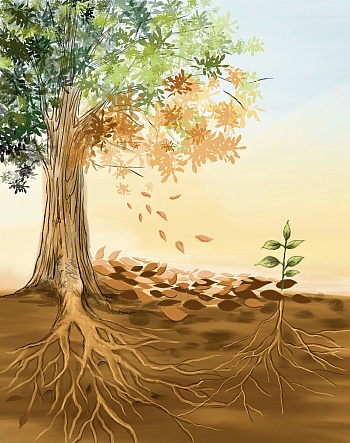
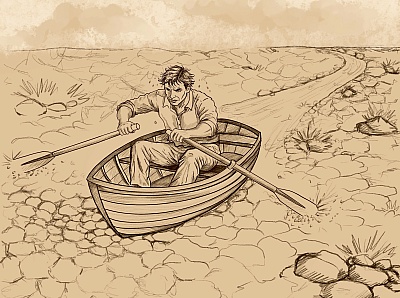
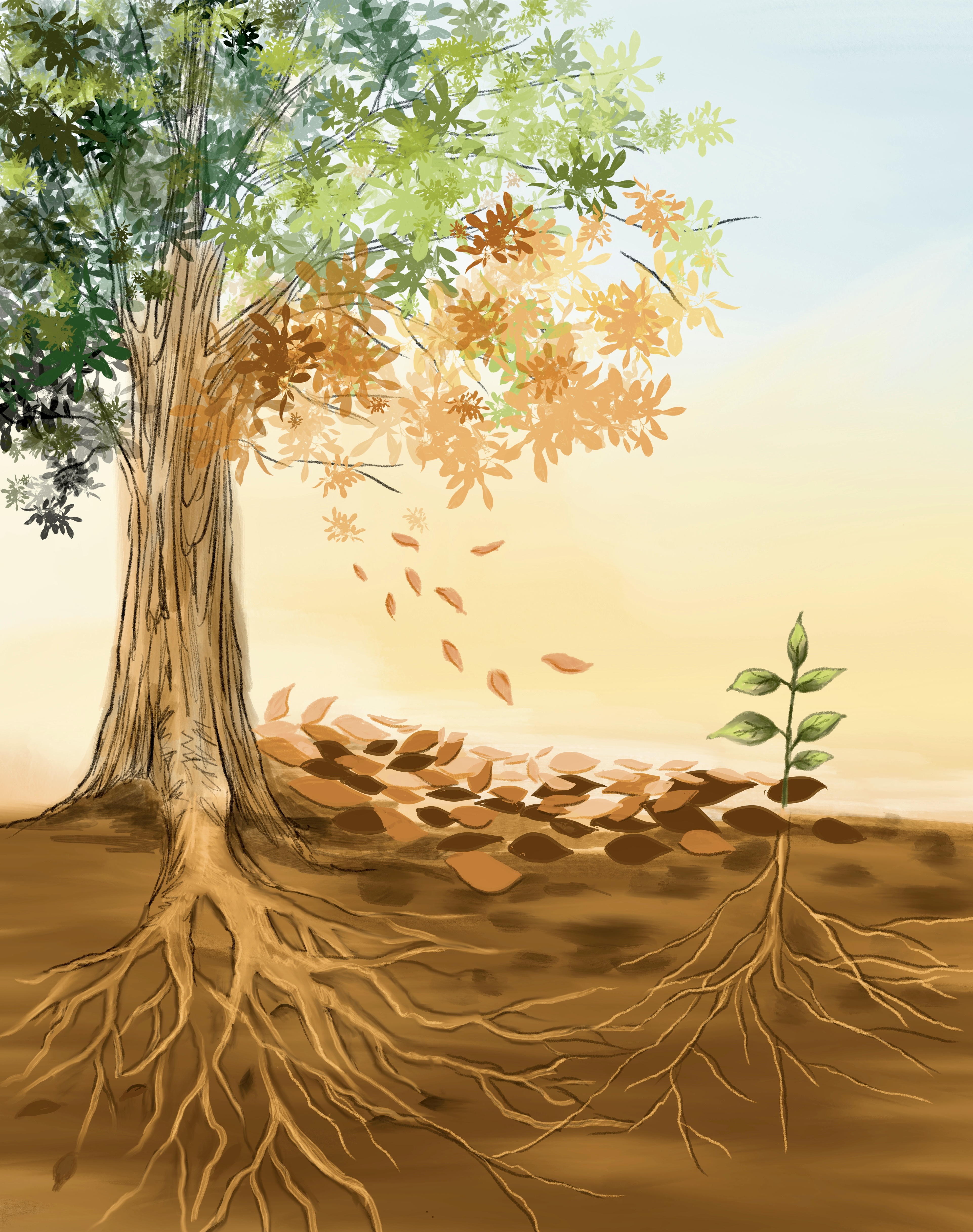
Hand-drawn art by Rupali Bhuva
Image of the Week

We live in a world of evidence. Our cities’ infrastructures and our environmental planning, our school curricula and our economic predictions, are all filtered through the funnel of data that compiles mechanisms of ‘science.’ Fair enough. We need to know what the new bridge will cost, or how many chemo treatments the patient can withstand; we need to calculate and measure the success of our work. But it is clear that we have made some serious miscalculations in the last 100 years. All the proof in the world has not provided the information that we need to see the complexity of the world we live in. We do not understand it. We make decisions that unfold into wild and unforeseen consequences. The proof was not enough. We needed the pattern.

Art does not ask for proof; it directs us to look for pattern.

Strung between the chords of a flamenco song is the empathy of a thousand years of love and pain. In the gestures of a contemporary dancer we can remember all that we have never imagined, and follow the form of the body into an unknown dictionary of emotions. In the strokes of color on a London wall, we find the humor and irony of our own mistakes. On a canvas, in a photo, on the screen, we see ourselves seeing the world. We see it, we see us, we take in the cock-eyed framing that tilts our heads and rests our status quo on its ear. The poetry is there, un-killable. Each of us is an artist, dabbing rhythms, colors, metaphors, and harmonies into our moments.

While abstract concepts may rollercoaster through us in art we don’t understand, the metaphors still enter us, and one day, maybe years ahead, they will speak to us. In the gruesomeness of art we find we are vulnerable and that we bleed. I have a small poster of Picasso’s ‘Woman Weeping’ on my dresser to remind me that to be a student of life is to be willing to be shattered. The darkness in art gives us a visceral experience of being dug up, emptied of the seeds of trust, and carved into the anger or jealousy that has overtaken us. There are things to be angry about in life, and art lets us explore the community of that experience. Through the breaking, tingling, crackling, smoothing, and opening, we are in art, with unnamed resonances coursing through us. We are pulled from our illusion that we can watch life from our safe place at the window. We are participants in the process.

In all forms, art can offer an experience of integration that calls upon our cultural language of symbols, our imagination, our history, our intellect, and our emotions. While we often stress the importance of ‘creative expression,’ it is perhaps more vital at this moment in our history to explore what art has to say about the possibility that our perception itself can be brought into larger circuits of cognition through metaphor. Appreciation of a piece of art can be seen as recognition of the pattern that connects. As I see it, art allows us to perceive from multiple perspectives simultaneously. In order for science to really work with complexity, we need art to help give scientists a more developed capacity to perceive context, one that includes all the disciplines, emotions, cultural symbols, and personal memories. As Blake said in ‘The Grey Monk’: “A tear is an intellectual thing.”

Seed Questions for Reflection

What do you make of the idea that art does not ask for proof, and instead directs us to "look for pattern"? Can you share a personal story of a time when a piece of art - a song, a painting, a poem, a dance - revealed something to you that rational understanding had missed, perhaps speaking to you months or even years after you first encountered it? What helps you cultivate the willingness to be "shattered," like Picasso's weeping woman, to participate fully in life rather than watching safely of the window?

Moved by this reading? Join a live Awakin Circle to discuss in community.
Join this week
More ways to connect

Add Your Reflection

6 Past Reflections
There is the objective world of form, of limited and measurable information, evidence, and proof. There also is the subjective world of art, intuition, complex process and pattern. Art and many disciplines are telling us that reality is interconnected pattern and relationship. There is much wisdom in Nora Bateson's statements. I love her saying that Picasso's 'Woman Weeping' says to be a student of life is to be willing to be shattered. Art -- be it poetry, painting, or music -- typically penetrates my deep indoctrination of rational understanding slowly, and slowly my consciousness expands enough to see and hear a deeper message. I'm not willing to be shattered; I have learned through age and paying attention that life is complex, uncertain, and uncontrollable, shatterings will happen like it or not, and I can learn from them. I don't like the shattering but I love the learning that it brings. A shattering is a growth opportunity.
NM
Jun 3, 2026
I'm opening our local circle, and here are the five beautiful questions from the passage that stood out for me: The lazy reading is "feelings vs. facts," and Nora refuses it. Her father's line is that 'science probes, it does not prove' — and the real prize is "loose and strict thinking" held together. So the live question isn't "which do we trust." It's: why are we so bad at holding both? "A tear is an intellectual thing." (Blake) Emotion is a form of cognition, not its opposite. We've been trained to keep the tear and the spreadsheet in separate rooms. What if the tear is data — just warm data, the kind that won't submit to a spreadsheet? "To be a student of life is to be willing to be shattered." Nora keeps Picasso's Woman Weeping on her dresser as a reminder. It cuts against every self-improvement frame we know — we want growth without breakage, depth without being dug up. Can we actually learn the deep things any other way? "We are pulled from our illusion that ... View full comment
CD
Charly Drobeck
Jun 3, 2026
Around 1990 I was working in a metaphysical bookstore, and came upon a poem by then lesser-known Mevlana Jelaluddin Rumi, “Out beyond ideas of wrongdoing and rightdoing, there is a field, I’ll meet you there…” The final lines struck my non-rational heart very strongly, and I have never been the same, thanks to so many teachers, lessons and the trust which is enfolded in his lines. The heart is beyond rational, and I approach most art-poetry, music and the fine arts, with my heart in the lead. What a gift!
LA
Laura
Jun 2, 2026
Robert Wilson's design/concept of Van Cleef&Arpels' Noah's Ark...a fwe years ago I was wandering in this darkened gallery-space, somewhere west of the High Line...one of the dioramas--a bird? A cheetah?--transfixed my faltering steps and I began to weep. I have seen the Pieta, Van Gogh, Calder, Judy Chicago's table...but these sudden, unbidden tears were an anointment. One of the lovely galleristas floated over, curious? Concerned? And I could not speak or explain. It was a moment of transendence. Never before, not yet repeated
CR
May 31, 2026
"Each of us is an artist" - indeed. And if we allow ourselves to be the artist and it bubbles up and appears in our daily activities humor is but a breath away. As evidence of the meeting of science, art, and perhaps even spirituality. As movement artist now also engaging with Social Presencing Theatre practices I witness the patterns in my own life, especially. Where and how I become contracted and stifled through self-doubt and lack of courage and the pattern of opening to quiet confidence and courage.
JP
May 29, 2026
We, as human beings, are looking for truth, love, compassion and forgiveness. How can we attain strength , courage, and patience for attaining such attributes? According to my understanding it requires, patience, compassion and kindness. We all love to have such wonderful qualities in our life. Wishes are not enough. We need to invest our energy, have patience and courage to attain such qualities. We do need proof to show it. Truth, love, and forgiveness are self evident. Such inner qualities do not need any proof. Living such inner qualities in our daily life reveals the truth. It is evident in my personal life. It takes time, passion, patience and compassion to attain and preserve such qualities. As we say "Rome was not built in a day." As we know, building an inner bridge that unites us doesn't happen in a day. It takes time. But once we build such an inner bridge we can walk on it and help others to walk on it. If we all make sincere efforts to walk on this bridge life become... View full comment