Faith And Certainty Aren't The Same

IMAGE OF THE WEEK
We are grateful to Rupali Bhuva for offering this hand-made painting for this reading.
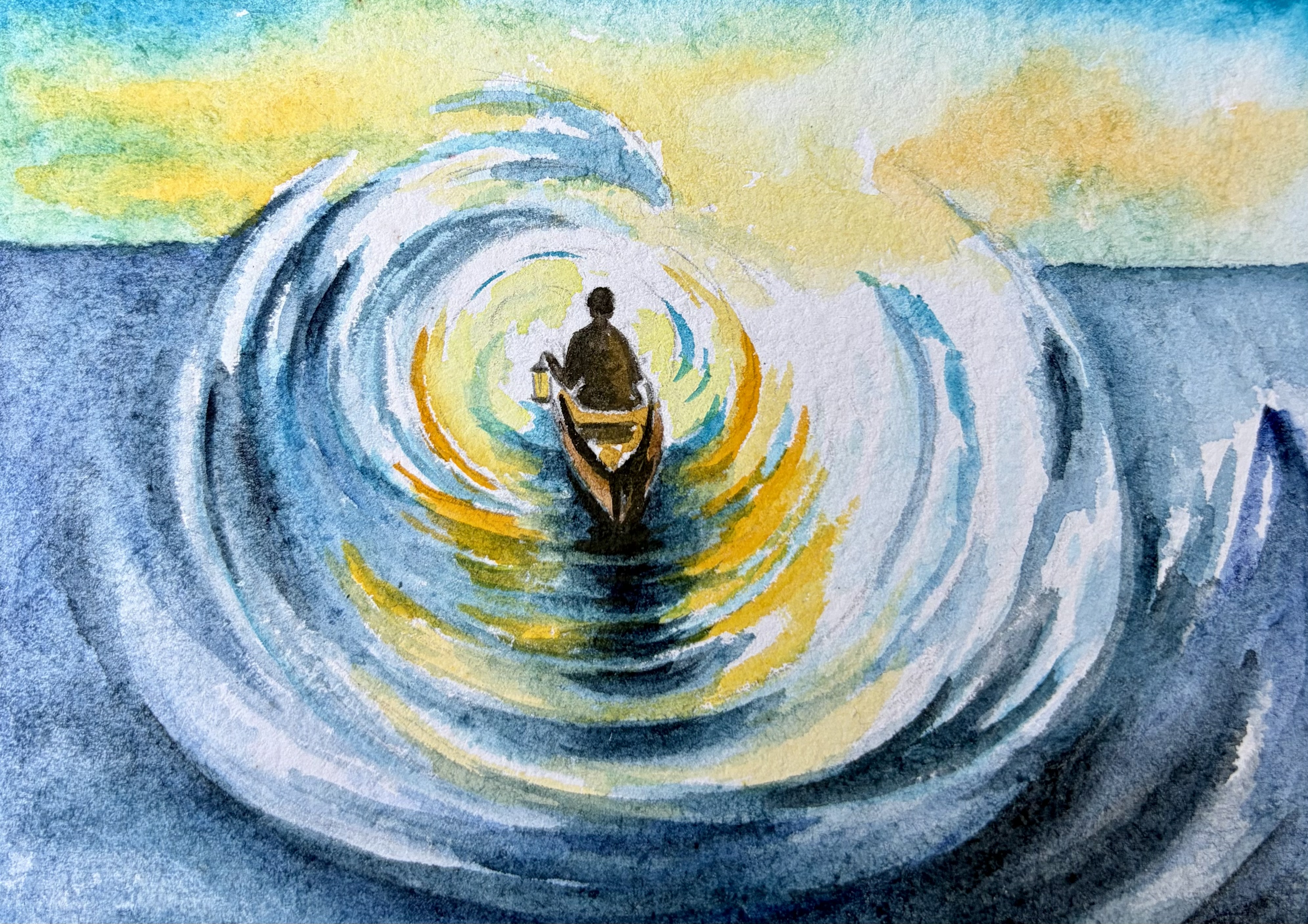
What became clear for me is that we cannot control the volatile tides that life brings, but maybe we can learn to build better boats. I needed a better vessel -- a sacred vessel. I would do this for myself and for my people -- my daughters, my mother, and my extended community -- so that we could navigate the harsh conditions of life without being torn asunder. And so I went in search.
What I discovered is this: Suffering comes with the experience of being human, and one’s perspective can determine how one experiences and works with it. Suffering is psycho-somatic pain, meaning that it impacts the mind, body, and spirit of a person. Sometimes suffering is multigenerational, genetically coded, or situational. It sometimes hides out in the subconscious realms of our psyche and muscle memory, like a kid’s game of hide-and-seek. Life experiences, painful encounters, and anxiety can trigger and awaken moments of trauma or suffering.
I have come to realize that there is no logic when it comes to suffering. Because it is a type of pain, we try to make sense of the pain. We ask: Is there a reason for the pain? What does the pain mean? Is there a cause for my suffering? Is it the result of a choice I have made? While there may be answers for simple forms of temporary suffering, when it comes to more complex forms, adequate answers are more elusive. In these instances, a person and loved ones must come to terms with suffering as a permanent resident in their lives. In these instances, suffering persistently nudges the sufferer and/or loved ones to ask heart-wrenching questions about the meaning and purpose of life.
While not all do so, some choose to wrestle with suffering rather than retreat into denial or bitterness. These sojourners follow a rabbit hole into the dark tunnels of life’s mystery, where only questions illuminate the path in front of them. It is a lonely and isolating inward journey, because only they alone can fully experience their suffering. Encounters with the ultimate source of suffering, however, can lead to transformation, new insights, wisdom, and healing to share with those who might face similar encounters.
For me this journey was intimate and private, but at the same time I found wise guides, teachers, and counselors to accompany me as I descended into the luminous darkness of my own emotional memories. Howard Thurman was one of those guides:
The individual enters a fellowship of suffering and the community of sufferers. The only point to be held steadily in mind is that, despite the personal character of suffering, the sufferer can work his way through to community. This does not make his pain less, but it can make it inclusive of many other people. Sometimes he discovers through the ministry of his own burden a larger comprehension of his fellows, of whose presence he becomes aware of in his darkness. They are companions along the way.
Wrestling with my suffering was necessary in order for me to reckon with the gut-wrenching pain of my own experience in hopes of discovering an illumined path of healing and transformation to share with others. Again, Thurman’s words resonate:
This is why we very often see people as profoundly changed by their suffering. Into their faces has come a subtle radiance and a settled serenity; into their relationships [comes] a vital generosity that opens the sealed doors of the heart in all who are encountered along the way. Such people look out upon life with quiet eyes. Openings are made in a life by suffering that are not made in any other way. Serious questions are raised and primary answers come forth. Insights are reached concerning aspects of life that are hidden and obscure before the assault.
I discovered an ancient, underground river of truth that rises up in all of these traditions. I discovered that faith and certainty are not the same. Too much certainty about what, why, and how God works gets in God’s way.
Rev. Stephen Lewis is the president of Forum for Theological Exploration. Excerpt above from his first book, Another Way.
SEED QUESTIONS FOR REFLECTION: How do you relate to the notion that "too much certainty about what, why, and how God works gets in God's way"? Can you share a personal story of a time when wrestling with suffering, rather than retreating into denial or bitterness, led you into those "dark tunnels of life's mystery" where you discovered unexpected companions or a new understanding of your own pain? What helps you craft a sacred vessel strong enough to carry both yourself and your people?