Pregunta por qué tu mente no es libre
--por J. Krishnamurti
La palabra «libertad» ha sido objeto de un gran abuso tanto por gobiernos tiránicos como democráticos, y también por las religiones, en todo el mundo. La libertad y la independencia personales no existen, excepto quizás en el mundo científico. No existen en el mundo empresarial ni en las estructuras religiosas que el hombre ha organizado mediante el miedo y la creencia; no existen en los gobiernos ni en ningún ámbito de la actividad humana. Pero el hombre ha afirmado constantemente que es libre y se ha quejado de que es el entorno el que lo esclaviza.
La libertad es la independencia para pensar por un@ mism@ con claridad y no para actuar según los dictados de la sociedad o las propias inclinaciones personales… La libertad no es simplemente liberarse de algo, sino libertad en sí misma. Esto no significa libertad para hacer lo que un@ quiera, por lo que es necesario comprender no solo verbalmente, sino de hecho, lo que implica esa palabra. No intentamos definir qué es la libertad; Cada cual lo interpretaría según su propia inclinación o educación, y algunos incluso negarían su existencia.
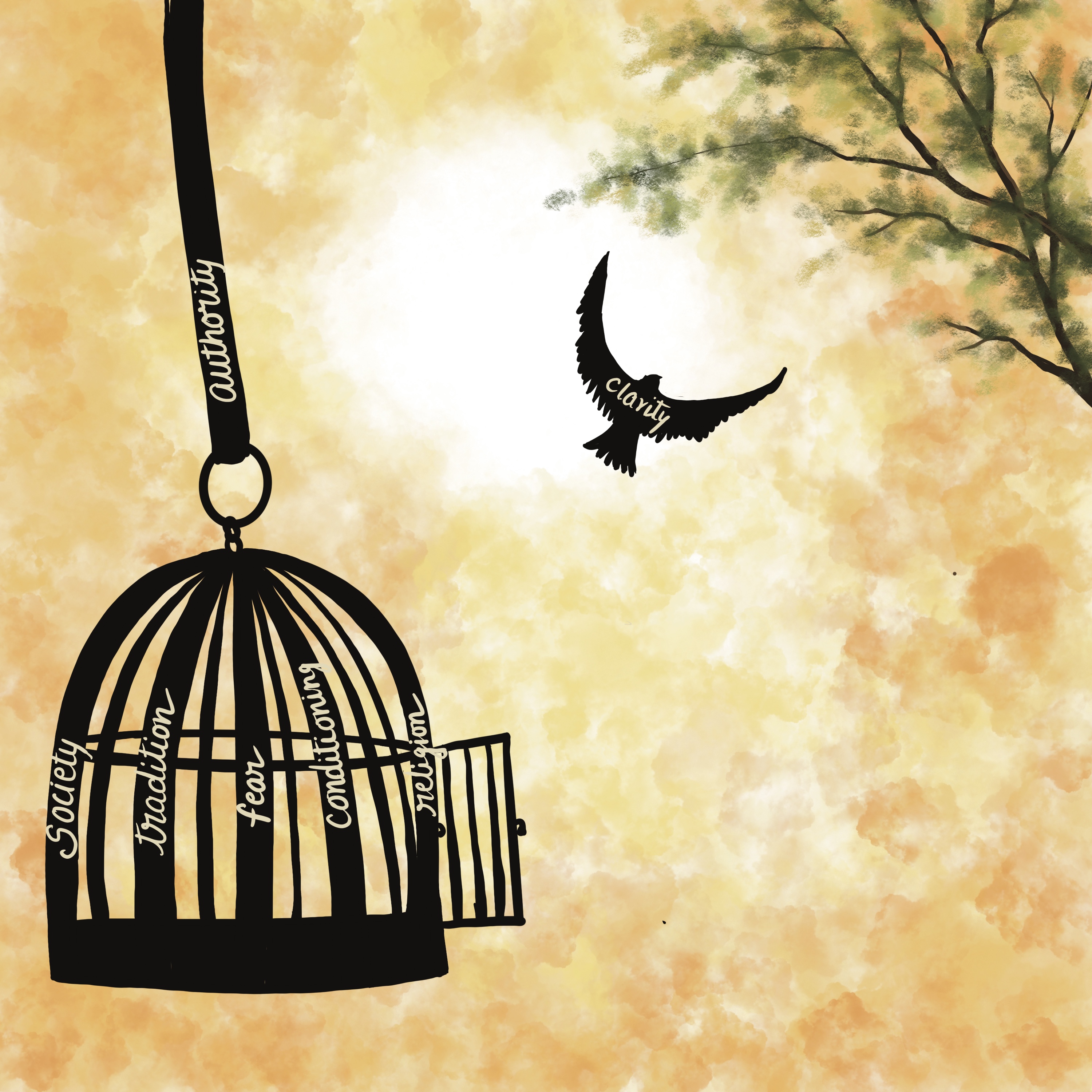
La libertad no se encuentra buscándola, sino comprendiendo qué es lo que aprisiona la mente. Cuando se rompen los muros de esta prisión, surge la libertad de forma natural, sin necesidad de buscarla. Así pues, lo importante no es cómo alcanzar la libertad ni preguntarse qué es, sino preguntarse por qué la mente, que es el producto del tiempo y el entorno, y que ha vivido tantas experiencias de miseria y conflicto, no es libre.
Descubre por qué la mente sigue tan condicionada después de tantos millones de años. La mente está condicionada por la sociedad, con sus culturas, leyes, sanciones religiosas, presiones económicas, etc. Al fin y al cabo, la mente es el resultado del pasado, y este pasado es tradición. Vive en esta tradición con todas sus luchas, guerras y agonías. Hay que preguntarse si puede liberarse de su propio condicionamiento. Sin libertad del condicionamiento, la humanidad siempre permanecerá prisionera y la vida seguirá siendo un campo de batalla.
Lo primero que hay que comprender en esta indagación es la naturaleza de la autoridad. En cualquier comunidad, la ley y la policía son necesarias, pero también hemos introducido a un policía en el mundo interior del pensamiento y el sentimiento. En este mundo, la obediencia se ha inculcado por tradición, experiencia y hábito: obediencia a los padres, a la sociedad, al sacerdote. Pero la obediencia nace del miedo: miedo a equivocarse, a actuar con independencia, a no estar segur@, a no formar parte de la comunidad, a estar sol@, a cometer un error.
Una disciplina que surge de forma natural, sin ninguna conformidad, es la simple observación de todos estos miedos, ansiedades y envidias; ver tus propios miedos, tus propias ambiciones como ves un árbol. Esta misma visión es esa disciplina. La palabra disciplina significa aprendizaje, no conformidad, represión u obediencia. Aprender la naturaleza y la estructura del condicionamiento trae orden; no el orden de la sociedad, que es desorden.
Preguntas semilla para la reflexión: ¿Cómo te identificas con la idea de que la verdadera libertad no se encuentra buscándola, sino a través de una comprensión más profunda de lo que aprisiona la mente? ¿Podrías compartir una historia personal que te haya ayudado a comprender la profundidad de tu propio condicionamiento y lo que significa liberarte de él? ¿Qué te ayuda a observar tus miedos, ansiedades y envidias con la simple claridad de ver un árbol, fomentando así una disciplina basada en el aprendizaje y no en la conformidad?
J. Krishnamuti fue un gran filósofo indio del siglo XX.
J. Krishnamuti was a great Indian philosopher of the 20th century.
Seed Questions for Reflection
How do you relate to the notion that true freedom is to be found not by seeking it but rather through a deeper understanding of what it is that imprisons the mind? Can you share a personal story that has helped you understand the depth of your own conditioning and what it means to break free from it? What helps you observe your fears, anxieties, and envies with the simple clarity of seeing a tree, thereby fostering a discipline that is rooted in learning rather than conformity?