Featured Speaker
Tania Singer
The Practice You Cannot Do Alone: Compassion, Burnout, and the Power of Two
Reflection Question
What practice have you managed to keep going only because someone else was waiting for you?
Share Your Reflection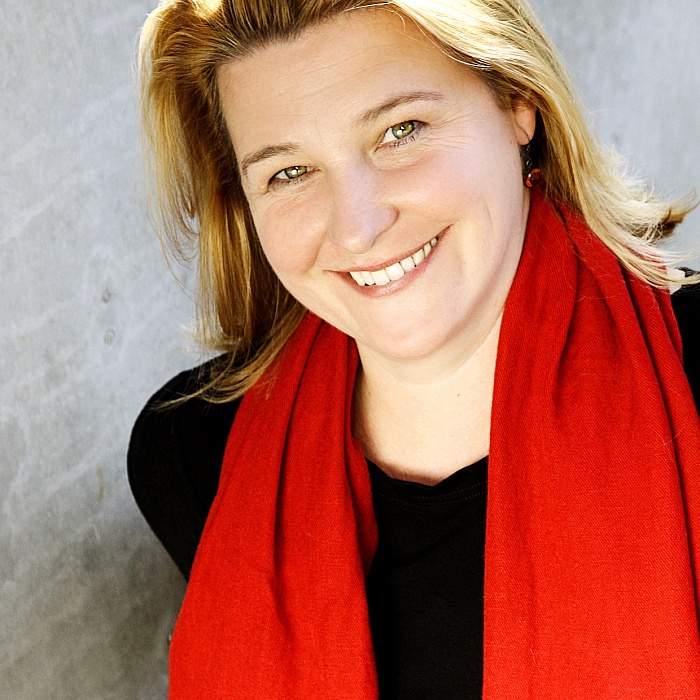
Can care be trained? Tania Singer has spent more than twenty years putting that question to brain scanners, and her answer is yes. Empathy is what we ask of nurses, teachers and carers of every kind. It is also, she found, what wears them out. She learned that from Matthieu Ricard, the French biologist turned Tibetan monk. Lying in her scanner, he watched footage of suffering children. She expected to see his pain network light up; what she saw instead were the regions tied to warmth and reward. He looked so untroubled that she wondered whether he was thinking about lunch. Asked to switch to ordinary empathy, he started to tire out much faster. Her further research with those without any meditation experience revealed a similar pattern.
A global pioneer in empathy and compassion research, Tania is a professor of social neuroscience and psychology and heads the Max Planck Society's Social Neuroscience Lab in Berlin, Germany. She has published more than 160 papers, cited over 56,000 times, and delivered over 400 keynote speeches and talks. Across all of it, she builds bridges between fields that seldom meet: science with the contemplative traditions of the East, neuroscience with economics, science with the arts.
"I was born as a we," Tania says. She and her identical twin sister Nathalie had a twin language before their parents could understand either of them. Psychology, when she trained in it, was all "just cognition, the individual" -- nothing about "the we and the social." She helped build the field that was missing. The contemplative half arrived by accident. In 2004, the same year her empathy research drew wide attention, she was in the Himalayas with Nathalie, filming the overtone chanting of Gyuto monks, when she wandered into a conference on brain plasticity. It began a long working relationship with contemplative practitioners, and shifted her research focus from empathy to compassion.
She initiated and headed one of the largest meditation-based secular mental training studies on compassion, the ReSource project. It took 332 people through nine months of daily contemplative practice, in three phases: attention to breath and body; compassion and the handling of difficult emotions; understanding another person's perspective. It has produced more than forty peer-reviewed papers. One major finding was that every practice delivered -- but only what it trained. Three months of attention made people more attentive; it did not make them any warmer toward anyone. "The effect of your meditation depends on what meditation you do," she says.
The second big finding was the power of two. Some practices in the study were solitary, but some were done with another person -- taking turns to speak honestly and listen without judging, a new partner each week. Dyads, she calls them. Those dyad practices lowered people's stress hormones in stressful social situations. Sitting alone did not. Later studies further sharpened the point. Set against people meditating alone for the same minutes a day, those who practiced in pairs came out less lonely -- and they were the ones still practicing after the study had ended and nobody was asking. Presently, through the Edu:Social initiative, she is bringing these dyads into education and health-care settings to boost resilience and social competencies in those spaces.
Years earlier, among economists in Zurich, Tania found herself "a bit shocked" to see that the field's founding assumptions were "absolutely not in line at all with what we know in psychology or from biology." Her objection was empirical, not just moral. Economics assumes a single motive, self-interest. Psychology finds several, and care is among the oldest. She became Europe's first professor of neuroeconomics, and has since worked with the macroeconomist Dennis Snower on economic models that begin from care, and convened the Dalai Lama dialogues behind Caring Economics and Power and Care.
Science was not Tania's first plan. Through high school she was a director's assistant in the opera houses of Frankfurt and Freiburg, and studied flamenco, juggling and pantomime. Her dream of directing opera went on hold when she took a PhD, but she continues to create bridges between science and the arts, including a free multi-media book on compassion with photos from the artist Olafur Eliasson and sound collages from her sister Nathalie. Work has taken her to nearly every continent, and she goes with a camera, making picture books from her travels. She cooks, crediting her French grandmother and mother -- "the best cooks on earth" -- and the never-ending family meals of her childhood. Put her in a new city and she strolls its food markets, taking photos, discovering a culture through its food.
Join Menka Sanghvi in conversation with this social neuroscientist of the space between two people, who has spent a career showing that what passes between us can be trained -- and that it cannot be trained alone.
Related Calls

Dr. Tracy Brandmeyer, Shay Beider and Nipun Mehta
Mar 18, 2023
Intelligence of the Heart

Can AI Help Us Be More Human?
Nov 29, 2025
Dr. Richard J. Davidson, Srinija Srinivasan & Nipun Mehta
Dr. James Doty
Feb 9, 2013
The Science of Compassion