Speaker: Tim Harrison
Compassion Based Education
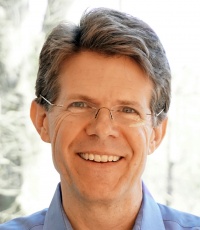 Timothy Harrison of Emory University in Atlanta, Georgia joined the university's Center for Contemplative Science and Compassion-Based Ethics (formerly the Emory-Tibet Partnership) in 2013 and currently serves as the associate director for Cognitively-Based Compassion Training (CBCT). Inspired by the works of His Holiness, the XIV Dalai Lama – a Nobel Peace Prize laureate and Emory University Presidential Distinguished Professor – the Center offers programs focusing on the interdisciplinary investigation and application of compassion.
Tim oversees the teaching and research programs of Cognitively-Based Compassion Training (CBCT®), a contemplative protocol for cultivating compassion in a secular context. He teaches CBCT regularly at the Emory Schools of Medicine and Law, Emory College, Spiritual Health at Emory Healthcare, and in the Atlanta Public Schools, and he guides the CBCT teacher certification.
Tim also contributed to founding the Center’s new education program, SEE Learning (Social Emotional and Ethical Learning), an educational framework for teaching compassion-based ethics beginning in kindergarten and continuing through high school. SEE Learning is launching for international use, translated into a dozen languages, at a conference in Delhi, India, April 4-6, 2019.
The Center collaborates with a wide range of scientists, scholars, professionals, and educators to offer multiple programs for the Emory community and beyond. Drawing from ancient Indo-Tibetan lo-jong practices, or "mind training," CBCT provides a secular, research-based approach to cultivating compassion. It was developed in 2004 by the Center's executive director, Lobsang Tenzin Negi, PhD, a former Tibetan monk who trained in the lineage of His Holiness the Dalai Lama for 27 years, and achieved a Geshe Larampa degree from the 600-year-old Drepung Loseling monastic educational system, the highest academic degree granted in the Tibetan Buddhist tradition. Designed to strengthen and sustain compassion, CBCT practices include training in attentional stability and increased emotional awareness, as well as targeted analytical reflections to better understand one's relationship with self and others.
Prior to joining Emory, Tim earned his master's degree in architecture from Harvard University in 1994, practicing and teaching design for 20 years while developing a contemplative practice "on the side." A longtime practitioner of both lo jong and Zen meditation, he initially learned to meditate by stumbling into Kopan Monestary in Nepal after a hiking trip was cut short due to a bout of illness.
"With little to do but sulk, on a lark I wandered into my first meditation class," he says. "There, a monk talked about the causes of happiness: 'If we come to Nepal to see the mountains, and then something stops us from seeing the mountains, we become very angry and miserable, and we blame that something, whatever it is, for our misery.' He calmly went on to explain that happiness is not due to the circumstances of our life, but rather to our perspective on those circumstances. The short meditation that followed, guided by the kindness of his voice, was my first chance to explore this radical idea in the context of my own inner experience."
Tim went on to study with his main teacher, Sandy Stewart, and practiced for many retreats in the Rinzai Zen tradition. In recent years he has benefited from teachings and retreats at Upaya Zen Center, and continues to benefit from CBCT's structured approach.
Tim has taught CBCT nationally and internationally in academic institutions and healthcare settings, as well as in prison and adolescent foster care settings. In his current role, he coordinates the expanding CBCT Teacher Certification program as well as the provision of CBCT for research studies. Additionally, he offers CBCT courses to students at the Emory School of Medicine and to residents in the Emory Healthcare Spiritual Health education program; teaches CBCT to undergraduate students through Emory’s Counseling and Psychological Services; and works with several community outreach and research programs, providing CBCT to public school teachers, vulnerable children and adolescents, and participants in numerous research studies including veterans with PTSD, cancer survivors, neonatal intensive care unit nurses, breast cancer survivors, parents of autistic children, and HIV patients.
Join us in conversation with this compassionate educator!
Five Questions with Tim Harrison
What Makes You Come Alive?
I am so lucky to have the job of sharing CBCT with others, either by teaching the classes myself or by helping others to learn to teach them more effectively. The seven core practices that comprise CBCT are the most reliable method that I know of to foster and sustain a more compassionate stance toward others as well as toward one's self. The method is powerful because it engages critical thinking as well as present-moment awareness in order to prepare the most fertile ground for constructive insights to arise. This type of practice gives us the chance to catch the mind in its habitual patterns and then to reshape these patterns by developing more wise and inclusive perspectives. With these methods, we set ourselves up to generate such insights more regularly and then to absorb and sustain them after they occur. In CBCT, it is these broader perspectives that we are after in order to sustain and extend compassion throughout a lifetime.
Pivotal turning point in your life?
When I was 24 I stopped out of school to trek in the Himalayas. I was stressed and needing a break and I loved mountains (I still do!). The night before the trek, I got sick and had to cancel the whole thing. The illness passed, but it ruined my plans and I remained miserable and resentful. With little to do but sulk, on a lark I wandered into my first meditation class. There, a monk talked about the causes of happiness: "If we come to Nepal to see the mountains, and then something stops of from seeing the mountains, we become very angry and miserable, and we blame that something, whatever it is, for our misery." He calmly went on to explain that happiness is not due to the circumstances of our life, but rather to our perspective on those circumstances. The short meditation that followed, guided by the kindness of his voice, was my first chance to explore this radical idea in the context of my own inner experience. It made sense, and it made a difference. I'm exploring still.
An Act of Kindness You'll Never Forget?
The times I have been forgiven for my weaknesses and mistakes are some of the most memorable moments of kindness in my life. Also, my parents' providing me with love throughout my formative years was an act of care that I will certainly never be able to forget, nor fully to repay.
One Thing On Your Bucket List?
Attending a meditation retreat in a remote Himalayan monastery for three months. (Or maybe even three years but don't tell my partner about this last part!)
One-line Message for the World?
“I can never be what I ought to be until you are what you ought to be, and you can never be what you ought to be until I am what I ought to be.†(Martin Luther King, Jr, “Letter from a Birmingham Jail,†1957)
RELATED CALLS
Ramesh Bhai Sanghvi
Aug 29, 2020
प्रेमसभर शिक्षण

Sara Schairer
Jun 22, 2013
Birthing a Compassion Revolution

Navin Amarasuriya
May 29, 2021
Finding Contentment